


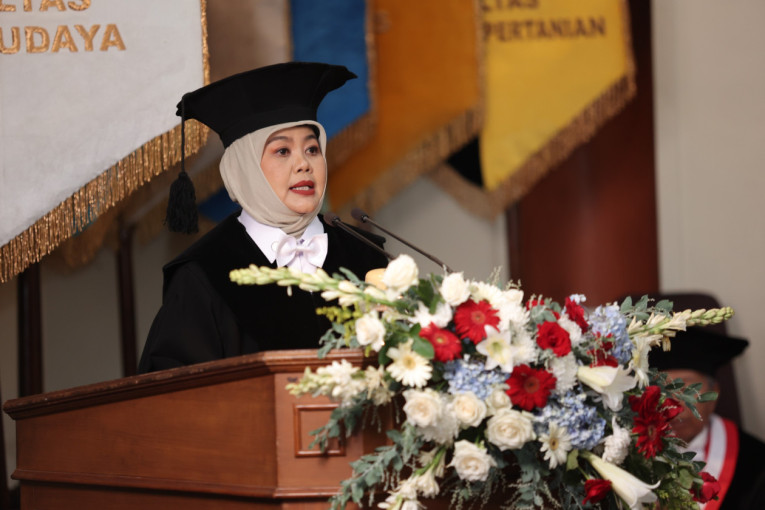
Coinciding with the celebration of Kartini Day on April 21, 2026, Mutiah Amini was inaugurated as Professor of Urban Social History at the Department of History, Faculty of Cultural Sciences, Universitas Gadjah Mada (FIB UGM). In her inaugural speech titled “History and Citizens’ Imagination of Urban Social Space,” she elaborated on the progressive nature of Raden Ajeng Kartini’s thinking in viewing urban development and modernization from the people’s perspective.
According to Professor Amini, Kartini recorded many events while expressing her views through the texts and letters she wrote. These writings became living cultural expressions that could spark long dialogues and serve as tools for observing changes in urban social spaces, particularly in advocating for the rights of urban residents.
“Long before the existence of BPJS Health insurance and ambulance services, Kartini, who perceived modernization as creating new social spaces, had already questioned whether the risks of development, such as accidents and crime, had been comprehensively considered to avoid generating social problems,” she explained.
Professor Amini also referred to the regional decentralization policy marked by the establishment of gementee or municipalities in the early 20th century, where strategic locations were selected based on the number of European communities residing there.
This policy reflected a form of centralization within decentralization. It indicated that residential areas designed for comfort by the colonial government were not accessible to all urban residents.
“The government had implemented kampoengverbetering (kampong improvement) and infrastructural development, but the number was very limited. As a result, people created new spaces by establishing settlements in the middle of the city or building houses along riverbanks,” she said.
Furthermore, Professor Amini highlighted the emergence of public and private spaces as a consequence of spatial colonization, such as the segregation of household functions. The idea of kampong and housing arrangements prompted the colonial government to conduct a series of public campaigns similar to healthy-living propaganda, such as promoting the importance of maintaining cleanliness in bathrooms, kitchens, bedrooms, and other spaces within the home.
She noted that this propaganda correlated with the intensification of women’s domestic workload.
“Creating a healthy environment for elite urban families became easier because they were assisted by jongos and babu, who handled domestic chores and daily garden work. Meanwhile, in other social classes, household responsibilities were largely placed on women,” she explained.
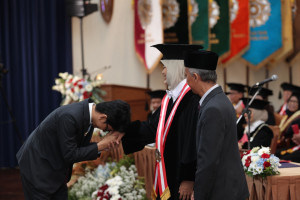
The collective imagination of non-elite communities became important in generating new urban social spaces that were aesthetic, harmonious, and healthy. This imagination appeared in various expressions, including criticism and excerpts in the mass media. These expressions took the form of satirical narratives in nonfiction, illustrated and serial stories, short stories, poetry, songs, and images and videos.
However, these forms of expression largely belonged to the middle and upper classes. Meanwhile, the urban poor demonstrated their collective imagination by occupying available public spaces in the city.
In closing, Professor Amini reaffirmed the historical fact of Kartini’s role as a pioneer of women’s emancipation, as well as a woman who had thought in a visionary and comprehensive way about cultural, humanitarian, and social issues.
“This certainly becomes a self-critique for us, historians. Kartini opened the way for all of us to continue thinking about solutions, reminding us that government policies must be considered comprehensively,” Professor Amini concluded her speech.
Author: Ika Agustine
Editor: Gusti Grehenson
Post-editor: Rajendra Arya
Photo: Firsto