


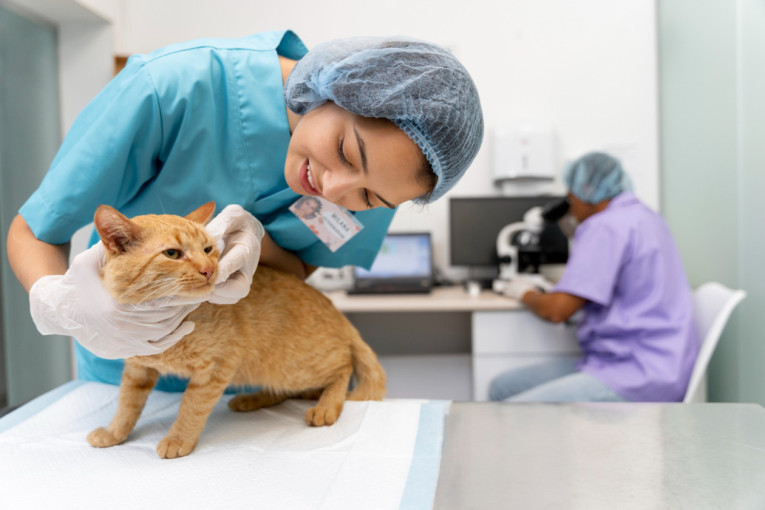
Commemorating World Veterinary Day on April 25 is an important opportunity to reflect on the strategic role of veterinarians in safeguarding public health. Amid rising threats of zoonotic diseases, challenges in food security, and increasing pressure on wildlife conservation and the environment, veterinarians play not only a role in animal health but also an integral part in maintaining ecosystem balance. Through the One Health approach, synergy between human, animal, and environmental health becomes key to achieving a healthy, safe, and sustainable society.
A professor at the Faculty of Veterinary Medicine UGM (FKH UGM), Professor Widagdo Sri Nugroho, emphasized that veterinarians hold a strategic position in maintaining the balance of human, animal, and environmental health within the One Health framework. Their role extends beyond animal health to include disease prevention, food safety, and environmental sustainability.
“We cannot focus solely on animals, as the environment must also be considered in its management,” he said on Monday (Apr. 27).
According to him, zoonotic diseases remain a critical issue requiring serious attention, as most originate from animals and have the potential to be transmitted to humans. From a technical perspective, limited vaccine availability and difficulties in reaching vaccination targets in endemic areas pose major challenges.
Meanwhile, socio-cultural factors also play a role, including concerns about vaccination and practices such as consuming or distributing meat from sick animals.
“It is not merely a matter of animal health techniques, but also involves public knowledge and socio-cultural backgrounds,” he explained.
Food security is another area that demands veterinarians’ attention. He stated that every veterinarian is responsible for ensuring the safety of animal-based products from upstream to downstream processes. Monitoring is conducted from production to post-harvest stages to ensure products are free from chemical residues and microbial contamination that could cause disease in humans.
“Post-harvest processes must ensure there is no microbial contamination, so the resulting products do not carry disease agents transmissible to humans. Waste generated from animal-based food production must not cause environmental harm,” he stressed.
In wildlife conservation efforts, the role of veterinarians has continued to expand, particularly in rescue and rehabilitation activities. In addition, public education is essential for preventing risky practices, such as consuming wildlife, that could trigger the emergence of new zoonotic diseases. However, protecting wildlife habitats remains a challenge that requires strong commitment from various stakeholders.
“There are already many regulations, but consistent implementation still needs to be strengthened. Education based on the One Health approach is crucial, involving multiple disciplines, including social and cultural aspects, to sustainably change public behavior,” he said.
Looking ahead, Professor Widagdo expressed hope that strengthening the role of veterinarians will be supported by strong political will from the government. Such support should be reflected in concrete programs, including vaccination, public education, the implementation of good farming practices, and preparedness for the emergence of new diseases. He emphasized that these efforts must also be backed by adequate funding to ensure effective implementation in the field.
“The key lies in the government’s political will. There must be a clear commitment reflected in programs such as vaccination, education, and preparedness for emerging diseases,” he concluded.
Author: Cyntia Noviana
Editor: Gusti Grehenson
Post-editor: Jasmine Ferdian
Photo: Freepik