


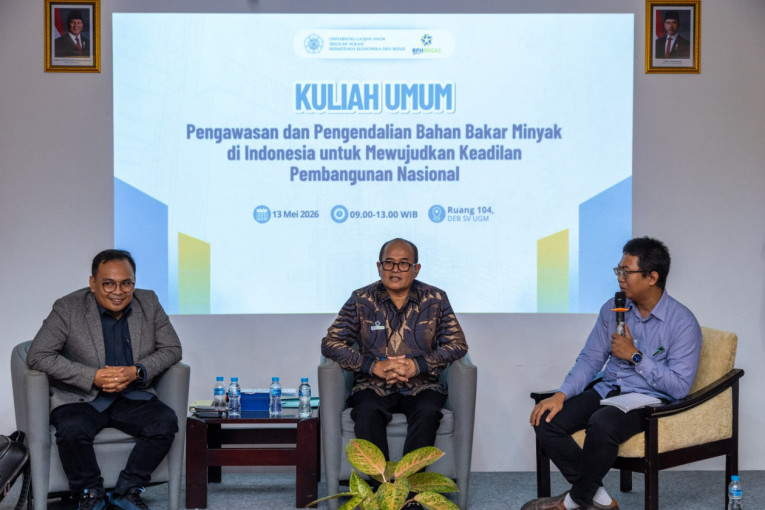
Head of the Downstream Oil and Gas Regulatory Agency (BPH Migas), Wahyudi Anas, stated that amid oil supply shortages caused by geopolitical tensions and conflicts in the Middle East, BPH Migas is focusing on ensuring fuel availability and equitable fuel distribution across the country, particularly in Indonesia’s disadvantaged, frontier, and outermost (3T) regions. According to Wahyudi Anas, fuel distribution in 3T areas faces logistical challenges and distribution risks, as it requires multiple modes of transportation, ranging from ships and aircraft to riverboats.
“Sometimes after being unloaded from the aircraft, the fuel is not immediately distributed to the community. It is transferred again using drums. After that, it’s moved by vehicles. Once the roads end, it continues by water through rivers, reaching deep into remote areas in the 3T regions,” said Wahyudi Anas during a public lecture titled “Pengawasan dan Pengendalian Bahan Bakar Minyak di Indonesia untuk Mewujudkan Keadilan Pembangunan Nasional” (Supervision and Control of Fuel Oil in Indonesia to Achieve Equitable National Development) on Wednesday (May. 13) at Room 104, DEB Building, Vocational College of Universitas Gadjah Mada (SV UGM).
Furthermore, regarding distribution, BPH Migas continues to oversee the delivery of subsidized fuel to ensure it reaches eligible recipients. This includes efforts to implement QR code systems, which have frequently faced challenges such as illegal counterfeiting by irresponsible individuals.
“BPH Migas also reaffirmed the government’s commitment to expanding the BBM 1 Harga program down to the subdistrict level. Land transportation vehicles are required to use QR codes to improve the public database for those eligible to receive subsidized fuel and state compensation,” he explained.
Researcher at the Center for Energy Studies UGM, Agung Satriyo Nugroho, highlighted that nearly half of Indonesia’s subdistricts (48.45%) do not have official fuel distributors, forcing residents to travel long distances at high operational costs. As a measure to ensure that the burden of fuel distribution in remote areas is not borne solely by Pertamina, he proposed a Remote Market Obligation (RMO) policy that requires all oil and gas trading companies to allocate 5% of their sales to remote regions.
He also urged Kemendagri to issue regulations granting local governments the authority to assist in fuel supervision. According to him, relying solely on central government oversight across all regions of Indonesia is neither sufficient nor feasible.
“I propose that the Ministry of Home Affairs immediately issue a mandate allowing regional governments to become involved in the regulation, supervision, and control of fuel distribution in their respective areas,” he emphasized.
Author: Leony
Editor: Gusti Grehenson
Post-editor: Jasmine Ferdian
Photo: Donnie