


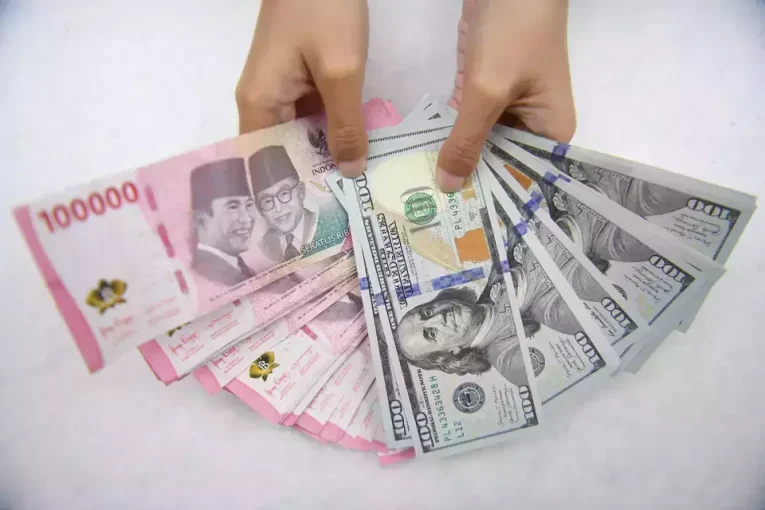
The rupiah exchange rate against the US dollar is once again under pressure. During trading on Monday morning (May. 18), the rupiah was projected to move between Rp17,590 and Rp17,660 per US dollar, continuing a weakening trend that in recent weeks has raised public concerns over domestic economic conditions. Amid the turmoil, the middle class is considered the most vulnerable group to its effects. The weakening rupiah is no longer merely a figure on trading screens, but a real threat to purchasing power, savings, investments, and the sense of economic security among people who have long lived in relatively stable conditions but without strong financial buffers.
Sociologist at Universitas Gadjah Mada, Dr. Arie Sujito, stated that the weakening rupiah has had a direct impact on the socioeconomic lives of communities, particularly the urban middle class. According to him, rising living costs have forced people to recalculate household spending and adjust previously arranged life plans.
The situation has gradually affected consumption patterns, especially for secondary needs, which are being reduced to maintain household economic stability. Dr. Sujito explained that the situation has also created a growing sense of insecurity as people’s economic reserves continue to decline significantly in value.
Dr. Sujito revealed that ongoing global economic pressures are further increasing Indonesia’s domestic economic vulnerability. International geopolitical conflicts, including the war between Iran and Israel involving the United States and its allies, are believed to have contributed to rising global oil prices and increasing domestic living costs.
According to him, the situation poses a major challenge for the state in maintaining economic stability while sustaining public subsidies. The short-term effects of these global conditions are expected to be felt most quickly by the middle and lower classes.
“If the state does not have the capacity to respond quickly, the impacts will continue in succession,” he said on Tuesday (May. 19).

According to Dr. Sujito, prolonged economic pressure could lead to broader social problems if not addressed promptly. He explained that when people begin to struggle to meet primary needs, the consequences are no longer limited to household economic issues.
The situation may affect social stability as people experience a declining sense of security regarding their living conditions. This vulnerability, he said, will become even greater if the national economic foundation is not strong enough to withstand prolonged global pressures.
“Once it affects primary needs, it will create social impacts,” he explained.
Dr. Sujito noted that the government has, in fact, implemented various social protection programs to maintain public resilience amid economic pressures. However, he believes these measures have not been fully capable of addressing the crisis occurring on the ground.
Dr. Sujito observed a disconnect between government policies and the realities communities face in their daily lives. As a result, various social assistance programs and economic interventions have not been sufficiently effective in curbing growing social vulnerability.
“There is a disconnect between the programs being implemented and the crisis taking place,” he said.
He also highlighted the declining fiscal capacity of both central and regional governments, which he believes has further intensified socioeconomic pressures on the public. According to him, reduced fiscal transfers from the central government have caused many regions to struggle in financing development and public services. The effects are beginning to be felt across sectors, including education, which must now cope with budget cuts and various funding limitations.
In circumstances such as these, institutions are being required to survive amid increasingly severe economic pressure. Dr. Sujito stressed that the issue cannot be considered minor because it is directly related to the sustainability of public services.
Furthermore, Dr. Sujito warned that an unresolved economic crisis could escalate into a social and even political crisis. According to him, the pressures experienced by the middle class could trigger chain effects on other social groups, especially lower-income communities with weaker economic resilience. He believes the government needs to prepare strategic measures and emergency policies to mitigate the crisis quickly and effectively.
“If economic pressures continue to accumulate without clear solutions, this condition could affect social stability and public trust in the state,” he concluded.
Author: Triya Andriyani
Post-editor: Jasmine Ferdian
Photos: Jakarta Globe and UGM Public Relations Documentation