


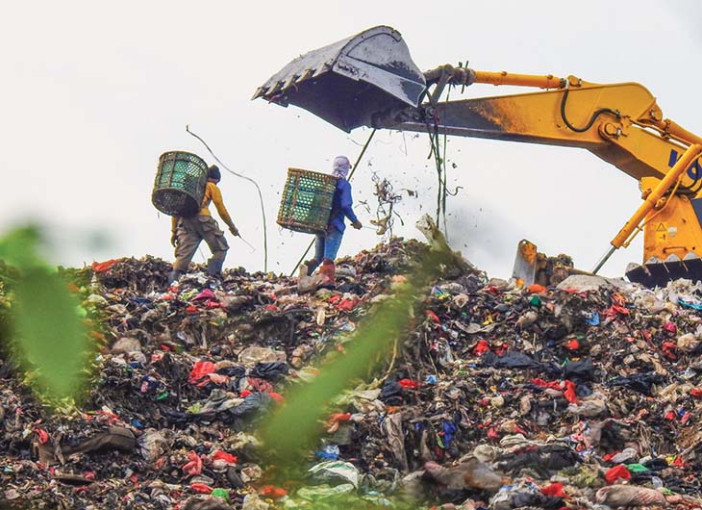
The Integrated Waste Processing Site (TPST) Bantargebang in Bekasi, West Java, is often cited as the largest waste-processing site in Southeast Asia and as the world’s second-largest methane producer after the Campo de Mayo landfill in Buenos Aires, Argentina.
Both waste disposal sites were detected by the Carbon Mapper satellite as among the largest methane emitters, releasing more than six tons per hour. This finding appeared in a report by the Emmett Institute, a center for environmental law, policy, and climate change studies at the Faculty of Law, University of California, which released a list of the 25 landfills with the highest methane production throughout 2025.
Biorefinery, sustainable energy, and carbon dioxide removal technology expert, and Chemical Engineering lecturer at Universitas Gadjah Mada (UGM), Dr. Hanifrahmawan Sudibyo, explained that methane is one of the greenhouse gases contributing to rising global temperatures. This gas is generally produced by the decomposition of organic materials under anaerobic or low-oxygen conditions, such as in organic waste piles, animal manure, swamp sediments, and high-moisture food-industry waste.
“Moist conditions and limited oxygen supply create an ideal environment for methane-producing microorganisms,” said Dr. Sudibyo on Monday (May. 18).
More specifically, Dr. Sudibyo explained that methane is formed by methanogenic archaea, a group of anaerobic microorganisms that play a role in the final stage of organic matter decomposition. In this process, complex organic compounds are first broken down by other microbial communities into simpler compounds such as organic acids, hydrogen, and carbon dioxide, which are then converted by methanogenic archaea into methane gas.
At the Bantargebang landfill, when large piles of organic waste accumulate, low-oxygen zones form, particularly in the inner, lower parts of the waste layers. Moist conditions due to rainwater, low porosity, and limited air circulation create an ideal environment for anaerobic microorganisms, including methanogenic archaea.
“As this decomposition process continues, methane gas is produced and can be released into the atmosphere if not properly managed,” he explained.
Dr. Sudibyo added that methane is a natural component of Earth’s carbon cycle and is produced during the biodegradation of organic materials. However, environmental problems arise when methane emissions increase excessively due to the accumulation of unmanaged organic waste that is not optimally utilized.
“Considering methane’s global warming potential is higher than carbon dioxide over a certain period, methane release from landfills becomes an important issue in controlling greenhouse gas emissions,” he noted.
From the perspective of chemical engineering and energy conversion, using methane from landfills can help reduce greenhouse gas emissions while supporting a cleaner energy transition. This process is carried out using methane capture technology, such as vertical and horizontal pipe networks installed within waste piles to collect gas generated within the landfill. Dr. Sudibyo explained that the collected methane can then be directed to purification units or biogas-based power plants for use as an energy source.
In addition to implementing methane capture technology, Dr. Sudibyo emphasized that preventive efforts, such as waste sorting and reducing the amount of organic waste sent to landfills, are equally important. Increased public consumption without proper waste management will increase the burden on landfills, both in terms of capacity and methane formation potential.
Therefore, methane utilization as an energy source must be integrated with a more sustainable waste management system to support the circular economy concept and long-term reduction of greenhouse gas emissions.
Dr. Sudibyo also assessed that optimizing methane utilization at landfills cannot rely solely on waste management operators or the industrial sector. Cross-sector support is needed, from government and communities to energy providers such as PLN, to build integrated infrastructure and systems for landfill gas utilization.
“The high methane production potential at TPST Bantargebang should serve as a momentum to evaluate national waste management, particularly in encouraging emission reductions while developing more environmentally friendly energy,” he concluded.
Author: Ika Agustine
Editor: Gusti Grehenson
Post-editor: Rajendra Arya
Photo: Forestdigest