


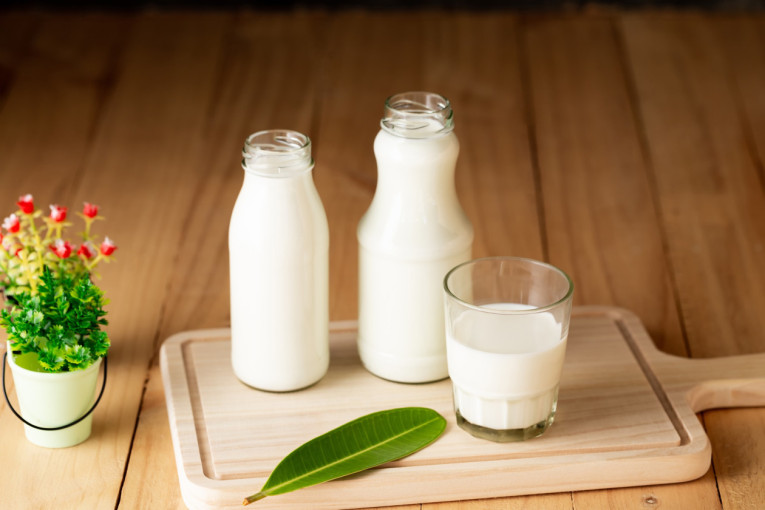
Efforts to improve the welfare of dairy cattle farmers cannot rely solely on increasing fresh milk production. Farmers need to be encouraged to engage in downstream processing, ranging from processing and packaging to the marketing of value-added dairy products, so they can gain greater economic benefits.
Lecturer at the Faculty of Animal Science, Universitas Gadjah Mada (Animal Science UGM), Satyaguna Rakhmatulloh, assesses that farmers have so far remained at the earliest stage of the dairy value chain. According to him, they primarily function as raw milk suppliers, while the greatest added value is captured by downstream sectors that control processing technology, branding, packaging, and distribution.
He noted that increasing production without strengthening farmers’ position in the value chain would only expand the supply of fresh milk without guaranteeing improved welfare.
“Therefore, the transformation of farmers’ roles into actors in processed dairy product businesses must become a key agenda in national dairy development,” he said on Thursday (18/6).
Satyaguna stated that one strategy to pursue is diversifying dairy products. Fresh milk, he explained, can be processed into various value-added products, including pasteurized milk, yogurt, ice cream, milk pudding, cheese, and functional foods. Diversification should be carried out gradually, in line with the capacity of farmer groups and market demand, to improve farmers’ bargaining position and extend product shelf life.
However, he emphasized that the success of downstream processing does not depend solely on the availability of equipment. Satyaguna highlighted the importance of continuous training and mentoring, covering technical aspects of milk processing, business management, digital marketing, and business licensing.
“Empowerment programs that are merely ceremonial are not sufficient to build farmers’ independence,” he said.
In addition, strengthening farmer groups and cooperatives is crucial to supporting downstream development. According to him, farmer groups need to evolve into economic institutions capable of professionally managing production, processing, marketing, and quality control. Through collective action, farmers can strengthen their bargaining position while gaining access to support from the government, universities, financial institutions, and industry.

Satyaguna also highlighted the importance of women’s empowerment within the dairy value chain. Women play strategic roles in the production, packaging, administration, and marketing of processed dairy products. Their involvement can strengthen farmers’ household economies while fostering more inclusive and sustainable enterprises.
He noted that achieving sustainable downstream development requires collaboration among the government, universities, cooperatives, and the private sector. Support in the form of training, financing, institutional strengthening, market development, and technological assistance is essential in building a more equitable dairy ecosystem for farmers.
“Dairy farmers must become the main subjects of downstream processing, not merely raw material suppliers,” he explained.
Satyaguna estimates that downstream processing through farmer groups can increase milk production and elevate farmers to independent, competitive business actors who contribute to national dairy self-sufficiency.
“Through involvement in processing and marketing dairy products, farmers can enjoy the added value that has so far been largely captured by downstream sectors,” he said.
Contributor: Satria Ardhi Nugraha / Faculty of Animal Science Public Relations
Author: Hanifah
Editor: Gusti Grehenson
Post-editor: Zabrina Kumara
Photo: Personal documentation and Magnific