


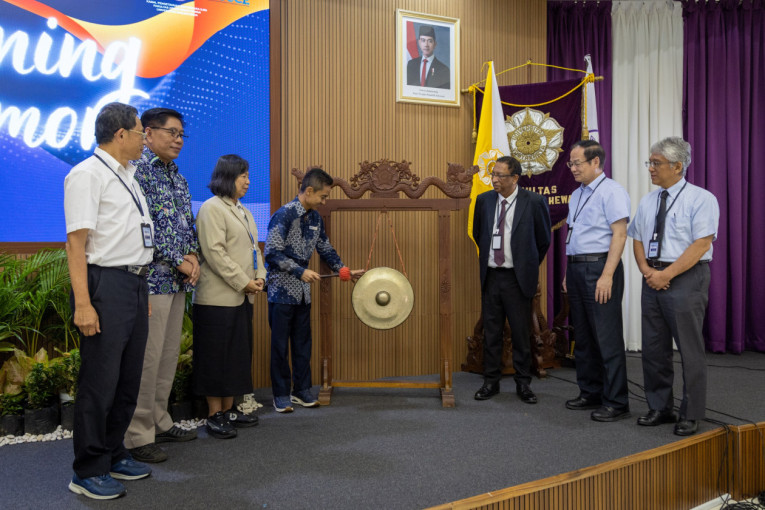
The Faculty of Veterinary Medicine (FKH UGM), in collaboration with IPB University, hosted the Asian and Oceania Society for Comparative Endocrinology (AOSCE) International Symposium from July 5-9, 2026. The symposium featured discussions on comparative endocrinology, a branch of science that examines hormonal systems across different organisms to better understand their functions, mechanisms, and evolution in regulating biological processes such as growth, reproduction, metabolism, and environmental adaptation.
UGM Vice Rector for Research, Business Development, and Partnerships, Dr. Danang Sri Hadmoko, expressed his appreciation for the international symposium hosted by FKH UGM.
According to Dr. Hadmoko, the faculty plays a strategic role not only in advancing veterinary science and animal health but also in creating tangible benefits for society through education, research, and community service.
“We are honored to have the opportunity to host this symposium through FKH UGM, which contributes not only to animal health but also to the broader community,” he said.
Meanwhile, Ishwar S. Parhar, President of AOSCE, appreciated the organizing committee for their dedication to making the international symposium possible. He believed the event’s success was the result of the collective efforts of everyone involved.
“I would like to express my sincere appreciation to the organizing committee for their dedication,” he said.
Parhar also hopes that the symposium serves as a platform for participants to exchange ideas, build collaborations, and expand their scientific networks. The ideas and partnerships established during the event are expected to advance science while generating broader benefits for society.

During the plenary session “Kisspeptin in the Social-Reproductive Brain”, AOSCE President Ishwar S. Parhar explained the role of kisspeptin in regulating the reproductive system. Kisspeptin is a neuropeptide produced in the brain and has long been recognized as an activator of gonadotropin-releasing hormone (GnRH), the hormone that controls reproductive function. However, recent research shows that kisspeptin’s role extends far beyond this function.
“Kisspeptin is a molecule that acts one level above GnRH and regulates the reproductive system,” he said.
Reproduction is influenced not only by hormones but by the brain’s ability to process information from the surrounding environment. Signals such as light, odors, sensory stimuli, social interactions, and physiological conditions are integrated before the brain activates the reproductive system through kisspeptin.
“Successful reproduction requires the continuous integration of environmental information, sensory systems, social life, and the endocrine system,” said Parhar.
According to him, kisspeptin serves as the coordinator that integrates all of this information. In addition to activating GnRH, kisspeptin interacts with several brain regions responsible for emotion, motivation, and social behavior. As a result, reproduction is shaped not only biologically but also by social experiences and the environment in which an organism lives.
“What we are trying to understand now is how the reproductive system and social behavior work together to ensure successful reproduction,” he explained.
Parhar added that when the body experiences stress, levels of gonadotropin-inhibitory hormone (GnIH) increase, suppressing reproductive function.
“The reproductive system is highly sensitive to changes occurring both inside and outside the body,” he said.
As an example, Parhar presented findings from his research on tilapia. Dominant fish are more likely to reproduce because they are in better physical condition and experience lower stress levels. In contrast, subordinate fish experience elevated stress hormones, reduced appetite, slower growth, and ultimately reproductive failure.
“Fish experiencing stress eventually fail to reproduce,” he said.
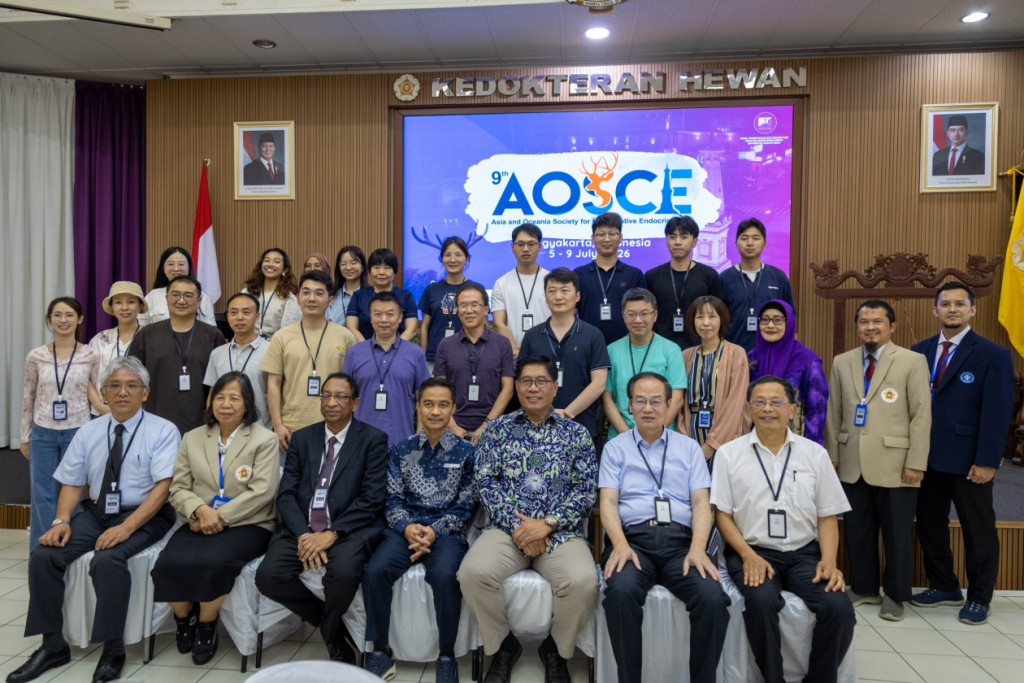
He further explained that kisspeptin’s role has been identified not only in one species but across a wide range of vertebrates, including fish, amphibians, reptiles, birds, and mammals. The shared mechanism suggests that this reproductive regulatory system has been conserved throughout evolution.
“This mechanism has been found in many vertebrate species and demonstrates how the brain connects social behavior with reproductive function,” he said.
Concluding his presentation, Parhar emphasized that current kisspeptin research extends beyond reproductive hormones to explore the interactions among the brain, environment, emotions, and social behavior. A deeper understanding of these relationships could help explain reproductive disorders while opening new avenues for research in neuroendocrinology.
“Our current research focuses on understanding how these two systems work together to achieve successful reproduction,” he concluded.
Author/Photo: Zabrina Kumara
Editor: Gusti Grehenson
Post-editor: Jasmine Ferdian