


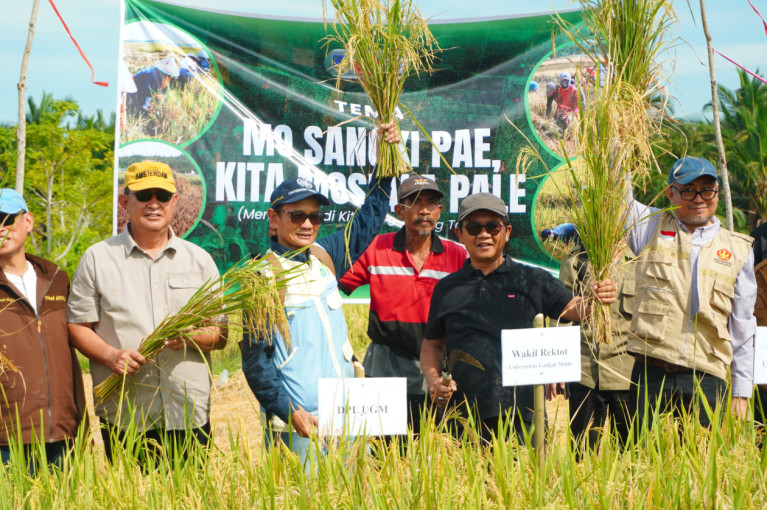
Mo Sangki Pae Kita Mosiala Pale, which means “harvesting rice hand in hand” in Indonesian, is more than a traditional harvest celebration for the people of Limboro Village, Donggala Regency, Central Sulawesi. The celebration, held on Tuesday (Jul. 7), symbolized the return of hope after years of losing irrigation due to damage to the Uvenja Dam. Thanks to the presence of UGM community service students (KKN-PPM UGM), the villagers were finally able to harvest rice once again.
For approximately 14 years, the Uvenja Dam on the Limboro River remained damaged after the flood disrupted its irrigation system, leaving around 43 hectares of rice fields uncultivable. As a result, local farmers lost both their livelihoods and hope of farming their land again. That hope began to return when the KKN-PPM UGM collaborated with Tadulako University (UNTAD) in 2025 to initiate a community-led effort to restore the Uvenja Dam.
UGM Vice Rector for Student Affairs, Community Service, and Alumni, Dr. Arie Sujito, attended this year’s harvest celebration and presented Gamagora rice seeds, a UGM-developed rice variety resulting from the university’s downstream research efforts, to strengthen food security and improve agricultural productivity in Limboro Village. This amphibious rice variety can be cultivated in both irrigated paddy fields and dry land.
Dr. Sujito encouraged local communities to continue protecting the unique potential of their regions to provide lasting benefits. Emphasized the importance of strengthening the agricultural sector and fostering shared responsibility for achieving food security.
“Let us preserve the resources in every region, strengthen our agricultural land, and share the responsibility for food security,” he said.
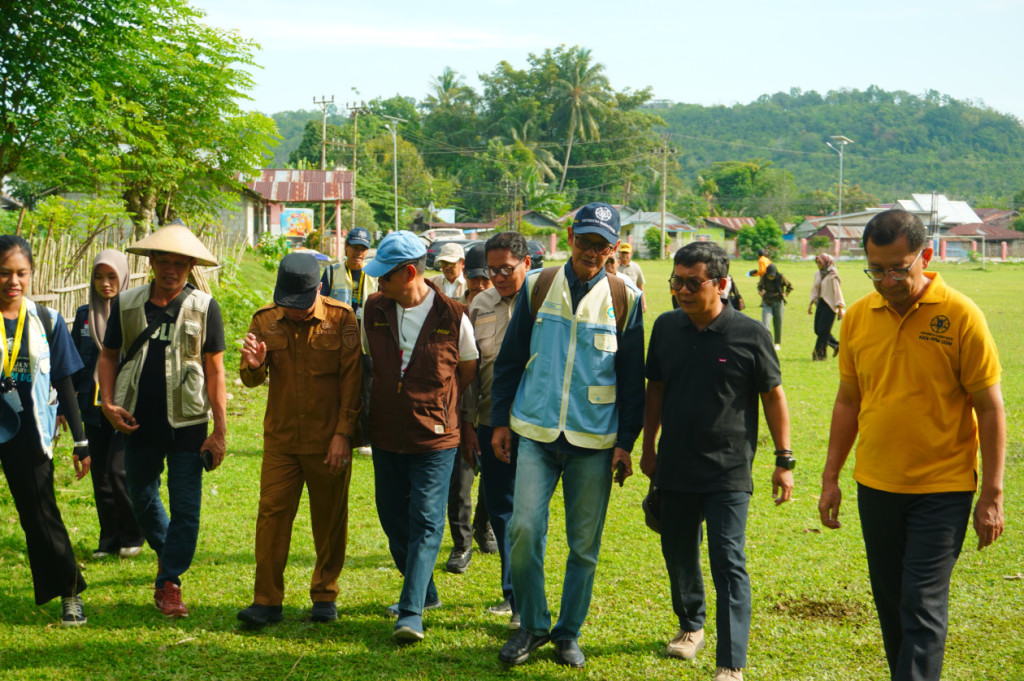
This year’s harvest was the result of a long journey to restore the village’s agricultural productivity. Professor Nizam, Field Supervisor of the Bulava Donggala’s KKN-PPM UGM team, explained that the initiative had been prepared since late 2024 through a series of community needs assessments. Together with the team from Tadulako University, Professor Nizam visited the villages of Towale and Limboro in November 2024 to meet with village heads, village officials, the Donggala Regency Government, and the Banawa Tengah Subdistrict administration. The process continued through virtual discussions involving UGM and UNTAD students, village officials, and community leaders to design programs that genuinely addressed local needs.
Based on the assessment, restoring the Uvenja Dam became the highest priority. After a collaborative effort involving locals, village authorities, UGM, UNTAD, partner organizations, and heavy equipment support, the dam was successfully repaired, allowing irrigation water to flow back into farmers’ fields.
“We focused on finding solutions by mobilizing community cooperation and support from various stakeholders,” said Professor Nizam.
The restoration marked a turning point for Limboro Village. By early 2026, approximately 43 hectares of rice fields that had remained idle for years were once again producing rice. For a remote village at the edge of Donggala Regency, this achievement represented a significant milestone in restoring local agricultural productivity.
According to Professor Nizam, the area has tremendous agricultural potential due to its fertile soil, with productivity reaching approximately eight tons of harvested rice per hectare. The restoration of irrigation has not only revived the community’s aspiration for village food self-sufficiency but also reinforced Limboro’s role as one of Central Sulawesi’s rice-producing areas.
The successful restoration of the Uvenja Dam was not the end of the collaboration. Through the 2026 Phase II UGM Bulava Donggala Community Service Program, several community empowerment initiatives have continued, including efforts to strengthen food security by introducing the Gamagora rice variety to local farmers. Developed by UGM, Gamagora was selected because it thrives on dry land while maintaining high productivity, making it a promising solution for farmers facing drought caused by El Niño.
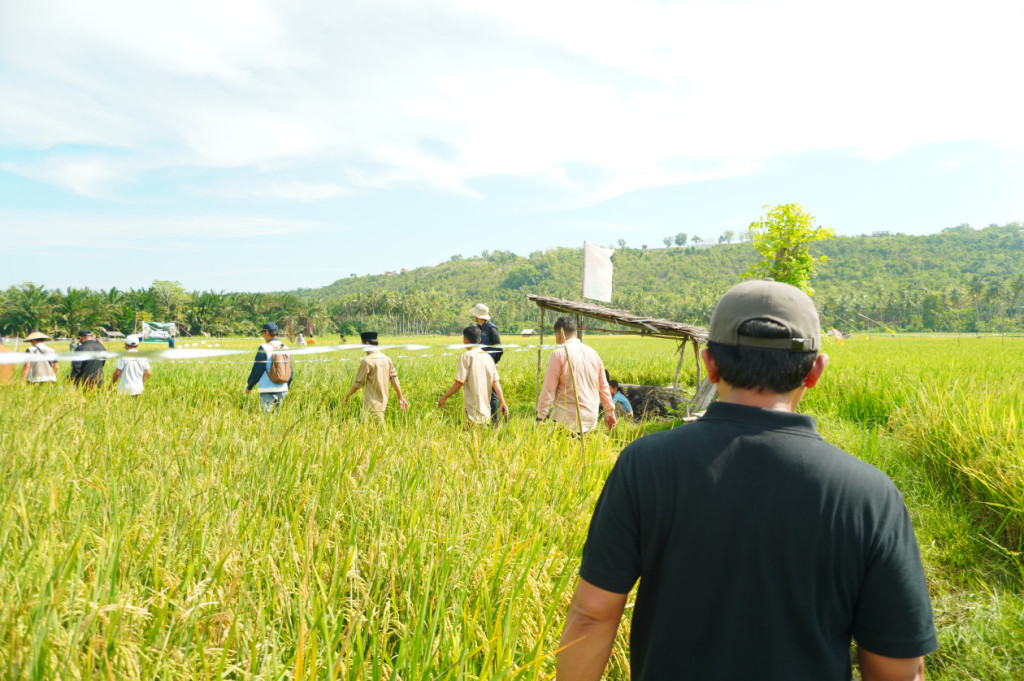
I Komang Agus Juliantara, Coordinator of the Bulava Donggala’s KKN-PPM UGM team, explained that student assistance extends beyond distributing seeds. Throughout the program, students will guide farmers in understanding Gamagora’s characteristics and cultivation techniques, and will use demonstration plots as practical learning sites.
“Gamagora is an amphibious rice variety that can grow in dry conditions while maintaining excellent productivity. We hope it will help communities cope with future El Niño impacts in Sulawesi,” said Komang.
The demonstration plots would serve as learning centers where farmers could directly observe and adopt Gamagora cultivation techniques.
“We plan to continue working alongside the community by providing more in-depth knowledge about Gamagora, including cultivation methods, important considerations, and establishing demonstration plots,” he said.
Beyond strengthening food security, the 2026 Phase II of KKN-PPM UGM Bulava Donggala team is implementing several other community-based programs developed from local needs assessments. These include tourism development through coral reef restoration, strengthening the creative economy, and environmental conservation through plans to construct embankments and plant bamboo as part of disaster mitigation and environmental preservation efforts.
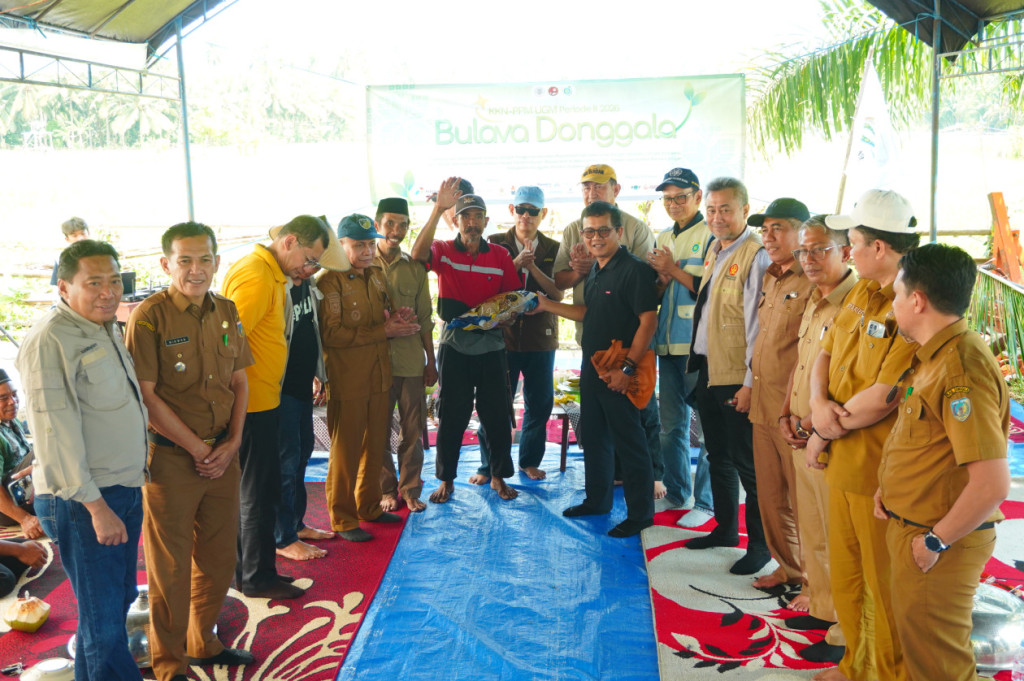
For Komang, the entire process has been a valuable learning experience. He believes that the success of any program depends not only on the innovations introduced by students but also on active community participation throughout its implementation.
“The community has been incredibly open and willing to engage in discussions. We have learned that successful programs require the involvement of all stakeholders,” he said.
Waludin, representing the local farmers’ group, also expressed his gratitude for the Gamagora rice seed donation provided by UGM.
“We are deeply grateful for the Gamagora seeds donated by UGM,” he said.
The two-year collaboration also received appreciation from Limboro Village Head Mohammad Kifli. According to Kifli, UGM has become an integral part of a shared learning process involving villagers, the village government, and the university in addressing local challenges.
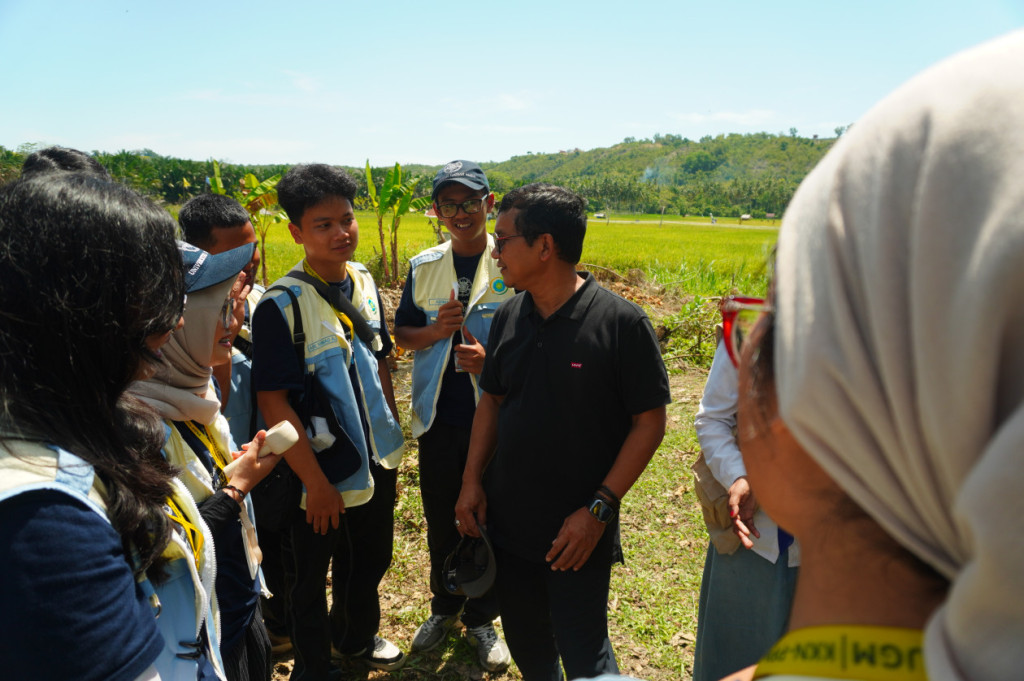
“I am grateful and sincerely thank Universitas Gadjah Mada for accompanying us throughout this learning process over the past two years,” he said.
Kifli believes that restoring the Uvenja Dam and bringing the rice fields back into production demonstrate that rural development can succeed only through collaboration among multiple stakeholders.
“For us, this is truly a collaborative process involving many parties,” he said.
He also expressed admiration for Professor Nizam’s direct involvement, noting that he worked alongside the community from the earliest planning stages through program implementation.
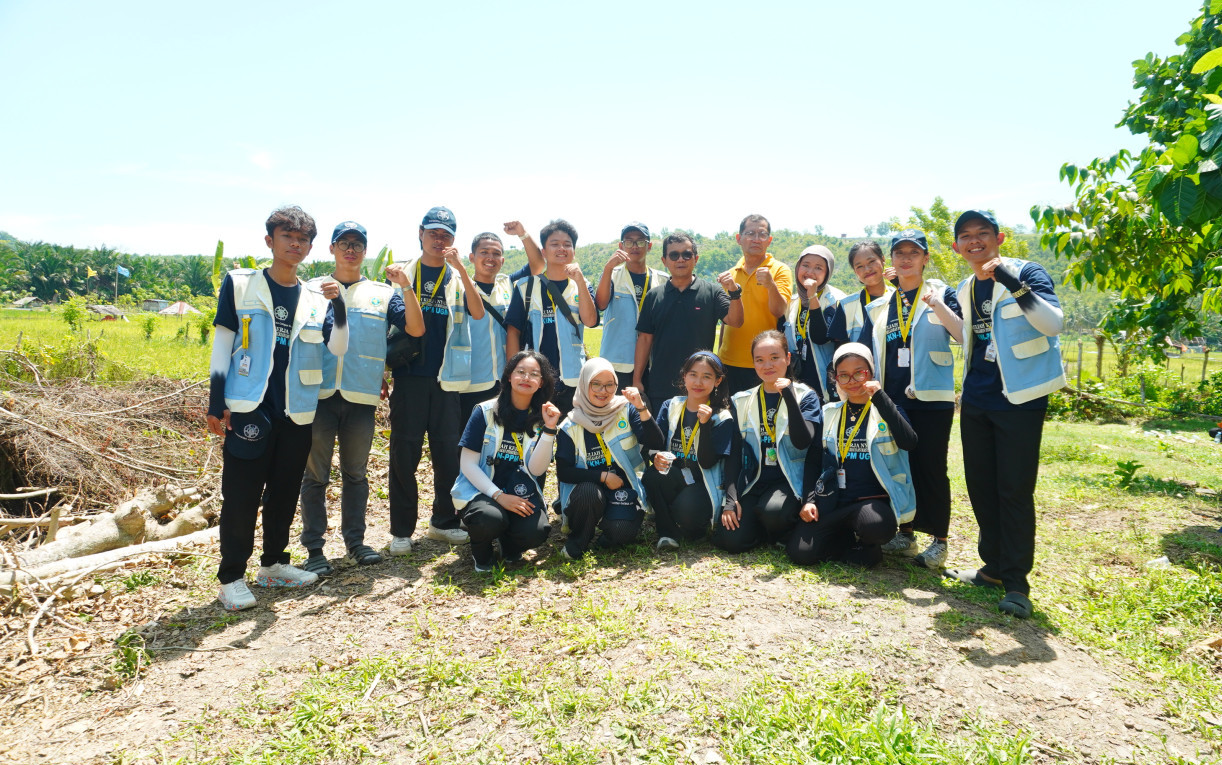
“Many village heads know professors, but for us, Professor Nizam is our first true professor friend. His willingness to work directly with farmers has left a lasting impression on our community because it is rare to find a professor who genuinely accompanies farmers throughout the process,” he remarked.
Looking ahead, the Limboro Village Government hopes that its partnership with UGM will continue beyond temporary projects and grow into a long-term collaboration through various community empowerment programs.
“I sincerely hope this partnership is not merely momentary but something we can continue to nurture together,” Kifli concluded.
Author: Zabrina Kumara
Editor: Gusti Grehenson
Post-editor: Jasmine Ferdian
Photo: UGM Bulava Donggala Community Service Team Documentation