


The Center for Human Health and Nutrition (PKGM) of the Faculty of Medicine, Public Health, and Nursing, Universitas Gadjah Mada (FK-KMK UGM) held food safety training for several campus canteen managers at the FK-KMK UGM Alumni Hall on Tuesday (October 27). This community service program aims to ensure campus canteens provide safe, high-quality food while supporting the health of the academic community throughout their on-campus activities.
Professor Fatwa Sari Tetra Dewi, Chair of UGM’s 2026 Health Promoting University (HPU) Team, emphasized the importance of providing food that is not only nutritious but also safe for the entire academic community to consume. According to Fatwa, proper canteen management should support the campus community’s health while ensuring the sustainability of canteen operators’ businesses.
“Through this training, food handlers are expected to gain the knowledge and skills needed to implement safe food preparation practices,” she said.
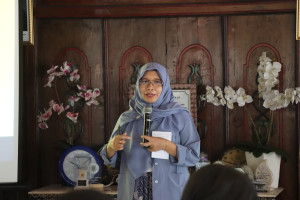
During a session introducing food safety principles, Farah Faza, a lecturer at UGM’s Department of Health Nutrition, explained that food that appears clean is not necessarily free from hazards that could threaten human health.
She explained that these hazards may involve biological, chemical, or physical contamination during food handling and preparation.
“Biological hazards, for example, can originate from bacteria such as Escherichia coli and Salmonella,” she said.
Meanwhile, chemical hazards may come from cleaning product residues, while physical hazards may include hair or other foreign objects that enter food.
“That is why food safety must be considered at every stage, from receiving and storing raw ingredients to serving food to consumers,” Farah said.
She added that, beyond identifying potential hazards, food handlers must also prevent cross-contamination by maintaining clean equipment and separating utensils used for raw ingredients from those used for ready-to-eat food.
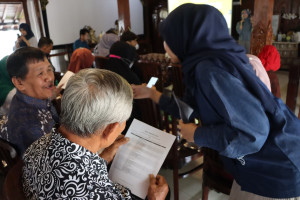
Speaking about personal hygiene and the use of personal protective equipment (PPE), Setyo Utami Wisnusanti, a lecturer in Health Nutrition at UGM, explained that canteen managers must maintain personal and work-clothing hygiene, wear head coverings, and wash their hands with soap and running water at appropriate times to ensure the cleanliness of the food they serve.
Food handlers should also avoid touching their faces or hair while working and talking directly over food. Santi further advised that workers experiencing symptoms of certain illnesses should refrain from handling food to prevent the risk of contamination.
“We must also avoid touching food or talking directly over it. In addition, we should not eat, drink, chew gum, or constantly handle our mobile phones while working,” she advised.
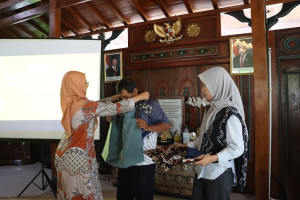
As part of the training, Fatwa symbolically helped participants put on aprons and other personal protective equipment (PPE). During the subsequent presentations, participants also completed questionnaires on food safety and food waste management.
Author/Photo: Agito Sitepu
Editor: Gusti Grehenson
Post-editor: Zabrina Kumara