


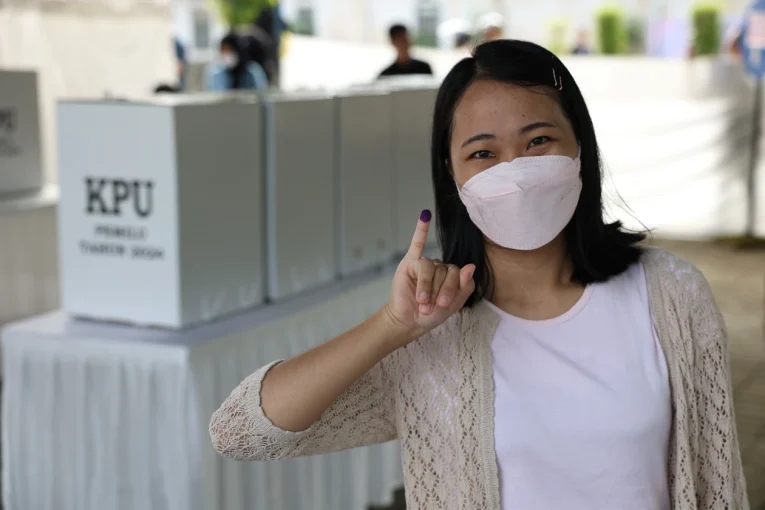
The ongoing deliberation of the Election Bill (RUU Pemilu) by Commission II of the House of Representatives (DPR) is unlikely to effectively ensure democratic elections unless accompanied by revisions to the Political Parties Law. Several election experts argue that political parties must be strengthened internally, as they serve as the primary pillars of democracy and political representation.
A lecturer from the Department of Politics and Government, Universitas Gadjah Mada (UGM), Alfath Bagus Panuntun El Nur Indonesia, explained that revising the law is indeed urgent. However, he emphasized that Indonesia’s electoral problems are not merely technical issues related to voting procedures or the choice between open- and closed-list systems.
Alfath explained that the 2024 election revealed far more fundamental issues, including concerns about the independence of election organizers, unprepared technology, a weakening of collaboration with civil society, and public perceptions of the strong influence of executive power over the electoral process. Therefore, in his view, revisions to the Election Law should be seen as momentum for improving the overall electoral ecosystem and rebuilding electoral integrity.
“The focus should not only be on producing new regulations, but also on ensuring that public trust in electoral democracy can be restored,” he said on Monday (Jun. 15).
Alfath explained that revising the Political Parties Law is important, but it is not the only solution. The creation of democratic elections must also be supported by a healthy electoral ecosystem. Referring to the post-2024 election evaluation, he noted that the problems are, in fact, much broader. There are issues in the selection process of election organizers, which have yet to consistently produce credible and professional figures.
Technological issues, such as the controversy surrounding SIREKAP, also illustrate these problems. In addition, partnerships between election organizers and civil society remain weak. During the 2024 election, concerns also emerged about the excessive dominance of presidential power across various stages of the electoral process.
“So, if revisions stop at reforming political parties alone, I believe we are only addressing a small part of the problem,” he explained.
According to Alfath, what is needed now is a comprehensive reform of the electoral ecosystem.
“In my view, the open proportional system was originally designed with good intentions, namely to give voters the right to directly choose the candidates they want, rather than leaving the decision entirely to political parties,” he said.
However, in practice, this system has also created several consequences. Competition occurs not only between parties but also among candidates within the same party. As a result, political costs become very high. Alfath explained that candidates are encouraged to build personal support bases using substantial resources. In such circumstances, elections can resemble a free market, where those with stronger economic capital naturally gain an advantage. Vote buying becomes difficult to eradicate because the incentives remain high. Therefore, evaluations of the open proportional system must be conducted seriously and based on evidence, rather than on ideological preferences alone.
For Alfath, however, the key question is not “open or closed” but which system can better connect representatives with voters, strengthen party institutionalization, and reduce vote-buying. This indicates that society must allow room to evaluate the current system, including the possibility of changing it.
Furthermore, Alfath explained that seat distribution in the DPR is based on population size. Therefore, regions with larger populations receive more seats than less populated regions. However, problems arise when seat allocation updates do not optimally reflect demographic changes. As a result, the value of one vote in one region may differ from that in another. Would allocating one seat per region be fairer? Not necessarily.
If every region receives the same number of seats regardless of population, new forms of inequality may emerge, as votes in smaller regions become more “valuable” than those in densely populated areas. Therefore, Alfath believes the challenge lies in balancing the principle of equal citizenship with the need to maintain territorial representation.
According to Alfath, the public must also pay attention to district magnitude, namely the number of seats contested in a single electoral district. Although this may seem technical, it greatly determines the quality of representation. If the number of seats is too small, representatives may indeed be closer to voters. However, the consequence is that smaller parties and minority groups, including women, become less likely to gain representation. Conversely, if the number of seats is too large, representation becomes more proportional, but competition among legislative candidates intensifies, political costs rise, and the relationship between representatives and constituents becomes weaker. Therefore, Alfath reaffirmed that the issue is not merely about equalizing seat allocation.
“What matters more is finding a balanced district size, one that is proportional enough to ensure representation while maintaining closeness and accountability between representatives and voters,” he stressed.
Alfath explained that five major agendas should be prioritized to ensure that elections in Indonesia function effectively. First, improving the recruitment process for election organizers to make it more professional, transparent, and less vulnerable to political compromise. He even suggested considering the decentralized selection of regional election organizers so that the burden is not overly centralized. Second, improving the governance of electoral technology.
He explained that technology must be tested gradually, audited regularly, and developed based on principles of transparency. The SIREKAP case demonstrates that innovation without adequate preparedness can instead erode public trust. Third, strengthening civil society.
Alfath believes a healthy democracy requires civil society organizations that are critical, independent, and given sufficient space to engage in voter education and election oversight. Fourth, strengthening fairness in political competition. This can be done through investigative audits of campaign financing, stricter regulation of state resource use, and consideration of a moratorium on the distribution of social assistance ahead of elections to prevent electoral advantages for incumbents.
In addition, another important step, according to Alfath, is limiting the concentration of presidential power in the electoral process. He emphasized that a healthy election requires independent referees and equal rules of the game. When state power becomes overly dominant in the arena of competition, electoral integrity will inevitably be called into question.
“So, if you ask what the key to ideal elections is, my answer is simple: it is not merely about changing regulations. What matters more is ensuring that all actors, such as political parties, election organizers, the government, civil society, and election participants, compete in the same arena under rules that are fair, transparent, and publicly legitimate,” he concluded.
Author: Fatihah Salwa Rasyid
Editor: Gusti Grehenson
Post-editor: Rajendra Arya