


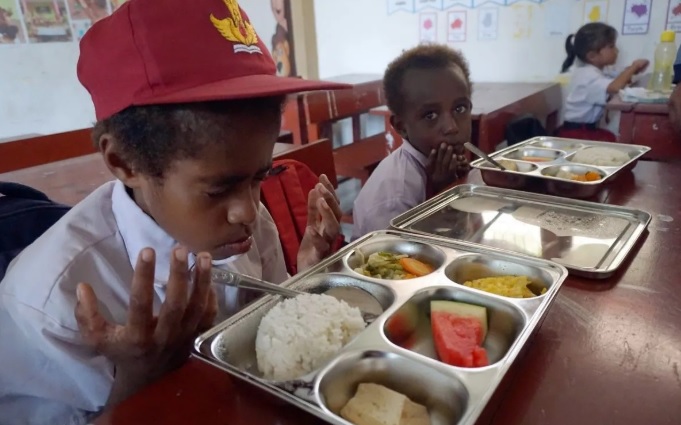
The government’s decision to refocus the Free Nutritious Meals (MBG) program is a step in the right direction. However, improvements should not stop at redefining the target beneficiaries. The program’s implementation design, food service governance, and evaluation system must also be strengthened to ensure it effectively addresses Indonesia’s stunting problem.
This was conveyed by Professor Sri Raharjo of the Faculty of Agricultural Technology at Universitas Gadjah Mada. According to him, from the outset, it is important to distinguish between a stunting intervention program and a school meal program. Stunting reduction initiatives had already been implemented long before the launch of MBG through various interventions targeting pregnant women, breastfeeding mothers, and young children.
“If the goal of MBG is to improve nutritional status and reduce stunting, everyone would agree that this is a worthwhile objective. The real question is how the program is designed and implemented,” he said on Monday (Jul. 7).
Professor Raharjo explained that the government had previously set a target to reduce national stunting prevalence to below 20 percent. Although the national rate has approached that target, several provinces still record significantly higher stunting rates, particularly in Eastern Indonesia, including Papua, Maluku, and East Nusa Tenggara.
However, in practice, the establishment of Nutritional Fulfillment Service Units (SPPG) has expanded more rapidly in relatively accessible areas than in regions with the highest stunting prevalence.
“If the objective is truly to reduce stunting, then nutritious meal service facilities should be prioritized in stunting hotspots. What is happening now is inconsistent with that objective,” he said.
Professor Raharjo believes the government moved too quickly in pursuing its first-year target of reaching all intended beneficiaries without ensuring that the necessary infrastructure and supporting resources were in place. In his view, SPPGs were built on a large scale before food safety standards, sanitation systems, human resources, and supply chains were adequately prepared.
As a result, various problems have emerged, ranging from food poisoning incidents to the government’s subsequent revisions of the operational standards for MBG kitchens.
“The initial target was overly ambitious. Only after numerous food poisoning cases occurred did the government begin making improvements. Preparations should have been completed before implementing the program on such a large scale,” he explained. He also highlighted the impact of MBG budget allocations on other existing programs within ministries and government agencies.
According to Professor Raharjo, another issue lies in the implementation mechanism, which relies on establishing new kitchens through foundations and private investors. He argued that this model encourages SPPGs to be built in areas with adequate infrastructure, reliable food supplies, and sufficient human resources. Meanwhile, underdeveloped regions that are actually stunting hotspots face significant limitations, making them less attractive to investors.
“If the mechanism is investment-driven, investors will naturally choose locations with easy access to food supplies, electricity, and skilled workers. As a result, the areas that need the program most are left behind,” he said.
He suggested that the government consider using existing school facilities, particularly those with well-functioning kitchens and cafeterias. Instead of constructing new kitchens, the government could optimize existing educational infrastructure through coordination with the Ministry of Primary and Secondary Education and local governments.
Beyond governance, Professor Raharjo also believes that food safety has not received sufficient attention in the implementation of MBG. He explained that SPPGs have primarily involved nutritionists whose expertise focuses on meeting nutritional requirements. However, large-scale food production also requires food technologists with expertise in food safety.
“The issue is not only whether the meals are nutritious but also whether they are safe to eat. That is the primary expertise of food technology,” he said.
He emphasized that every stage of the process, from procuring raw materials and storage to food preparation and distribution, must comply with food safety principles. Producing thousands of meal packages each day carries significant risks if cooking procedures are not properly followed.
He cited food poisoning cases that were suspected to have originated from chicken-based side dishes. According to him, such incidents may occur when meals are prepared too hastily, preventing harmful bacteria from being completely eliminated during cooking.
Professor Raharjo also argued that views rejecting all ultra-processed foods (UPFs) in the MBG program should be considered more proportionately. In his opinion, not all processed foods are of poor quality. Certain processed food products can help ensure food safety while also facilitating the distribution of nutritious meals.
To improve the effectiveness of MBG, Professor Raharjo proposed three key priorities for the refocusing policy. First, the government should concentrate assistance on those who genuinely require nutritional intervention, particularly students with poor nutritional status and communities in areas with high stunting prevalence.
Second, the government should reassess the food provision mechanism, particularly in Indonesia’s frontier, outermost, and disadvantaged (3T) regions. If an investment-based kitchen model is not feasible, then the government should assume full responsibility for providing the necessary facilities.
Third, the success of MBG should be measured by improvements in beneficiaries’ nutritional status, as evidenced by baseline data collection and regular evaluations, rather than simply by the number of meals distributed.
“If the goal of this program is to improve nutritional status, then its success must be measured by changes in the nutritional status of its beneficiaries. There must be baseline data, followed by another assessment after one year. That is the indicator of success,” he emphasized.
Professor Raharjo believes that the government’s decision to refocus the program is appropriate. However, he stressed that such evaluation should have been incorporated into the planning process from the beginning so that MBG could be implemented more effectively and efficiently while delivering a meaningful impact on reducing stunting in Indonesia.
Author: Jelita Agustine
Editor: Gusti Grehenson
Post-Editor: Zabrina Kumara
Photo: Antara