


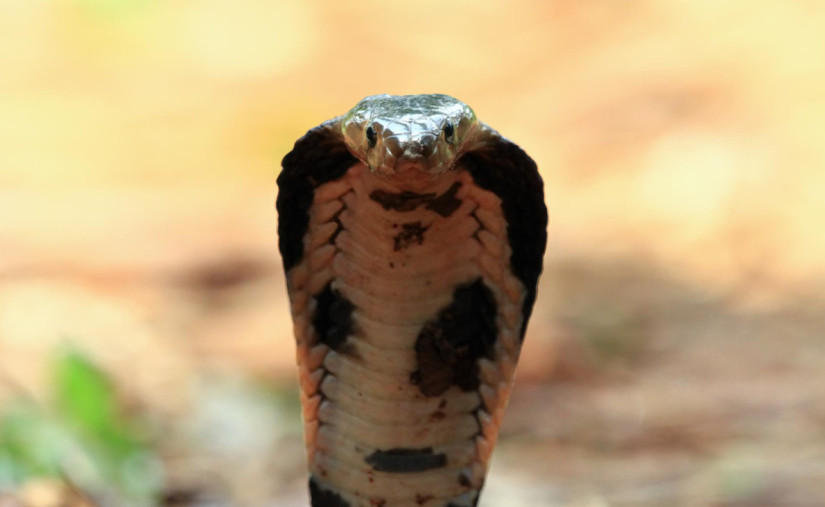
The Indonesian Toxinology Society reported that snakebite cases remain a serious issue in Indonesia. In 2024, Indonesia recorded 9,878 snakebite cases, including 54 deaths from venomous snakebites. Even by October 2025, there had already been 8,721 snakebite cases, resulting in 25 deaths. Treatment of snakebite victims remains hindered by limited antivenom supplies for various venomous snake species.
In fact, around 10 percent of the world’s venomous snake species are found in Indonesia. However, Indonesia currently provides antivenom serum for only three snake species: the Javan spitting cobra, Malayan banded wolf snake, and Malayan krait. The country still relies entirely on imports for these antivenoms, with Australia serving as the primary supplier.
A biology lecturer at Universitas Gadjah Mada and wildlife observer, Donan Satria Yudha, acknowledged that Indonesia has yet to develop snake antivenom serum on a large scale due to limited government support, particularly from the Ministry of Health, for antivenom research and production.
“The reason we still import is that we do not yet have sufficient state support to independently produce our own antivenom,” he explained on Thursday (Jun. 7).
Donan explained that antivenom serum could actually be produced domestically using local resources. However, several challenges remain, including financial constraints, limited research and development facilities for antivenom production, and difficulties in obtaining live venomous snake samples for venom extraction.
“We have the capability, but the issue lies in the lack of government support, especially funding for research and development,” he said.
Although snake antivenom can theoretically be developed as a universal antivenom, such research has not yet been further developed in Indonesia. Even conventional antivenom research and development still lack adequate support, let alone the development of a “universal” antivenom. In addition to the high costs of research and development, conventional snake antivenom has only begun to develop globally in recent years.
He explained that universal snake antivenom also requires specialized expertise and scientific knowledge. Moreover, Indonesia still has very few snake venom experts.
“In principle, antivenom for three different snake species could potentially be combined into a single antivenom,” he said.
Beyond financial issues, another challenge in producing snake antivenom serum is the large number of Indonesia’s endemic venomous snake species, which are distributed across islands such as West and East Nusa Tenggara, Maluku, and Papua. The country’s vast archipelagic geography makes it difficult to obtain sufficient live venomous snake samples for venom extraction, particularly in remote and hard-to-reach areas.
In addition, variations in venom characteristics among snake species and geographic isolation also pose challenges for researchers. Furthermore, snake farm facilities in Indonesia have yet to meet proper standards for maintenance, animal welfare, venom extraction processes, and storage systems.
“There must be standardized maintenance practices. Snakes should not merely be kept but also managed with proper animal welfare standards,” he explained.
Donan suggested that efforts to reduce Indonesia’s dependence on imported antivenom should begin with a comprehensive inventory and identification of venomous snake species in Indonesia, followed by venom characterization research on all species, especially endemic snakes.
Further support from the government could include research incentives for research and educational institutions. Such support should target institutions that already have the capability to develop antivenom, particularly for local and endemic snake species.
In addition, stronger coordination and support among government institutions such as the Ministry of Health, the National Agency of Drug and Food Control (BPOM), Bio Farma, National Research and Innovation Agency (BRIN), and universities are needed to strengthen collaboration in antivenom research, production, and distribution.
“Another effort that can be undertaken is establishing standardized snake farms in regions with high venomous snake diversity,” he concluded.
Author: Fatihah Salwa Rasyid
Editor: Gusti Grehenson
Post-editor: Zabrina Kumara
Photo: Magnific