


A total of 17 children from Wukirsari Village, Imogiri, Bantul, participated in a mass circumcision program organized by the community service team of the Faculty of Medicine, Public Health, and Nursing, Universitas Gadjah Mada (FK-KMK UGM), as part of its Social Service and Sacrificial Animal Slaughter Program held on Friday (May 29). In addition to the mass circumcision program, the FK-KMK UGM team also distributed sacrificial animals and provided free health screenings in Girimulyo, Kulon Progo, and Playen, Gunungkidul.
The coordinator of the FK-KMK UGM Community Service Team, Dr. Supriyati, explained that the social service activities and sacrificial animal distribution are annual programs conducted by FK-KMK UGM as part of its commitment to strengthening social care and community engagement values. This year, FK-KMK UGM distributed three cows and two goats across three regencies: Bantul, Kulon Progo, and Gunungkidul.
“The sacrificial donors include not only lecturers and educational staff but also students, residents, and alumni as part of our community service efforts,” said Dr. Supriyati.
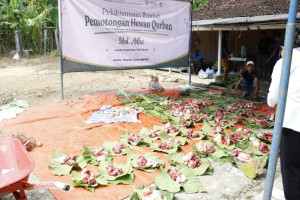
Dr. Supriyati noted that, in addition to sacrificial animal slaughter, the program also included educational and health outreach activities tailored to the specific needs of each community. In Bantul Regency, at Sanggar Among Budoyo, Kampung Pramuka, Wukirsari, Imogiri, FK-KMK UGM collaborated with the Social Welfare Institution Sahabat Pemerhati Difabel (LKS SAPADIFA). The faculty distributed one cow and one goat.
“The educational activities ranged from reproductive health screening, ultrasound examinations, and urology services to dental and oral health checkups. We also organized a mass circumcision program attended by 17 participants,” she said.
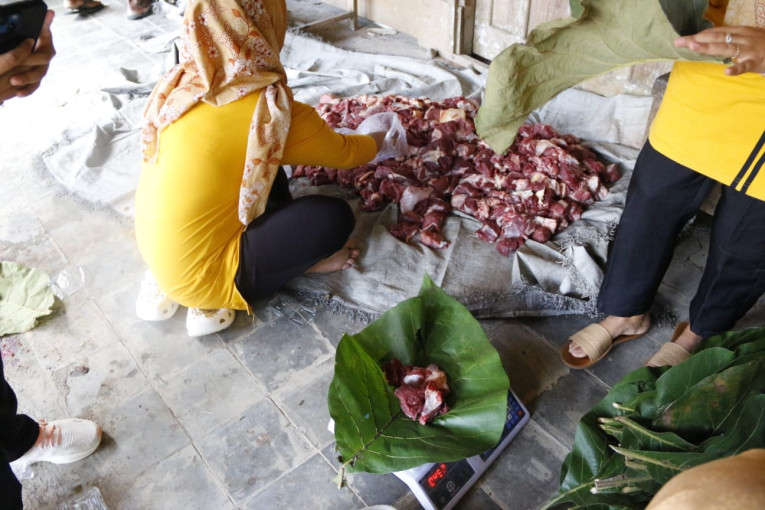
In Kulon Progo Regency, at Al Mu’minun Prayer Hall in Patihombo, Girimulyo, the team distributed one cow and provided education and outreach on children’s mental health and nutrition to students at the local Quranic learning center (TPA). Residents were also encouraged to use teak leaves as environmentally friendly packaging for sacrificial meat.
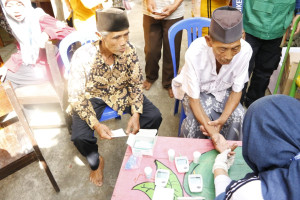
A similar initiative was carried out in Gunungkidul, where teak leaves were likewise used to package sacrificial meat. At PS Lentera Keluarga in Getas, Playen, Gunungkidul, FK-KMK UGM distributed one cow and one goat. Educational activities in the area included health screenings for local older adults, covering cholesterol, blood sugar, and uric acid levels.
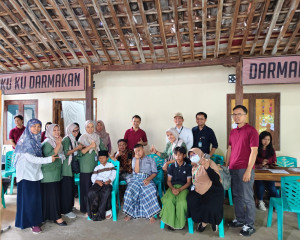
Through the Eid al-Adha observance, Dr. Supriyati hopes the program will help cultivate compassion and solidarity by sharing both happiness and knowledge among FK-KMK UGM lecturers and students.
“This initiative promotes proper hygiene in sacrificial meat distribution while remaining environmentally friendly through the use of teak leaves and woven bamboo baskets as packaging. This aligns with UGM’s mission as a healthy campus that positively impacts surrounding communities,” she said.
The chair of the organizing committee, Dr. Ibrahim Rahmat, also expressed hope that the program would bring joy to the community and strengthen inclusivity through collaboration.
“We hope this sacrificial program brings happiness and emotional well-being to people with disabilities who participated in this event,” he said.
Author: Jesi
Editor: Gusti Grehenson
Post-editor: Rajendra Arya
Photo: Documentation of Supriyati and FK-KMK UGM