


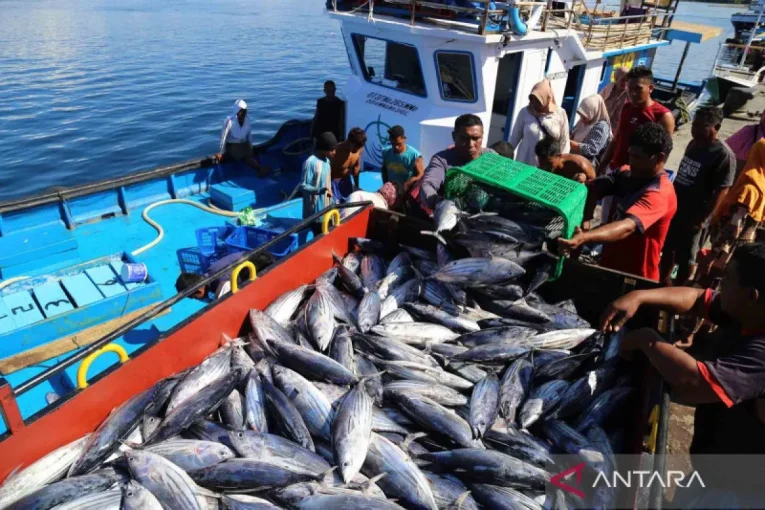
The Indonesian Government issued Presidential Regulation No. 25 of 2026 on May 1, 2026, ratifying the International Labor Organization (ILO) Convention No. 188 on Work in Fishing. The regulation is considered an important step for Indonesia in strengthening protections for workers in the fisheries sector. Fishery crew members continue to face vulnerabilities, including exploitation, excessive working hours, and limited access to legal protection.
As a maritime nation with a large fisheries workforce, Indonesia faces the challenge of ensuring that decent labor standards are effectively implemented in practice. The ratification also marks Indonesia’s commitment to aligning labor governance in the fisheries sector with international standards. However, policy implementation remains the greatest challenge following the ratification process.
A labor law lecturer at the Faculty of Law UGM (FH UGM), Nabiyla Risfa Izzati, emphasized that workers in the fisheries sector have not yet been fully protected under Indonesia’s national labor laws. Fishery workers, particularly crew members, work under maritime employment agreements that are regulated differently from workers in general. This condition has left some fisheries workers outside the scope of the normative protections stipulated in labor legislation.
“This situation creates space that is vulnerable to labor rights violations and exploitative practices. Workers in the fisheries sector cannot be fully protected under the Labor Law,” she said on Thursday (May 7).
Nabiyla explained that maritime employment agreements have largely been regulated under the Indonesian Commercial Code (KUHD). As a result, protections for fishery workers often fall within a legal framework separate from the general labor mechanism.
According to Nabiyla, this condition has created a regulatory dualism in practice, often causing confusion when workers’ rights are violated. The Ministry of Manpower is also unable to fully intervene in addressing exploitation cases in this sector.
“The issue falls not under the Labor Law but under the Commercial Code,” said Nabiyla.

She also explained that through the ratification of ILO Convention 188, Indonesia now has an opportunity to strengthen the legal framework protecting maritime workers. The convention contains various labor protection standards, ranging from occupational safety and decent working conditions to guarantees of workers’ rights protection on board fishing vessels. The presence of this international instrument can also serve as an additional legal basis for closing protection gaps not yet addressed in national regulations.
Therefore, the ratification is not merely symbolic but may serve as an entry point for reforming labor governance in the fisheries sector.
“The protections provided under ILO Convention 188 can serve as a legal umbrella for the protection of maritime workers in Indonesia,” she explained.
Nevertheless, implementation challenges remain a major issue in law enforcement within the fisheries sector. Unlike land-based workplaces, the working environment of fishery crew members is at sea and often difficult to reach through conventional monitoring mechanisms. This situation makes labor violations more difficult to detect, especially when workers have weak bargaining positions against companies or vessel owners. Closed working conditions also discourage many workers from reporting rights violations.
“Workplaces that are difficult to access make supervision challenging,” she added.
According to Nabiyla, labor inspection is an essential element that cannot be separated from law enforcement efforts. The unequal power relations between workers and employers often place fishery workers in vulnerable positions. In many cases, workers struggle to file reports because they fear losing their jobs or facing pressure while working aboard vessels. Therefore, robust labor inspection is considered crucial to ensuring that workers’ rights remain protected.
“The presence of robust labor inspection will support law enforcement and case handling in labor-related sectors,” Nabiyla explained.

Furthermore, the ratification of ILO Convention 188 is considered significant for protecting Indonesian workers employed on foreign vessels. By ratifying the convention, Indonesia not only demonstrates a moral commitment to worker protection but also assumes formal legal responsibility to ensure that protection standards are implemented. This is important considering that many Indonesian fishery crew members work across borders and face increasingly complex risks of exploitation.
Nabiyla stressed that the international standards adopted through ILO Convention 188 could serve as a reference in strengthening Indonesia’s position when handling cases involving migrant workers in the fisheries sector.
“Indonesia has a greater responsibility to address these issues using the standards established by ILO Convention 188,” she said.
On the other hand, Nabiyla believes that ratification alone is insufficient without concrete technical measures. The government needs to formulate additional operational implementing regulations to ensure that the principles of ILO Convention 188 are effectively enforced.
In addition, implementing the convention requires coordination among ministries and institutions responsible for fisheries and labor affairs. According to her, the protection of fishery workers cannot be placed solely on a single institution.
“There must be concrete collaborative efforts among relevant institutions dealing with issues concerning workers in the fisheries sector,” she concluded.
Author: Triya Andriyani
Post-editor: Zabrina Kumara
Photo: Donnie and Antara Documentation