


Indonesia is recognized as the world’s largest nickel producer, supplying more than half of the global market. However, despite the government’s push to develop downstream nickel industries, regions that produce nickel have yet to enjoy the economic benefits generated by the sector. Instead, locals continue to bear the social and environmental costs amid rapid economic growth in their regions, particularly in nickel-rich provinces such as North Maluku and Central Sulawesi.
Head of the Department of Politics and Government at Fisipol UGM, Dr. Ari Dwipayana, said many regional leaders have expressed concern that although their regions generate trillions of rupiah from natural resources, their fiscal capacity remains limited.
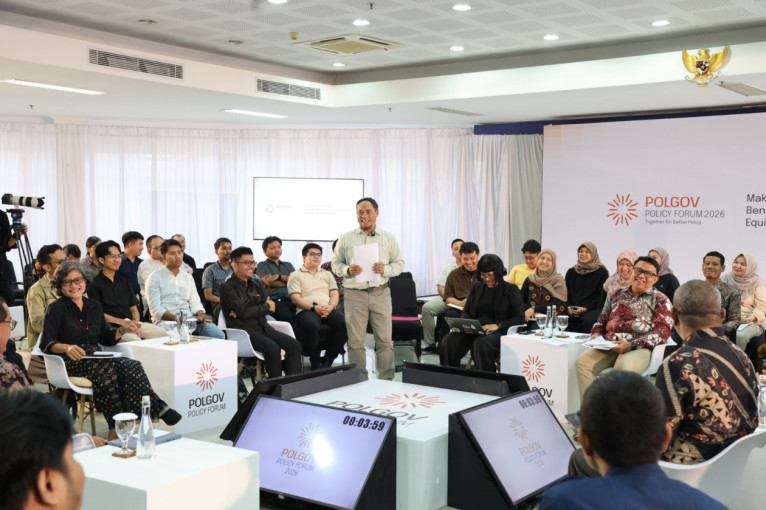
“They bear the social, environmental, and infrastructure impacts resulting from mining activities. Yet the fiscal space available to address these impacts is often far from adequate,” said Ari during the POLGOV Policy Forum titled “Adil Berbagi: Memastikan Pembagian Manfaat Mineral Kritis yang Berpihak pada Komunitas Lokal dan Berkelanjutan” (Fair Sharing: Ensuring Equitable and Sustainable Distribution of Critical Mineral Benefits for Local Communities), held at the Convention Hall, Fisipol UGM on Wednesday (Jun. 24).
UGM political science lecturer Dr. Hasrul Hanif said many resource-rich regions in Indonesia exemplify the paradox of plenty, where abundant natural resources coexist with rising poverty rates.
“As of 2025, Indonesia has 75 smelters. At the same time, provinces rich in nickel resources, such as North Maluku, Central Sulawesi, and Southeast Sulawesi, have recorded extraordinary economic growth, something rarely seen in provinces outside Java,” he said.
Climate and Energy Manager at Greenpeace Indonesia, Iqbal Damanik, revealed a striking fact about Indonesia’s nickel industry. He noted that less than one percent of the country’s total nickel production is actually used for the energy transition, such as manufacturing electric vehicles.
“So where is this industry really heading?” Iqbal asked.
Based on these findings, Iqbal argued that Indonesia’s nickel downstream policy was not originally designed to improve the welfare of local communities. Instead, the greatest benefits have accrued to importing countries that have rapidly expanded their electric vehicle industries and energy transition initiatives, using raw materials sourced from Indonesia.
Gender Studies and Anthropology lecturer at the University of Indonesia (UI), Mia Siscawati, Ph.D., identified shortcomings in the design of policies for mining sector development and community development. The central government needs to listen to and recognize the rights of Indigenous peoples and local communities living in mining areas.
Professor of Economics at Tadulako University, Professor Moh. Ahlis Djirimu, described the direct environmental and public health impacts of smelter operations in Central Sulawesi. Environmentally, smelters use seawater for cooling before discharging it back into the ocean. The resulting temperature changes damage coral reef ecosystems.
“As a result, marine biodiversity is disrupted, forcing local fishers to travel much farther, up to 20 nautical miles, to secure their catch,” he said.
Beyond environmental degradation, the industry has also contributed to a serious public health crisis. Professor Ahlis Djirimu noted that thousands of cases of Acute Respiratory Infection (ARI) have been reported in the region. The economic consequences are also significant.
“Each case of ARI among people of productive age is estimated to result in losses of between US$338 and US$368, amounting to around Rp118 trillion in total,” he said.
Head of the Regional Development Planning Agency (Bappeda) of Central Halmahera, Husain Ali, explained that high but unequal economic growth is largely driven by the limited institutional capacity of local governments.
“If local government institutions have the capacity to manage these resources effectively and have a clear direction focused on distributing benefits for public welfare, then it is achievable. This is what we call the benefit-sharing model for nickel downstream industries,” he said.
He further explained that the model is built on three key strategies. The first is investment in human capital. The second is providing social protection for vulnerable groups. The third is ensuring inclusive prosperity that benefits all members of society.
Director of Energy, Mineral Resources, and Mining at the National Development Planning Agency (Bappenas), Togu Pardede, emphasized that the quality of human resources is the key factor behind the economic paradox. According to him, strong economic growth will have little impact if local communities are not actively involved.
“As long as local human resources are unable to participate in and support the process of economic development, people will continue to live in poverty,” Togu said.
Author/Photo: M. Aidil Syahputra
Editor: Gusti Grehenson
Post-editor: Jasmine Ferdian