


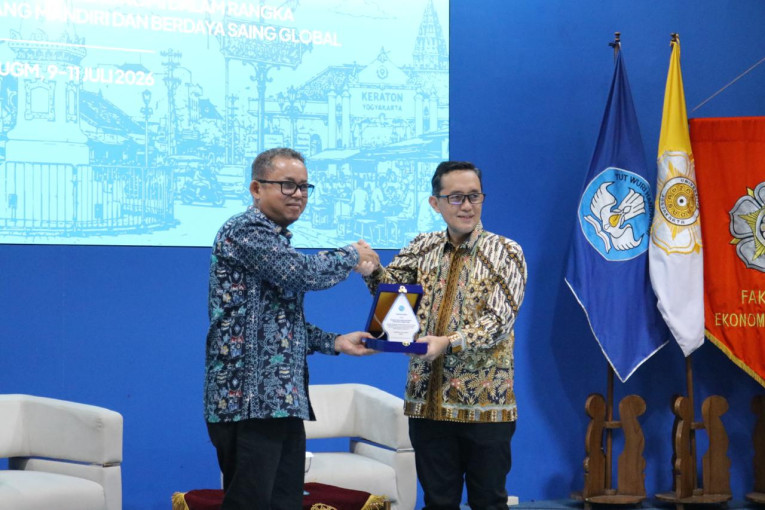
Economics programs at universities across Indonesia continue to refine their curricula to improve the quality of education and teaching. However, the development of competency-based curricula often poses challenges for study program administrators, and an increasing tendency toward over-formalization has led students to learn mathematical models without fully understanding institutional realities.
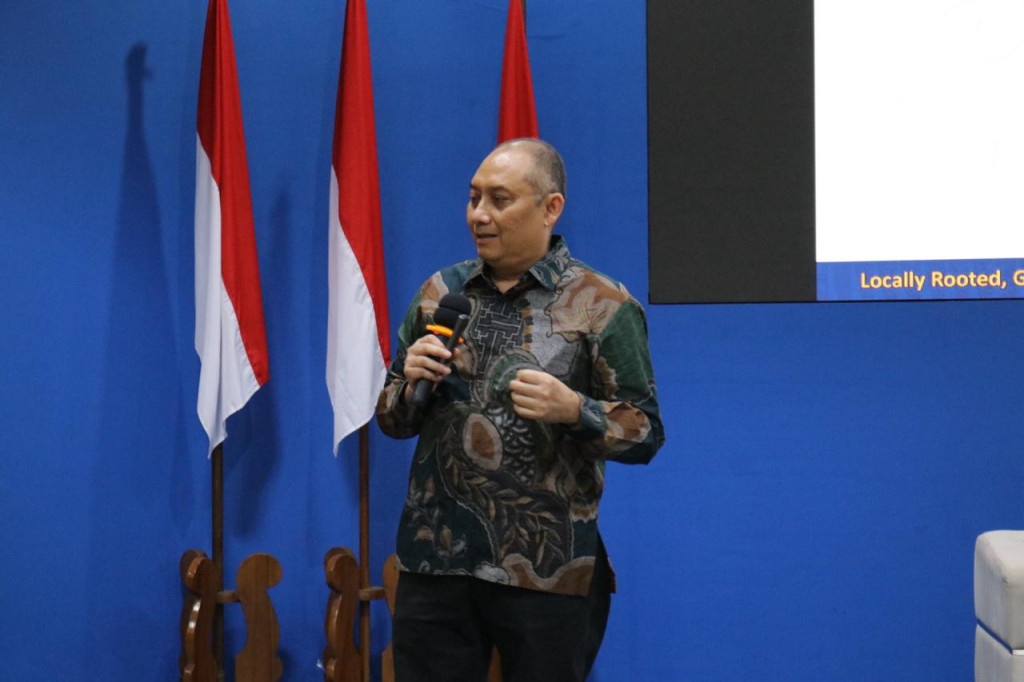
“The problem is that study programs find it difficult to formulate their curricula and teaching methods because graduate profiles are defined based on the jobs alumni hold. In reality, study programs do not offer jobs; they offer competencies,” said Professor Bernardinus Maria Purwanto of the Faculty of Economics and Business at Universitas Gadjah Mada (FEB UGM) during the 11th APSEPI National Seminar and Annual Meeting, themed “Membangun Program Studi Ekonomi dalam Menghasilkan Lulusan yang Mandiri dan Berdaya Saing Global,” held at FEB UGM on Thursday (Sept. 7).
According to Professor Purwanto, higher education curricula in Indonesia still rely heavily on tracer studies to measure learning outcomes. He argued that tracer studies are an indirect assessment method conducted only after students have graduated, making them both delayed and limited as a measure of educational outcomes. In addition, tracer study results are often overly optimistic because they are completed primarily by successful alumni, preventing study programs from obtaining an accurate and representative picture of graduates’ competencies.
Professor Purwanto suggested that competency assessments should instead be conducted before students graduate. He also argued that students’ cumulative grade point averages (GPAs) do not necessarily provide a valid measure of their competencies and academic quality.
“Study programs should develop an additional competency assessment system that is separate from the GPA. The results then should be used as an internal quality assurance tool to improve the study program, rather than as a basis for determining student graduation,” he explained.
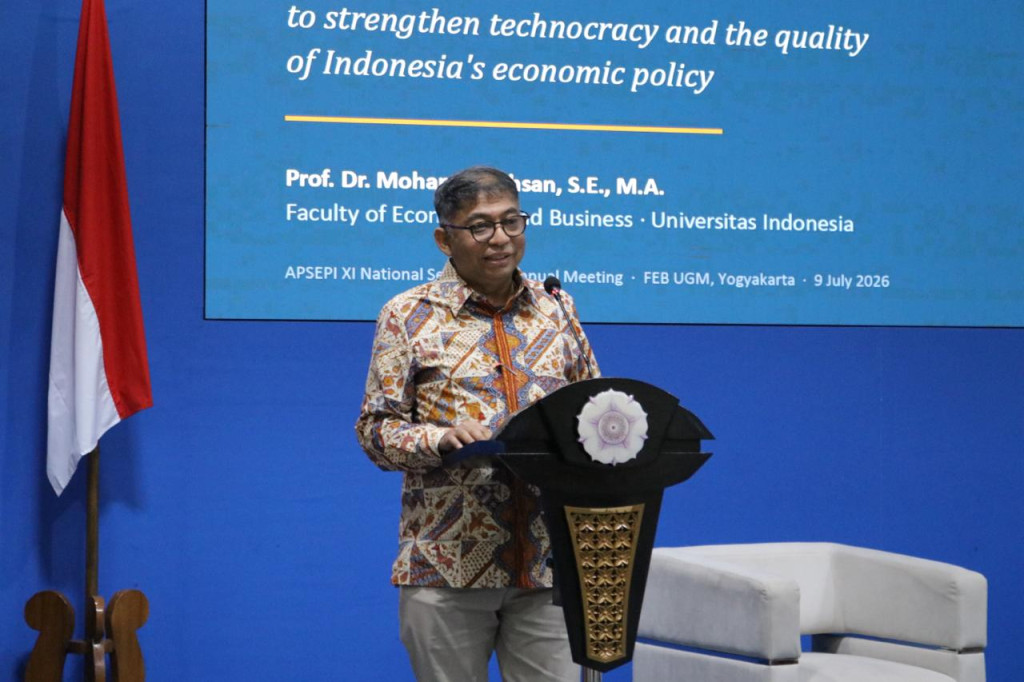
The quality of higher education, particularly economics programs, directly influences public policymaking. Professor Mohamad Ikhsan of the Faculty of Economics and Business at Universitas Indonesia explained that the quality of a nation’s long-term economic policies can never exceed the quality of the economic thinking taught in university classrooms. He described economics education as a form of soft infrastructure whose impact may only become evident 10 to 20 years later. Nevertheless, he observed that economics education in Indonesia remains focused on quantity rather than quality.
“We are caught between expanding numbers and improving quality. Therefore, we need to shift our focus from quantity to quality,” he said.
Dean of FEB UGM, Professor Didi Achjari, explained that universities continue to face financial constraints because state budget allocations remain limited, requiring higher education institutions to become increasingly self-reliant in financing their operations. At the same time, universities must also respond to the rapid impacts of geopolitical shifts and technological disruptions, including artificial intelligence (AI) agents that are beginning to replace human labor.
According to Professor Didi, economics study programs must go beyond teaching theory by cultivating graduates who are critical, adaptable, innovative, and ethical, and capable of developing solutions to complex economic and social challenges.
“At FEB UGM, we believe that today’s higher education challenges cannot be addressed individually. We need strong networks, productive thinking, and a spirit of collaboration in academia,” he emphasized.
Author/Photo: Fatihah Salwa Rasyid
Editor: Gusti Grehenson
Post-Editor: Priyanandaningrat