


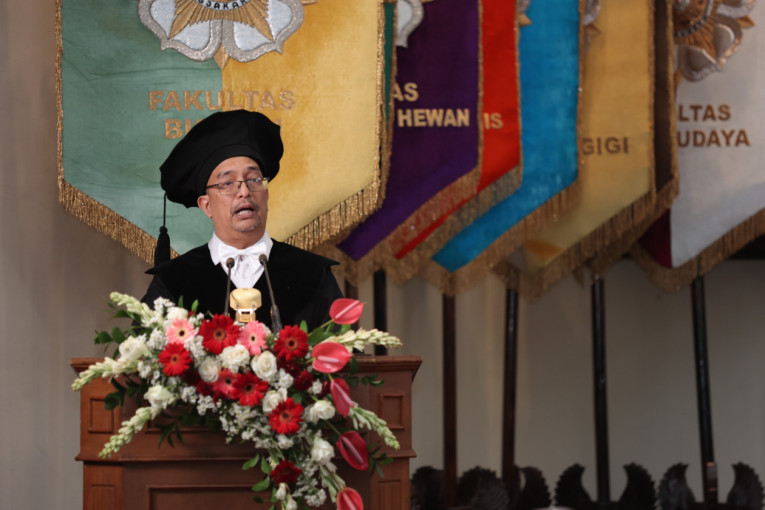
Professor Hendry T.S.S.G. Saragih, a lecturer in Biology at UGM, was inaugurated as a professor in Animal Developmental Structure at UGM’s Senate Hall on Thursday (Jul. 2). During the inauguration ceremony, Professor Saragih delivered a professorial address titled “Peran Ilmu Struktur Perkembangan Ayam di Bidang Biomedis dan Industri Perunggasan” (The Role of Chicken Developmental Structure Science in Biomedicine and the Poultry Industry).
Professor Saragih said that Indonesia possesses abundant, strategically valuable local chicken genetic resources. However, the productivity of indigenous chicken breeds continues to face several challenges, including relatively slow growth rates, lower reproductive performance, and farming systems that remain largely dependent on traditional management practices.
According to Professor Saragih, the field of animal developmental biology examines the growth process of chickens from fertilization through adulthood. The discipline encompasses cell division, differentiation, morphogenesis, growth, and organogenesis. Disruptions at any stage of development can affect the formation of body structures and functions.
“Moreover, this field is closely related to understanding embryonic development, which forms the basis for studying diseases and congenital abnormalities in animals,” he said.
Professor Saragih explained that chicken embryos during the early stages of development offer a solution to ethical challenges in modern biomedical research. At this stage, chicken embryos are not yet considered organisms with full sentience and are therefore generally regarded as raising fewer ethical concerns than adult vertebrates.
“The use of chicken embryos is highly consistent with the principles of the 3Rs, Replacement, Reduction, and Refinement,” he said.
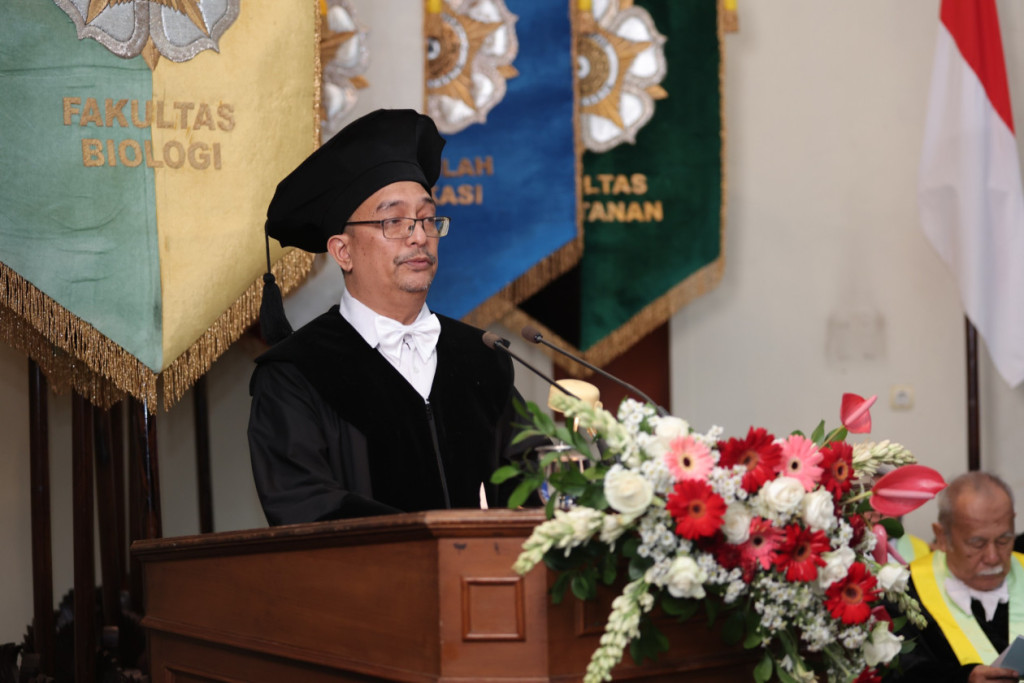
During his address, Professor Saragih also emphasized the importance of the Chick Embryotoxicity Screening Test (CHEST) and developmental toxicology studies. Chicken embryos serve as effective early indicators of the embryotoxic and teratogenic effects of pharmacological compounds, cosmetic ingredients, preservatives, and environmental contaminants before testing in humans proceeds.
In biomedical pharmacology research, Professor Saragih noted that chicken embryos have long served as an important model organism in developmental biology. They share strong genetic mechanisms and genome sequence similarities with other vertebrates, including humans. One of the major operational advantages of chicken embryos is their ease of manipulation during incubation, which allows researchers to open the eggshell and directly observe organogenesis.
“Researchers can isolate the direct pharmacological effects on the nervous system, cardiovascular system, and other tissues within a relatively short period,” he said.
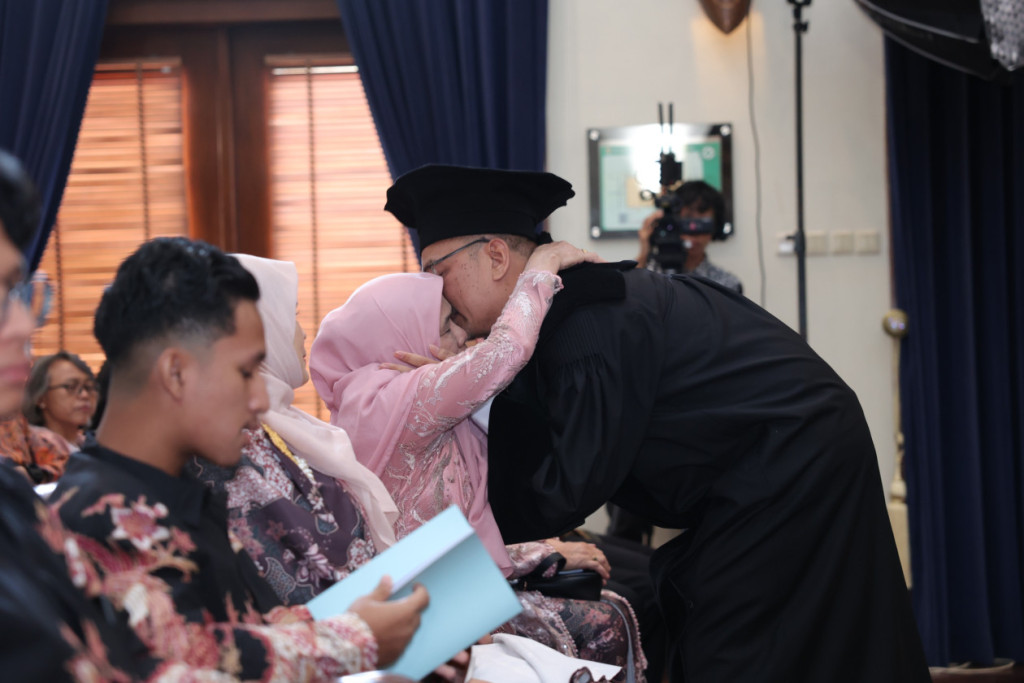
Beyond genetic factors, Professor Saragih emphasized that nutrition is a key determinant of successful chicken growth. Natural materials derived from terrestrial resources have significant potential as sources of nutrients and bioactive compounds. In addition, various aquatic organisms also show great promise as poultry feed additives, including macroalgae, green algae, and byproducts of the fisheries industry.
“These resources contain proteins, minerals, fatty acids, and various compounds that support respiratory development and muscle tissue growth,” he explained.
According to Professor Saragih, utilizing aquatic resources not only improves growth performance but also provides more sustainable and economically valuable alternatives for poultry feed. Improvements in small intestinal morphology, enhanced muscle development, and optimized organ function demonstrate that nutritional interventions act through biological mechanisms observable histologically and anatomically.
Professor Saragih further noted that his research contributes not only to advancing fundamental knowledge of developmental biology but also to generating innovations for the modern poultry industry. Through this research, it is possible to build poultry production systems that are more productive, efficient, and sustainable while preserving Indonesia’s poultry genetic resources.
“In this way, animal developmental structure science is expected to continue making meaningful contributions to strengthening the national poultry industry while supporting future food security,” he said.
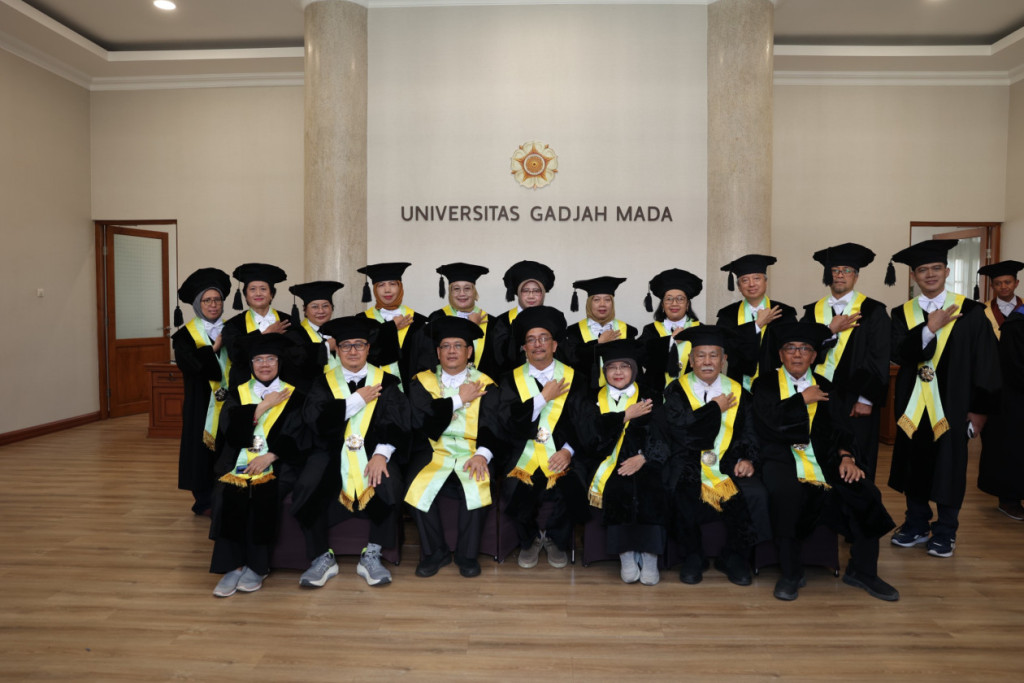
Chair of the UGM Professorial Council, Professor M. Baiquni, stated that Professor Saragih is one of UGM’s 545 active professors and one of UGM’s 16 active professors in Biology, out of the 30 professors the faculty has had throughout its history.
Author: Hanifah
Editor: Gusti Grehenson
Post-editor: Jasmine Ferdian
Photo: Firsto