


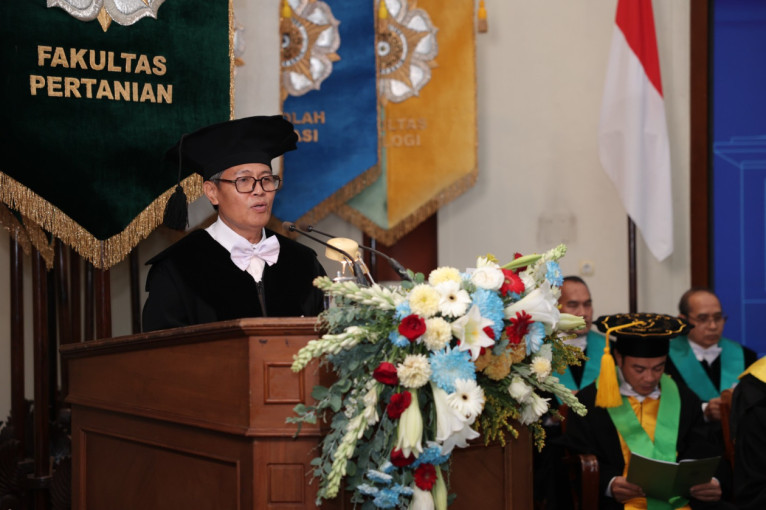
Eko Setyabudi, a lecturer from the Department of Fisheries, Faculty of Agriculture, Universitas Gadjah Mada (Agriculture UGM), was officially inaugurated as a professor in Fisheries and Marine Biology on Thursday (June 25) at the UGM Senate Hall. During the inauguration ceremony, he delivered a speech titled “Biologi Perikanan: Konsep dan Penerapan dalam Pengelolaan Sumber Daya Perikanan” (Fisheries Biology: Concepts and Applications in Fisheries Resource Management for Sustainable Development), highlighting the importance of science-based approaches in modern fisheries resource management to ensure the sustainability of fish stocks, maintain the stability of aquatic ecosystems, and prevent overexploitation.
“Fisheries biology data should serve as one of the fundamental components in decision-making for fisheries resource management. Without adequate data, management efforts risk miscalculations in stock assessments that may lead to overexploitation, suboptimal utilization, and disruptions to the stability of aquatic ecosystems,” he explained.
Professor Eko stated that fisheries biology is a key foundation for developing rational and sustainable marine management policies. According to him, the discipline provides essential information on fish growth patterns, spawning seasons, fecundity, migration routes, mortality rates, feeding habits, and the availability of wild fish stocks. These scientific data, he argued, should form the basis for government regulations on sustainable catch limits.
“Fisheries management is no longer focused solely on the volume of catches but also considers the regenerative capacity of fish resources and the balance of aquatic ecosystems,” he added.
Although fisheries biology data can serve as a foundation for fisheries resource management, significant challenges and limitations remain in both data collection and implementation. To address these issues, Professor Eko proposed several measures, including the continuous collection of detailed fisheries biological data, modernization of field methods through digital technologies, and stronger involvement of universities as data providers, particularly in fisheries and marine sciences. These efforts, he said, should be integrated into a transparent national data portal.
“Every policy issued by the government in the marine sector must be based on the best available scientific evidence,” he said.
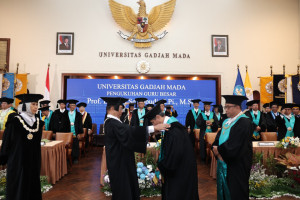
Professor Eko also emphasized the importance of fisheries biology in maintaining the availability and management of fish resources to support sustainable development goals and promote healthy and prosperous lives through improved nutrition, better public health, and stunting prevention. He noted that the rapid growth of the global population since the mid-twentieth century must be matched by adequate protein and nutritional sources for communities.
“One of the most reliable food sources for meeting society’s protein and nutritional needs is fishery resources,” he explained.
Professor Wahyudi Kumorotomo, Secretary of the UGM Board of Professors, noted that Professor Eko Setyabudi is one of UGM’s 544 active professors and one of the 30 active professors currently serving in the Agriculture UGM, which has produced a total of 64 professors throughout its history.
Author: M. Aidil Syahputra
Editor: Gusti Grehenson
Post-editor: Zabrina Kumara
Photo: Firsto