


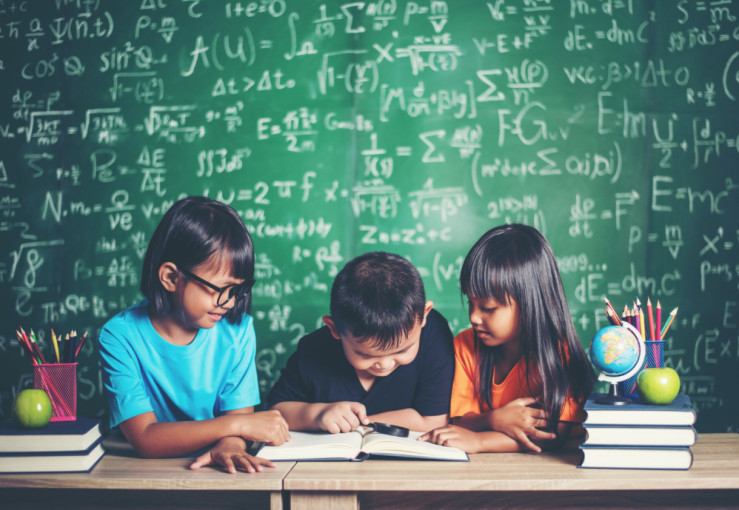
Mathematics is often perceived as an intimidating subject for many students from elementary to secondary school in Indonesia. Field data show a concerning situation.
Based on the 2022 Program for International Student Assessment (PISA) results, Indonesia’s numeracy score was only around 366, far below the Organization for Economic Co-operation and Development (OECD) average of 472. Ironically, only about 18% of Indonesian students reached the minimum competency level 2. In fact, this discipline plays a crucial role in strengthening students’ intellectual capacity and analytical skills by developing reasoning to solve problems.
An expert from the Department of Mathematics, Faculty of Mathematics and Natural Sciences at Universitas Gadjah Mada (FMIPA UGM), Professor Indah Emilia Wijayanti, stated that teachers have a significant influence on students’ interest in learning mathematics.
According to her, the quality of mathematics educators must first be improved to enhance teaching and learning, which in turn will boost students’ abilities as their interest in mathematics increases.
Professor Wijayanti emphasized the importance of teachers mastering Aristotle’s classical communication strategies to enliven the classroom learning atmosphere.
“If a teacher loves mathematics and communicates well using Aristotle’s principles, maintaining credibility (ethos), building emotional connection (pathos), and delivering material logically (logos), they will develop creativity in the teaching and learning process, allowing students to learn effectively and enjoyably,” she said on Monday (Apr. 20).
According to her, mathematics learning in Indonesia is still largely oriented toward memorization, making the learning process monotonous. This approach certainly affects students’ critical thinking skills and understanding of mathematical concepts.
Professor Wijayanti explained that mathematical concepts can be well understood when students’ logic and critical thinking are sufficiently developed. This becomes very important when these students later hold strategic roles in society.
“If these abilities are weak, we can imagine the impact on social, political, economic, and environmental life. Decision-making and policy implementation require arguments based on logical reasoning,” she explained.
Some parents have begun introducing mathematics learning from an early age, so the role of the family influences children’s numeracy skills at later levels of education. Professor Wijayanti explained that the family is a child’s first “school.” During the golden age of child development (0-5 years), children’s brains and logical thinking can be optimally stimulated through learning activities that train logical and critical thinking.
She added that parenting patterns that value children’s opinions, listen to their arguments, answer their questions, provide room for exploration, and give them freedom to express opinions also strengthen children’s logic and critical thinking abilities.
“From this, we see that parenting, educational institutions, and the environment must be aligned. After children enter school age and socialize in society, educational institutions should ideally continue these habits so that children’s potential continues to develop,” she said.
Furthermore, Professor Wijayanti outlined several strategies considered the most effective and realistic for sustainably increasing students’ interest in learning mathematics in Indonesia.
First, proper selection should be conducted for prospective mathematics teachers, even before they complete higher education. Second, welfare guarantees and decent employment should be provided for graduates from this selection process so that qualified teachers can work optimally. Third, teachers should be given the freedom to manage their classrooms creatively. Finally, the mathematics curriculum should be designed realistically, with competent authorities taking students’ development into account.
“I am confident that when the ecosystem is ideal and shares the same vision, the positive impact will be improved student performance in mathematics. Conversely, no matter how good the teaching methods are, without a supportive ecosystem, the results will not be optimal,” she concluded.
Author: Diyana Khairunnisa
Editor: Gusti Grehenson
Post-editor: Rajendra Arya
Photo: Freepik