


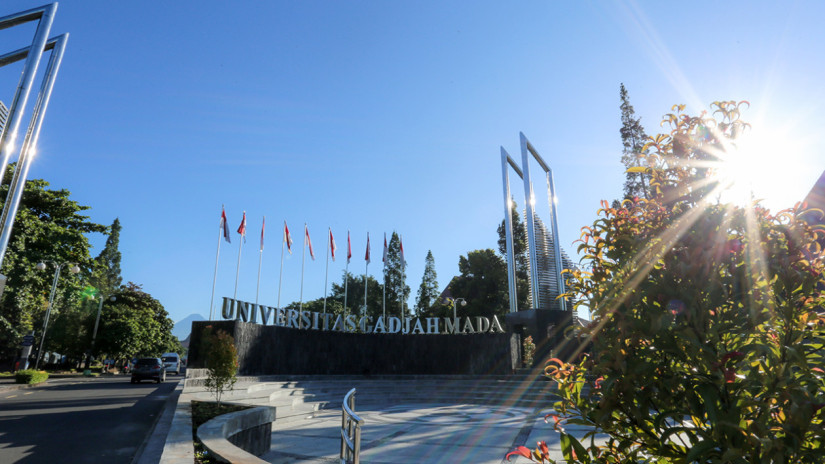
The Directorate of Community Service (DPkM) at Universitas Gadjah Mada has received an award from the Yogyakarta Special Region (DIY) Government as a Cooperative Assistance Partner during the Gebyar Koperasi 2026 event held in Yogyakarta on Wednesday (Jul. 22). The award recognizes UGM’s dedication, commitment, and contributions to strengthening cooperatives through institutional development and capacity-building initiatives across the Yogyakarta Special Region.
Dr. Djoko Santosa, Head of the Community Empowerment Subdirectorate at UGM’s Directorate of Community Service, said the award reflects the government’s trust in UGM’s commitment to strengthening community cooperatives.
He explained that UGM has served not only as a mentor but also as a partner, helping cooperatives identify growth opportunities through innovation and practical solutions to the challenges they face.
“This award recognizes the trust placed in UGM by both the government and the community. We strive to enhance cooperative capacity by fostering innovation and creating opportunities to address challenges in the cooperative sector,” he said in an interview on Thursday (Jul. 30).
Djoko explained that UGM’s mentoring model differs from conventional training programs by using an assistance scheme that begins by identifying the specific challenges each cooperative faces, allowing tailored solutions to be developed. This approach also encourages cooperatives to grow collectively, strengthen one another, and build competitiveness together.
“This mentoring model has proven highly effective in enabling cooperatives to progress together, become stronger together, and avoid competing against one another. Instead, they work collectively to build resilient and competitive cooperatives,” he said.
Before the mentoring program begins, the UGM team identifies the challenges each cooperative faces. The assessment found at least five major issues: the capacity of cooperative management personnel, organizational governance, marketing, the adoption of appropriate technology, and business innovation and digitalization.
“This mapping process serves as the basis for determining the type of assistance required by each cooperative,” he said.
In addition, Djoko noted that UGM involves lecturers from various academic disciplines, assigned based on their respective areas of expertise. The mentoring is also conducted directly at cooperative sites, enabling lecturers to better understand local challenges and provide solutions suited to field conditions.
“Once we understand each cooperative’s weaknesses, we can assign the most appropriate mentors,” he explained.

He added that teams of lecturers carry out the current mentoring program over a three-month period. In the next phase, however, UGM plans to involve students through the Community Service Program (KKN-PPM). Students will assist cooperatives throughout their KKN-PPM assignments, making the strengthening process more intensive and sustainable.
“We plan to involve students participating in KKN-PPM to strengthen cooperatives. During their approximately 50-day placement near the cooperatives, they will be able to provide more extensive and continuous assistance,” he said.
To expand the program’s impact, UGM plans to refine its training and mentoring modules while strengthening collaboration with local governments, the private sector, and other stakeholders. Digitalization has become one of the program’s primary focuses.
According to Djoko, cooperatives need to adapt quickly to technological advancements, including artificial intelligence (AI), to attract younger generations and improve competitiveness in the digital era.
“Whether we like it or not, we must adapt to technology and AI. Before adopting AI, cooperatives must first be prepared for digitalization, and we have already incorporated this into our mentoring modules,” he explained.
For now, the mentoring program remains focused on cooperatives in the Yogyakarta Special Region. This approach aims to strengthen existing cooperatives so they can become role models for similar initiatives in other regions. In the future, UGM hopes to foster an economic ecosystem that connects cooperatives with micro, small, and medium enterprises (MSMEs), enabling both to grow and reinforce one another.
“For the time being, we are focusing on Yogyakarta. Once these existing cooperatives become stronger, they can serve as role models. MSMEs can also function as a buffer for cooperatives, creating a people-centered economic ecosystem,” he concluded.
Author: Cyntia Noviana
Editor: Gusti Grehenson
Post-Editor: Priyanandaningrat
Photo: Documentation of DPkM