


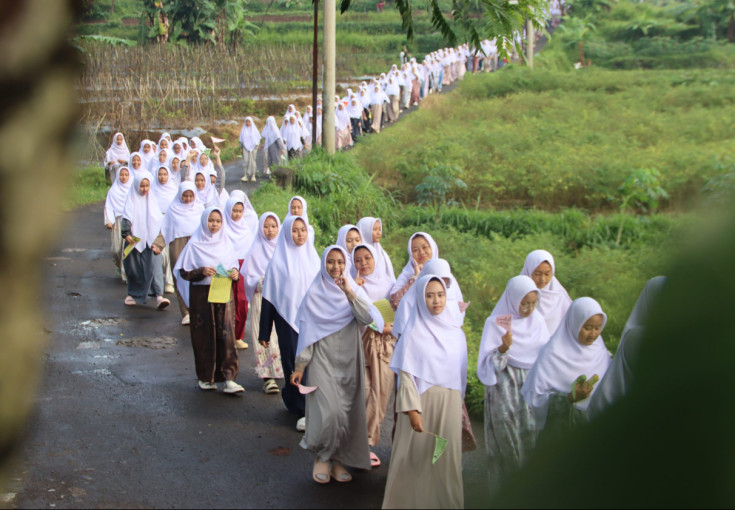
A case of sexual violence against several female students at an Islamic boarding school (pesantren) in Pati Regency, Central Java, allegedly committed by the founder and caretaker of the institution, has drawn public attention. The case adds to a long list of abuse incidents in educational settings.
The Indonesian Teachers’ Union Federation (FSGI) revealed that sexual violence in educational institutions, including pesantren, has increased sharply compared to physical violence and bullying. Since early 2026, 83 victims of sexual violence have been recorded, with around 54% of perpetrators in educational environments identified as teachers or education personnel.
Sociology Lecturer from Universitas Gadjah Mada (UGM), Dr. Hakimul Ikhwan, assessed that this case of sexual violence in a pesantren tarnishes the credibility of an institution known for upholding strict religious teachings. According to him, such cases stem from abuse of power that begins as symbolic violence and escalates into sexual violence against children.
Although religious figures are often viewed positively by the public, cases like this have occurred repeatedly. Dr. Ikhwan explained that this happens due to the misuse of authority held by individuals in positions of power. Unchecked power has a high potential for abuse.
“When someone feels extremely powerful, they begin to see the people around them as controllable. This case does not only occur in pesantren or among religious leaders, but in principle can happen wherever individuals hold power,” he said.
According to Dr. Ikhwan, the sexual violence case at the pesantren in Pati Regency reflects the broader characteristics of power abuse. He observed that feudalistic traits are still frequently found in pesantren. Moreover, this feudal culture intersects with a societal perspective that elevates religious leaders to a sacred status.
This condition becomes a tool of power used to gain legitimacy and influence from the community. Therefore, Dr. Ikhwan emphasized the need for control and evaluation mechanisms within the system.
“When cases occur, we need to strengthen the oversight system,” he stated.
To prevent similar incidents from recurring in pesantren environments, Dr. Ikhwan encouraged strengthening safe, independent reporting systems so that students will not fear reporting violations. In addition to internal supervision, he noted that the involvement of external parties, such as parents or guardians, village authorities, and local officials, is also important for reinforcing oversight within pesantren. Dr. Ikhwan further added the need to dismantle the pesantren culture that excessively submits to the authority of the kiai (religious leader).
“There must be an understanding that the sacredness of the kiai should not be without limits, and that obedience must also have boundaries. Therefore, dismantling certain cultural aspects within pesantren is, in my view, essential,” he explained.
Author: Fatihah Salwa Rasyid
Editor: Gusti Grehenson
Post-editor: Rajendra Arya
Photo: Husnul Khotimah Islamic Boarding School Documentation