


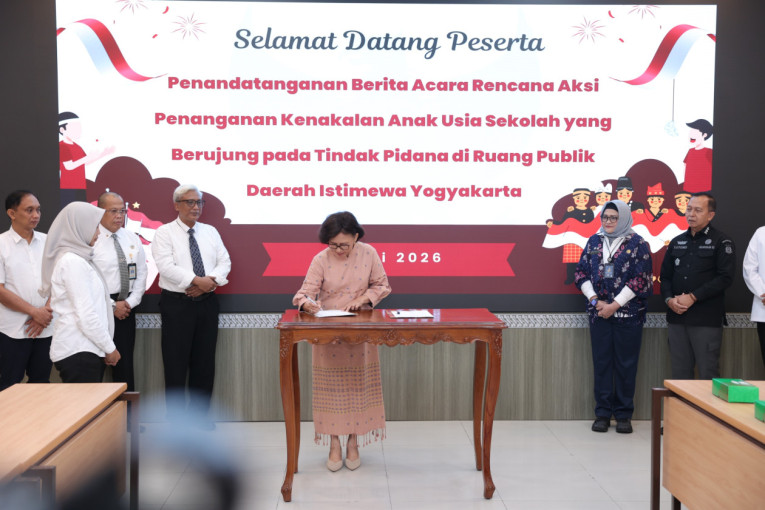
The Yogyakarta Special Region Government, together with the Regional Leadership Coordination Forum of the Special Region of Yogyakarta, law enforcement agencies, central government regional offices, and several universities, including Universitas Gadjah Mada (UGM), signed the Minutes of the Action Plan for Addressing Juvenile Delinquency Among School-Age Children Resulting in Criminal Offenses in Public Spaces on Wednesday (July 1) at the Governor’s Office of the Special Region of Yogyakarta. The commitment marks a shared first step toward strengthening prevention, law enforcement, and rehabilitation for children through cross-sector coordination to uphold Yogyakarta’s status as an Education City. In addition, creating a safe and supportive environment for children and adolescents requires the active involvement of all sectors of society.
UGM Vice-Rector for Student Affairs, Community Services, and Alumni, Dr. Arie Sudjito, said that the university’s participation reflects the moral responsibility of higher education institutions to foster a safe, comfortable, and dignified educational environment. As a university established by and for the people of Indonesia, UGM is committed to creating a conducive learning environment for younger generations.
“This is part of the university’s moral responsibility to uphold civility, dignity, and serve as a medium for learning. Maintaining a safe and comfortable environment is a fundamental value of the educational process,” Dr. Arie said in an interview on Thursday (July 2).
He noted that this commitment is not new. UGM has long collaborated with the Regional Leadership Coordination Forum of the Special Region of Yogyakarta (Forkopimda DIY) through various academic and community service initiatives. These contributions have taken the form of scientific studies, discussions, the UGM Community Service Program (KKN-PPM UGM), community education, and policy recommendations based on research findings. Going forward, UGM will continue to optimize the implementation of the Tri-dharma of Higher Education to support the action plan.
“We will realize the Tri-dharma of Higher Education through education, research, community service, and various educational programs aimed at preventing violence and encouraging young people to develop their creativity in positive ways,” he said.
With continued cross-sector collaboration, Dr. Arie expressed hope that the initiative would move beyond the signing of a commitment and be implemented consistently.
“We hope this cross-sector collaboration will not remain merely symbolic but will continue to be carried out consistently. Addressing this issue requires collective action grounded in the values of humanism, civility, and dignity,” he concluded.
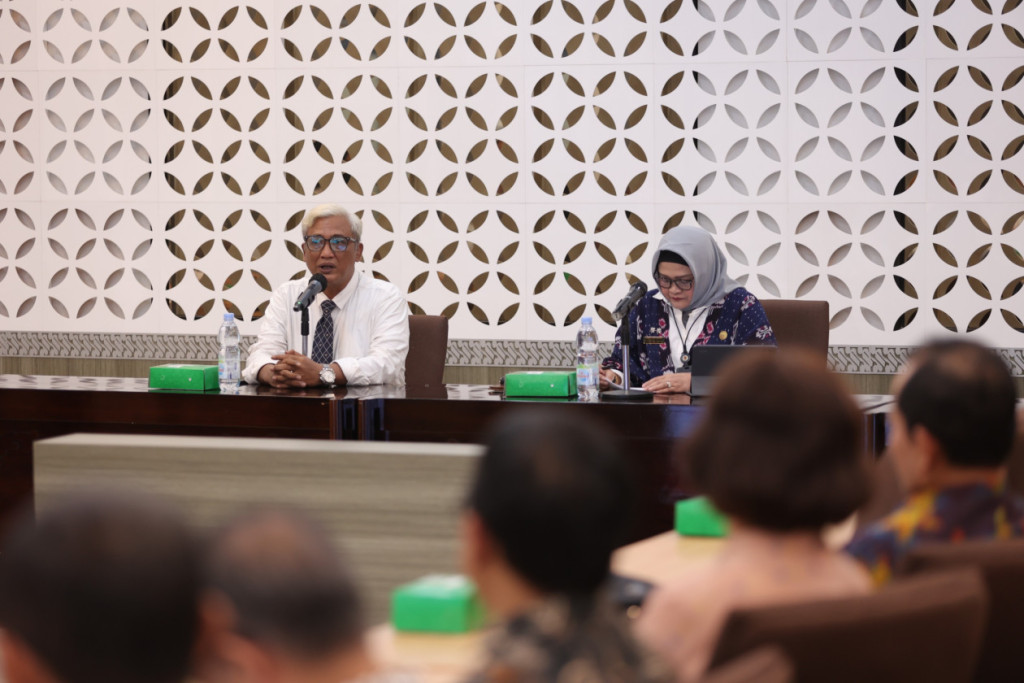
Meanwhile, the Regional Secretary of the Special Region of Yogyakarta, Ni Made Dwipanti Indrayanti, emphasized that juvenile delinquency should not be regarded as a minor issue. She likened behaviors such as skipping school or staying out late at night to early warning signs that can develop into more serious problems if left unaddressed.
“The safety of public spaces is a shared responsibility. We cannot simply blame families, schools, communities, or the children themselves. Families are the first line of defense; communities serve as the eyes and ears, while the state is responsible for enforcing the law and ensuring comprehensive rehabilitation,” she explained.
According to Indrayanti, implementing the action plan requires cross-sector synergy involving regional government agencies, security authorities, central government regional offices, communities, families, and universities. She stressed that academics play an essential role in analyzing issues, providing assistance, and creating positive activities that offer children and adolescents alternatives to risky behavior.
“We are talking about multisector collaboration involving regional government agencies, central government institutions, academics, and the community. Families are the first line of defense in protecting children, while universities play a major role in helping analyze problems, developing solutions, and creating positive activity spaces for children,” she concluded.
As part of the implementation, a task force (Satgas) will be established to carry out the strategy through three main pillars: prevention, enforcement, and rehabilitation. Prevention efforts will be coordinated by the Regional Education, Youth, and Sports Office together with relevant government agencies, focusing on securing public spaces and school environments. The enforcement pillar will involve the police, the Provincial National Narcotics Agency (BNNP), and the Prosecutor’s Office in addressing general criminal offenses, narcotics and psychotropic substance abuse, and the illegal distribution of alcoholic beverages. Meanwhile, the Regional Social Affairs Office, the Office for Women’s Empowerment, Child Protection, Population Control, and Family Planning (DP3AP2), and the Regional Health Office will lead rehabilitation efforts through comprehensive assessments, psychosocial recovery, and assistance for children in conflict with the law.
Author: Cyntia Noviana
Editor: Gusti Grehenson
Post-editor: Priyanandaningrat
Photo: Firsto