


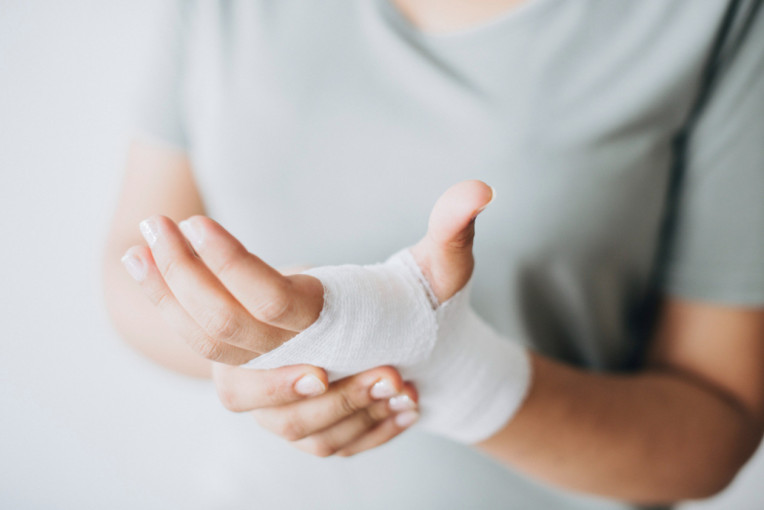
Wound care remains a major challenge in modern medicine due to the diverse characteristics of wounds and the unpredictability of healing outcomes. The burden of wound care, particularly chronic wounds, continues to increase alongside rising life expectancy. Studies show that approximately 3% of individuals aged over 65 have open wounds requiring treatment. Chronic wounds are more commonly found in women and older adults, with a prevalence of 1.67 cases per 1,000 population. In the context of Indonesia’s population, this translates to an estimated 278,000 cases of chronic wounds, placing a significant burden on the national healthcare system.
Vacuum Assisted Closure (VAC), which has long been introduced, has proven effective in accelerating healing. However, its high cost limits its use in developing countries such as Indonesia. Despite numerous innovations, there has been no fundamental breakthrough in the core components of VAC.
A doctoral student from the Faculty of Medicine, Public Health, and Nursing at Universitas Gadjah Mada (FKKMK UGM), Meirizal, has developed an innovation in negative pressure therapy called Reverse Aqua Pump-Vacuum Assisted Closure (RAP-VAC), offering a more affordable solution with comparable efficacy to commercial VAC.
In his dissertation titled “Cost-Effective and Efficient Wound Care as a Preparation Process for Advanced Surgical Skin Grafting Using the Reverse Aqua Pump–Vacuum Assisted Closure Innovation: A Non-Inferiority Randomized Clinical Study,” he presents an alternative wound therapy that is more affordable without compromising clinical effectiveness.
During his doctoral promotion open examination held on Thursday (Apr. 9) at the FKKMK UGM auditorium, Meirizal explained that the study was motivated by the high burden of wound care, particularly complex wounds requiring negative pressure therapy or Vacuum Assisted Closure (VAC), while the cost of commercial VAC remains a major barrier in developing countries such as Indonesia.
“The demand for VAC therapy is quite high, but access to this technology is still limited due to cost. Therefore, we developed RAP-VAC as a more affordable yet clinically effective alternative,” he said.
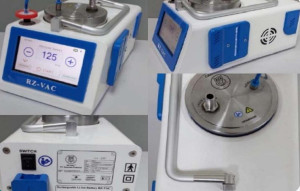
Using the Reverse Aqua Pump–VAC (RAP-VAC) innovation, this study employed a non-inferiority randomized clinical trial design to compare the effectiveness of RAP-VAC with that of a commercial VAC. The results showed that RAP-VAC has comparable effectiveness to conventional methods.
The study was conducted at Dr. Sardjito General Hospital, Yogyakarta, across outpatient clinics, inpatient wards, and operating rooms within the Orthopedics and Traumatology Department. The research took place over five months, from April to August 2025. The study subjects were patients with wound defects requiring further reconstruction in the Hand Surgery and Microsurgery Reconstruction Subdivision. Subjects were consecutively recruited from outpatient, inpatient, and emergency units until the required sample size was met.
The study initially involved 26 subjects who met the inclusion criteria. However, two were excluded because they required further surgical procedures, including flap reconstruction, resulting in a total of 24 subjects analyzed.
“The subjects were divided into two groups: the Reverse Aqua Pump–VAC (RAP-VAC) group and the commercial VAC group, each consisting of 12 patients,” he explained.
The findings revealed no significant difference in wound granulation between patients treated with RAP-VAC and those treated with commercial VAC. There was also no significant difference in the waiting time for further reconstruction between the two groups.
“There was a significant difference in wound infection status between patients treated with RAP-VAC and commercial VAC. However, there was no significant difference in patient comfort levels between the two methods. More importantly, there was a significant difference in treatment costs, with RAP-VAC being lower than commercial VAC,” he noted.
According to Meirizal, RAP-VAC produces healing effects that are equivalent to or better than commercial VAC at a much lower cost. Therefore, RAP-VAC can be considered a cost-effective alternative negative-pressure therapy that is non-inferior in wound-healing effectiveness.
“Our findings show that RAP-VAC is not only comparable in effectiveness but also far more cost-efficient. This opens up broader opportunities for implementation, especially in healthcare facilities with limited resources,” he added.
Based on these findings, RAP-VAC is considered to have strong potential as an effective and efficient alternative for treating complex wounds, particularly in preparing skin grafts for reconstructive surgery.
“It is hoped that this innovation can serve as a practical solution for healthcare services in Indonesia, enabling wider access to optimal wound therapy,” Meirizal concluded.
This research is expected not only to contribute to scientific knowledge but also to have a tangible impact on healthcare quality, particularly in hand surgery and microsurgical reconstruction.
Author: Jelita Agustine
Editor: Gusti Grehenson
Post-editor: Zabrina Kumara
Photo: Freepik and Jelita