


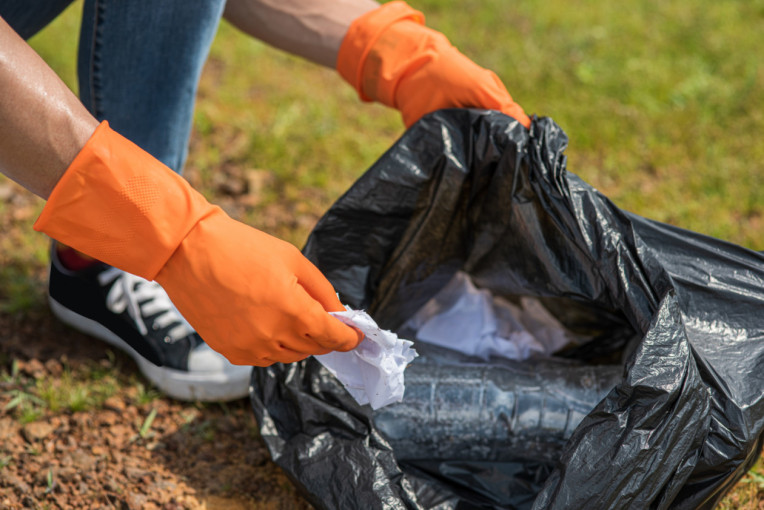
Food waste generated at the female dormitory of Al-Imdad Islamic Boarding School in Bantul can reach approximately 30-40 kilograms per day, with rice and vegetables accounting for the largest portion of the discarded food. In response to this issue, students and administrators of the boarding school jointly developed measures to reduce leftover food and manage the waste still produced through the Santri Lawan Food Waste program. The initiative was facilitated by three students from the Master of Public Health Program at the Faculty of Medicine, Public Health, and Nursing, Universitas Gadjah Mada (FKKMK UGM).
Kadek Darmawan, Stella Stritamar Amabi, and Karimatul Khalidah facilitated the program as part of the Community Empowerment and Networking course. The first stage involved observation and interviews to better understand the students’ daily lives and food management practices within the dormitory.
Based on these initial findings, the students worked with boarding school stakeholders, including dormitory administrators, kitchen managers, and waste management coordinators, to identify the causes of food waste and determine appropriate actions tailored to the school’s conditions and available resources.
Kadek explained that the facilitation process helped the students gain a deeper understanding of food waste issues through the experiences of both students and administrators. Through the discussions, they identified several factors contributing to food waste, including taste preferences, snacking habits, mood, portion sizes, and limited mealtime.
“We learned alongside the students and administrators to understand the various factors that lead to food waste. The proposed activities emerged from their experiences and needs, while we helped create a space for discussion so that everyone could share their perspectives and suggestions,” said Kadek on Thursday (Jun. 18).
Based on these discussions, the students and administrators selected four main initiatives: education on taking appropriate food portions and developing the habit of finishing meals, the provision of a menu suggestion box, the reactivation of Black Soldier Fly maggot cultivation, and the development of a dormitory cleanliness competition that incorporates food waste reduction as one of its assessment criteria.
Of the four selected initiatives, three have already been implemented. Messages about taking food according to individual needs, the benefits of consuming nutritious meals, and the importance of finishing one’s food are delivered during weekly student development sessions held every Friday evening after the Isya prayer. The materials align with values already practiced in the boarding school environment, such as avoiding excess (israf), expressing gratitude, and using food responsibly.
A menu suggestion box has also been introduced as a communication channel between students and kitchen managers. Through this system, students can provide feedback regarding taste, menu variety, portion sizes, and the meals being served. The collected feedback is then reviewed by administrators and kitchen managers. Meanwhile, the school’s waste management team has resumed cultivation of Black Soldier Fly maggots after approximately four months of inactivity. The maggots are used to process the ongoing food waste.
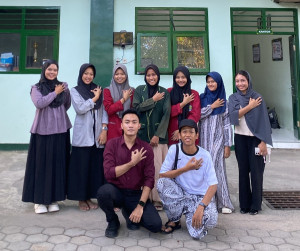
Another initiative, the development of a dormitory cleanliness competition, is currently in the preparation stage and is expected to be incorporated into the school’s biannual agenda. Under the proposed framework, each dormitory room’s efforts to reduce and manage food waste will become one of the evaluation criteria. Rooms demonstrating the best performance will receive awards, while those producing the most food waste will participate in educational group activities, such as delivering short religious talks, creating posters, promoting the habit of finishing vegetables, or assisting with kitchen activities.
The course tutor for Community Empowerment and Networking, Yunita Fitrianti, guided the students from the initial engagement with the boarding school community through to the early implementation of activities. She emphasized that the most important lesson for the students was learning to view the boarding school students and administrators as individuals who understand their own challenges, rather than merely as targets of an intervention. Students learned to listen first, identify the resources and values already present within the boarding school, and then support initiatives emerging from within the community.
“In this way, the resulting program belongs not to the students, but to the boarding school itself, making it more likely to continue in the future,” said Yunita.
The active involvement of students and administrators is also essential to ensuring that the activities continue after the university students’ facilitation period ends. The boarding school management expressed positive feedback regarding the initiative.
“We warmly welcome this program because it provides opportunities for students to learn while actively participating in efforts to reduce food waste within the boarding school. We hope this initiative can continue and develop further as part of character education, allowing values such as responsibility, social awareness, and environmental stewardship to be instilled sustainably among students,” said Ahmad Murod, the caretaker of Al-Imdad Islamic Boarding School.
For the UGM students, the facilitation process provided valuable experience in listening to the needs of boarding school students and administrators, recognizing existing resources, and supporting program implementation without taking over the decision-making process. Through the active involvement of students and administrators, Santri Lawan Food Waste helps reduce food waste at its source and foster more responsible consumption habits, in line with Sustainable Development Goal 12 on Responsible Consumption and Production.
Contributor: Kadek Darmawan
Author: Leony
Editor: Gusti Grehenson
Post-editor: Zabrina Kumara Putri
Photo: Team Documentation and Magnific