SDG 12: Responsible Consumption and Production
UGM’s Resona Saintek webinar urges stronger scientific collaboration and farmer institutions to drive sustainable agriculture transformation in Indonesia.
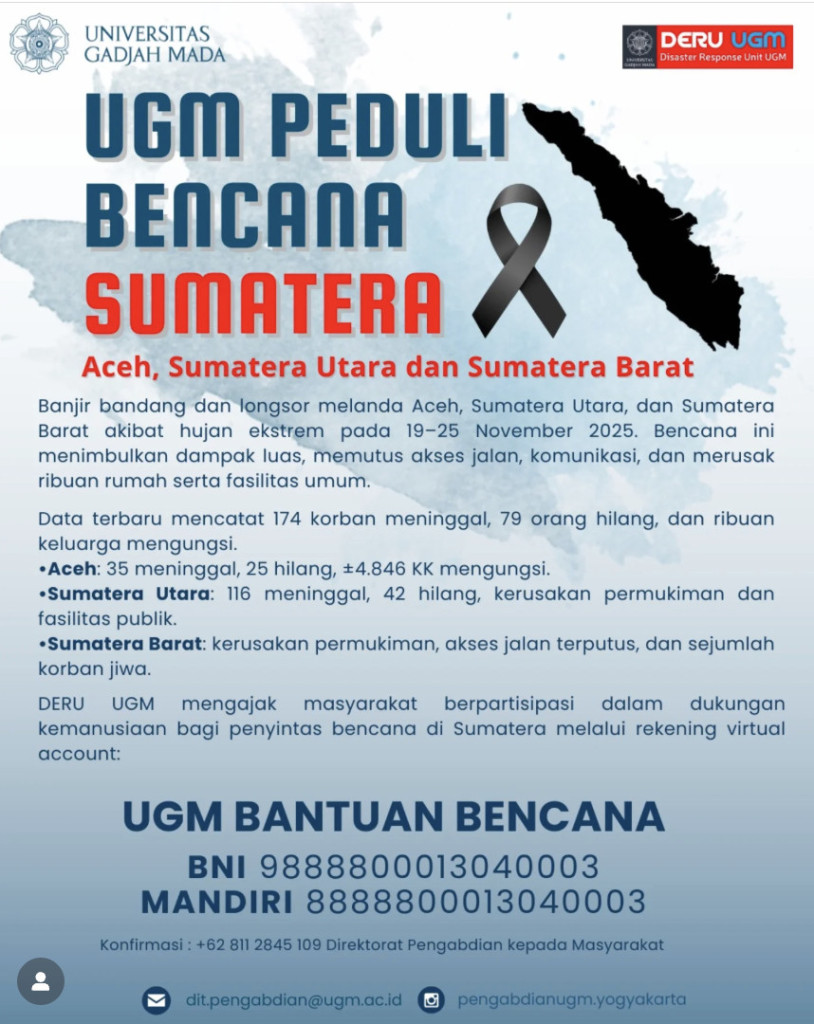
UGM expert highlights the urgency of meeting basic needs and providing psychosocial support to help Sumatra flood survivors recover with dignity.
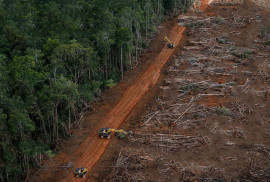
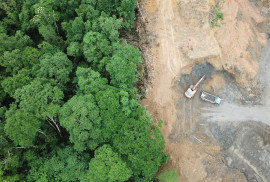
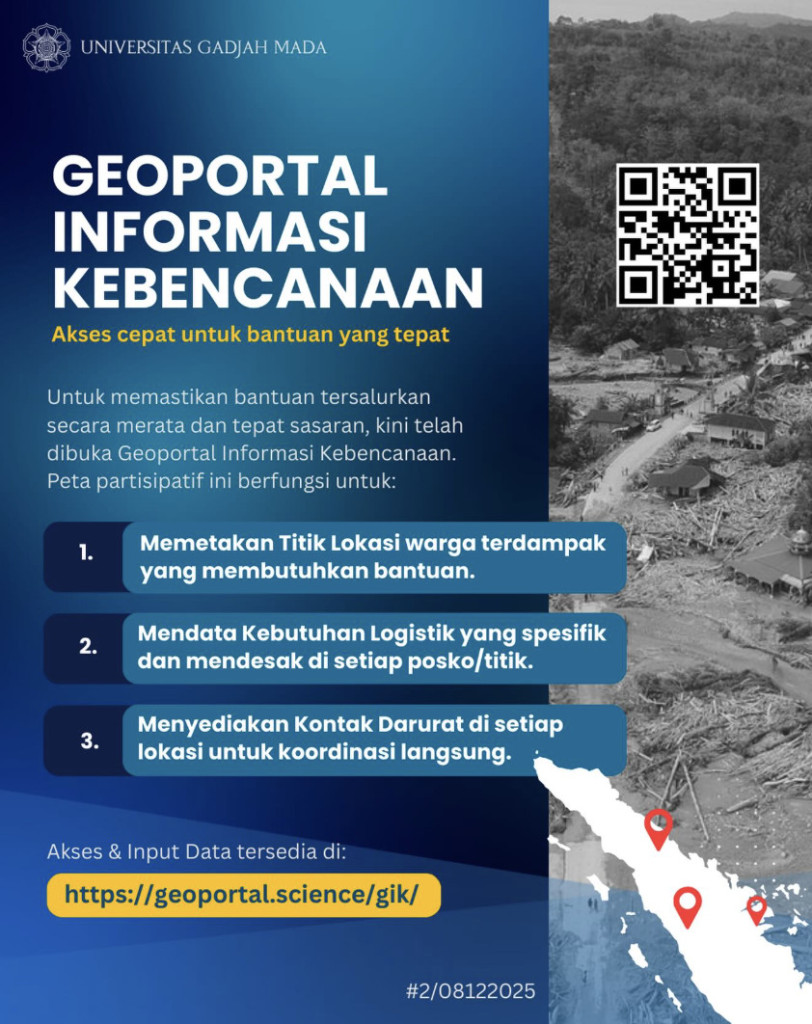
UGM experts call for urgent reforestation, watershed rehabilitation, and stronger law enforcement to prevent recurring flash floods in Sumatra.
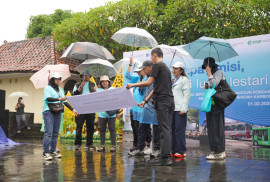
UGM students and community partners launched the RESIK and ROADMATE programs to improve coastal cleanliness and waste management at Parangtritis Beach.
Coordinating Minister Airlangga Hartarto outlines Indonesia’s downstreaming agenda, the digital talent needs, and the roles of universities in accelerating economic growth.
The 2025 launch of Equilibrium Magazine highlights Indonesia’s environmental challenges, energy transition issues, and the moral roots of the global Earth crisis.
UGM students develop SIKE, an AI-based smart kitchen system to improve the Free Nutritious Meal Program and turn food waste into renewable energy.
UGM empowers Dlingo forest farmers to convert wood biomass waste into biochar through training on sustainable agroforestry and rotary drum pyrolysis.
UGM researchers develop protein-bait innovations to control fruit flies, boosting salak quality, yields, and export potential in Turi, Sleman.
UGM’s expert warns of rising risks from counterfeit cosmetics amid Indonesia’s rapidly expanding beauty industry and urges strict compliance with BPOM regulations.
UGM Vocational College students and local youth test AI-based ROADSTER app to detect road damage and illegal waste, promoting community innovation.
Global Environmental Crisis Spurs Scholars to Propose New Approaches to Strengthen Social Resilience
Scholars from multiple countries gather at UGM’s IGSSCI to discuss global environmental crises and propose ideas to strengthen social resilience.
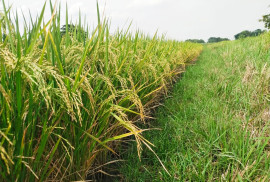
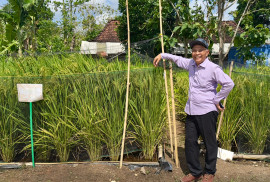
UGM introduces the high-yield, nutrient-rich Gamagora 7 rice variety to farmers in Klaten, aiming to advance innovation and promote sustainable food security.
Professor Ali Awaludin of UGM highlights the potential of laminated timber technology to support sustainable and eco-friendly construction in Indonesia.
FEB UGM installs 17 infiltration wells on campus as part of its “save water” campaign to support sustainable groundwater conservation.
Experts highlight Indonesia’s vast potential for carbon trade and call for stronger governance to ensure transparency and accountability.
UGM’s expert highlights the dangers of microplastics found in rainwater, urging stronger awareness and preventive action to protect human health.
UGM accounting lecturer Dr. Arika Artiningsih outlines the characteristics and warning signs of fraud in both the business and government sectors.
UGM students study the agricultural economy of South Yogyakarta’s coastal areas, integrating local wisdom through the “Ngarit Jembar Nalar” philosophy.
FTP UGM held training for SPPG Sinduadi volunteers to improve food safety and prevent MBG-related poisoning.
UGM students empower PKK Lestari Ngalian to turn traditional empon-empon crops into innovative food products with economic value.
UGM veterinary lecturers share causes and treatments for sudden fish deaths in freshwater ponds to help improve farmers’ aquaculture practices.
UGM and Bina Antarbudaya educate Yogyakarta high school students on sustainable household waste management.
UGM students develop Smart Fish Sorter, a sensor-based tool to automate catfish sorting and improve farmers’ productivity.
UGM researchers reveal how mindful consumption and a sense of awe can inspire responsible dining and help prevent food waste.
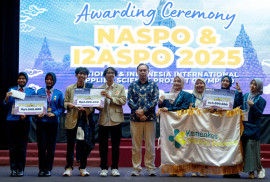
UGM’s FiNiX team wins first place and Best Team Presentation at the Industrial Spectrum 2025 White Paper Competition.
UGM students create Gelora, a portable and eco-friendly household waste incinerator equipped with carbon filtration and real-time monitoring.
UGM students’ research on rice field conversion in Yogyakarta reveals its potential threat to regional food sovereignty.
UGM students study environmental damage in the protected Guha Mountain karst area, revealing the impacts of mining and calling for sustainable management.
UGM students create IoT-based WormiBox to manage household organic waste efficiently and turn it into eco-friendly fertilizer.