SDG 2: Zero Hunger
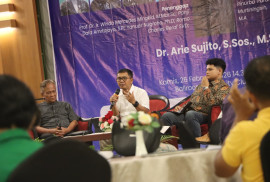
UGM economist warns Indonesia’s shrinking middle class signals fragile job quality and stalled social mobility.
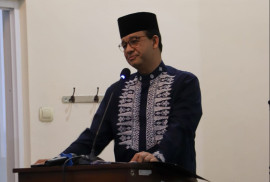
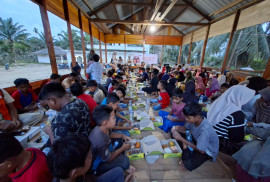
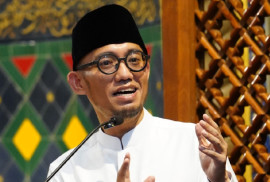
UGM Rector and Ustaz Wijayanto urge social compassion at the Ramadan 2026 campus opening event.
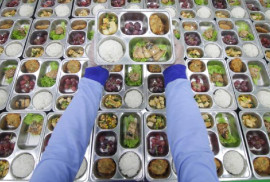
UGM experts propose replacing the “UPF” term with “processed food” to avoid public confusion in Indonesia’s MBG program.
UGM economist clarifies false claims that Indonesia is the world’s second poorest country.
UGM expert calls for precautionary planning of 1,582 new fishing vessels to prevent overfishing and protect fish stocks.
UGM students improve the literacy and numeracy skills of child disaster survivors in Aceh through Fisipol Mengajar.
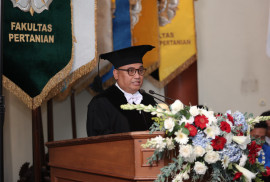
UGM professor warns that rising food productivity has not improved farmers’ welfare or ensured food sovereignty in Indonesia.
Coordinating Minister Airlangga Hartarto highlights industrial downstreaming, food security, and human resources as engines of growth.
UGM sociologist says a child suicide case over school expenses reflects structural inequality and schools’ failure as spaces for dialogue.
A UGM economist warns that 59 percent of Indonesian workers are informal and urges stronger employment and social protection policies.
A UGM lecturer highlights the water–energy–food nexus as a key approach to sustaining agricultural productivity amid growing global pressures.
Floods inundate dozens of villages in Pati Regency as UGM KKN students join local volunteers to evacuate residents and distribute aid.
UGM deploys 30 student volunteers through the KKN-PPM Disaster Response program to support post-disaster recovery efforts in Aceh.
A UGM lecturer has developed a rapid, eco-friendly tool for detecting food safety and authenticity, earning international recognition through the Hitachi Award.
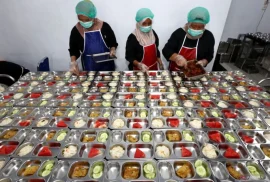
UGM expert urges integration of the Free Nutritious Meals (MBG) program for pregnant women and toddlers with Indonesia’s primary healthcare system.
UGM Professor Ani Widiastuti teaches adaptive agriculture at Ibaraki University through a cross-appointment, strengthening international academic collaboration.
UGM researchers develop high-nutrient, affordable green fodder products to support livestock productivity through downstream research innovation.
After a year of implementation, a UGM nutrition expert urges stricter food safety and an end to ultra-processed foods in Indonesia’s free meal program.
UGM researchers develop a geomembrane-based irrigation system to improve water efficiency and boost rice productivity in dryland areas such as Gunungkidul.
TEP UGM presents evidence-based findings on the potential of 14 transmigration areas to support inclusive and sustainable development.
UGM’s Patriot Expedition Team evaluates the Muting transmigration area to support sustainable, inclusive development in South Papua.
KAFEGAMA distributes IDR 200 million in humanitarian aid to flood and landslide victims across four affected regions in West Sumatra
UGM strengthens humanitarian contributions through disaster response, research innovation, community service, and global academic impact in its 76th year.
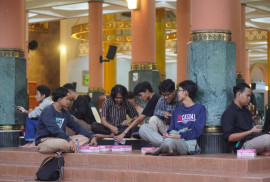
UGM offers free breakfast across several faculties during final exams to support student welfare, especially those facing economic hardship.
UGM introduces Gamahumat, a lignite-based soil conditioner developed to restore degraded land, support food security, and advance sustainable agriculture.
UGM advances food security by downstreaming research innovations through Resona Saintek, connecting campus research with farmers and communities
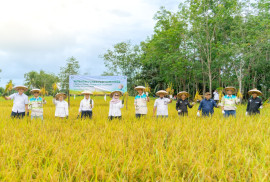
Developed by UGM, Gamagora 7 rice is now cultivated nationwide, offering early harvests and stable yields in irrigated and rainfed fields.
UGM resumes its free breakfast program during final exams to support student well-being and academic performance across multiple faculties.
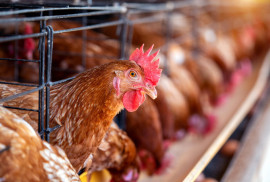
UGM’s Faculty of Animal Science hosts a national forum discussing poultry sector transformation, budget optimization, and strategies for achieving food self-sufficiency.
UGM’s Gamahumat innovation offers lignite-based soil restoration to strengthen food security, support mine reclamation, and enhance sustainable agriculture.