


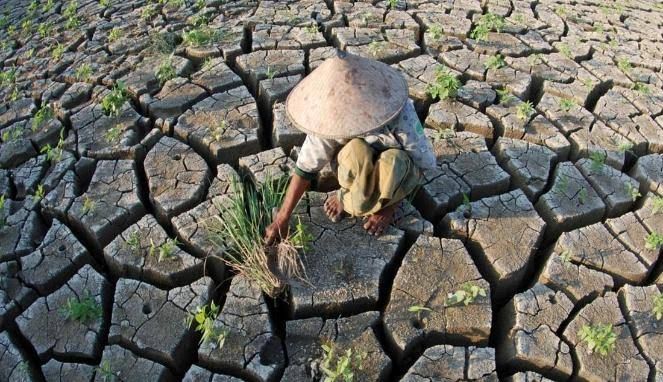
The Meteorology, Climatology, and Geophysics Agency (BMKG) predicts that the dry season will arrive earlier, last longer, and bring lower rainfall intensity than the average. The forecast, expected to begin in April, will inevitably affect the agricultural sector, which relies heavily on water resources from both rainfall and irrigation.
A lecturer at the Faculty of Agricultural Technology, Universitas Gadjah Mada (FTP UGM), Professor Bayu Dwi Apri Nugroho, said the BMKG’s projection of a prolonged dry season serves as a reminder for those working in the agricultural sector. According to Professor Bayu, the impacts of climate change, whether prolonged drought or extreme rainfall, will affect the sustainability of agricultural businesses.
“A prolonged drought can lead to planting and harvest failures, which will ultimately reduce agricultural production,” he said on Tuesday (Mar. 10).
To cope with a longer and drier dry season, Professor Bayu emphasized that actors in the agricultural sector need to adapt. One key to effective adaptation and mitigation, he noted, is more intensive communication between farmers and agricultural extension workers. Farmers sometimes lack access to updated information regarding unpredictable weather conditions. Therefore, close assistance from extension workers is expected to help mitigate the risks of planting and harvest failures.
“Farmers and extension workers are the key to success at the grassroots level in facing a prolonged dry season,” he explained.
He added that up-to-date information from BMKG, including early warnings about extreme conditions such as prolonged dry seasons or prolonged rainfall, should reach communities down to the village level.
“This will ensure that weather information delivered is more accurate and precise at the local level,” he said.
According to Professor Bayu, in addition to receiving accurate weather information, extension workers can also provide recommendations on which commodities or crops are suitable for cultivation during prolonged dry conditions.
Beyond seasonal adaptation, Professor Bayu also highlighted the role of researchers from universities and research institutions in developing innovations. By disseminating drought-resistant crop varieties that require less water while maintaining high productivity, researchers can help farmers adapt to increasingly challenging climate conditions.
Author: Fatihah Salwa Rasyid
Editor: Gusti Grehenson
Post-editor: Jasmine Ferdian
Photo: Thayyiba.com