


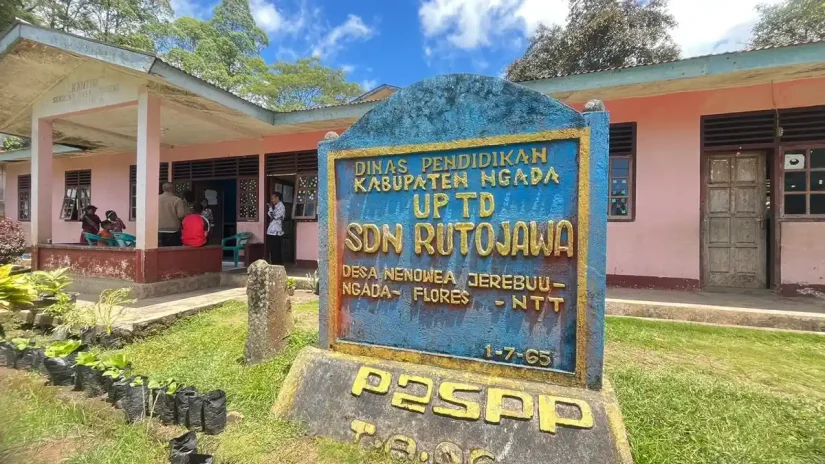
Based on data from Statistics Indonesia (BPS) for East Nusa Tenggara Province in 2025, Ngada Regency has a relatively lower poverty rate than other regions. However, there are still 19,530 people living in poverty out of a total population of 171,865 in Ngada Regency.
This relatively better poverty rate compared to other regions in East Nusa Tenggara is also reflected in its extreme poverty figures. In 2021, the number of people living in extreme poverty in Ngada was recorded at 8,880. In 2022, this figure declined by 2.34 percent to 5,040 people. The reality of extreme poverty in Ngada became more evident following the tragic case of an elementary school student who took his own life because his family could not afford to buy him books and a pen. YBR, a 10-year-old child, reportedly died by suicide due to the severe economic hardship faced by his family.
UGM economist, Dr. Wisnu Setiadi Nugroho, S.E., M.Sc., Ph.D., stated that the situation in Ngada Regency highlights the persistence of extreme vulnerability despite a decline in extreme poverty rates. In this case, the main issue lies not in statistical data but in the assumption that surpassing the poverty line automatically eliminates economic vulnerability. Currently, Indonesia’s poverty line instrument reflects subsistence rather than providing a guarantee of economic protection.
“We must be willing to change and reflect objectively by adopting fairer and more accurate measures,” he said.
According to Wisnu, the concentration of growth centers and industrialization in Java and parts of Sumatra has created structural economic disparities for eastern regions. As a result, access to markets, capital, and institutions remains far more limited compared to the western regions.
“The government needs to take a more active role by implementing comprehensive and measurable policies, both in economic and infrastructure development,” he explained.
In the education sector, Wisnu proposed several policy options that go beyond reactive cash transfers and instead emphasize anticipatory and institution-based support. First, providing free school supplies directly through schools so that students do not bear social stigma. Second, universal nutritional support to eliminate visible disparities between poor and non-poor students. Third, strengthening programs such as the Keluarga Harapan (Family Hope) Program with psychosocial assistance components. Fourth, integrating the Smart Indonesia Program to ensure aid becomes more responsive.
“We must promote programs with a clear vision, rather than relying solely on short-term and incidental initiatives,” Wisnu emphasized.
Furthermore, Wisnu called on the government to redefine development success by focusing on reducing structural vulnerability. Significant investment in connectivity and human resources in eastern Indonesia is essential to prevent the region from remaining constrained by geographic challenges. He added that behind the poverty statistics are real individuals struggling to sustain their lives.
“I hope tragedies like the one in Ngada are no longer seen as anomalies, but as signals that our measurement systems and policies have not yet fully captured the reality of poverty,” he concluded.
Author: Jesi
Editor: Gusti Grehenson
Post-editor: Zabrina Kumara
Photo: Tribun Flores