


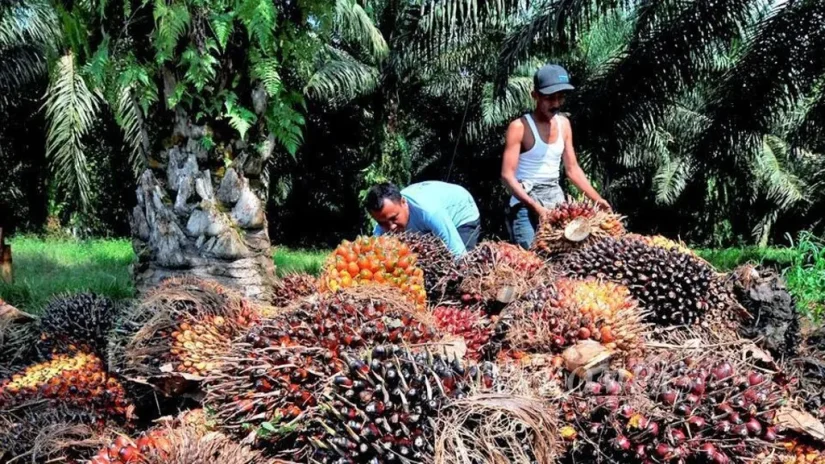
Palm oil is one of Indonesia’s largest export commodities. In fact, Indonesia is the world’s leading producer of palm oil, contributing approximately 59% of the global supply. This makes the palm oil sector a crucial pillar of the national economy, particularly through its contributions to export trade, job creation, and the livelihoods of millions. The industry supports the livelihoods of around 8 million people, with independent smallholders playing a significant role by managing more than 40% of the country’s total palm oil plantation area.
However, this dominant position is now facing increasingly complex global regulatory pressures. With the European Union Deforestation Regulation (EUDR) postponed twice and global markets tightening sustainability standards, Indonesia is racing against time to equip its negotiators and diplomats to meet these challenges.
The Center for World Trade Studies (PSPD) UGM has been mandated by the Coordinating Ministry for Economic Affairs, with support from the UNDP Forest, Agriculture and Sustainable Trade (FAST) program, to organize a Capacity Building Program on Foreign Negotiation and Diplomacy in Sustainable Palm Oil Practices.
Maharani Hapsari, S.IP., M.A., Team Leader and Executive Secretary of PSPD UGM, explained that PSPD UGM was tasked with developing and delivering training modules on negotiation and diplomacy that are relevant and responsive to practitioners’ needs while remaining aligned with sustainability standards in the palm oil industry.
“We designed the training modules to address the various issues faced by negotiators so they can objectively communicate the transformation of Indonesia’s palm oil industry from upstream to downstream,” Maharani said during the Kick-off and Inception Workshop: “Capacity Building on Foreign Negotiation and Diplomacy in Sustainable Practices of Palm Oil,” held Tuesday (7/4) at Hotel Harper Malioboro, Yogyakarta.
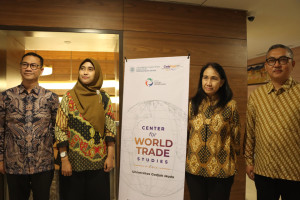
She highlighted several key points discussed during the forum. Indonesia is promoting a whole-of-government diplomatic approach that involves cross-ministerial actors, academics, farmers, and the private sector to address global regulatory pressures such as the EUDR. PSPD UGM, together with the UNDP-FAST Project, also launched a hybrid training program comprising modules on commodity mastery, negotiation strategies, and public diplomacy to strengthen Indonesia’s bargaining position in international markets.
“In addition, there has been an increase in exports of processed palm oil products to China and Egypt, as well as emerging opportunities in bioavtur and Sustainable Aviation Fuel (SAF) derived from POME, which open new avenues for Indonesia to reduce dependence on traditional markets and enhance downstream competitiveness,” she added.
Iwan Kurniawan, Program Manager for the Natural Resources Management (NRM) Cluster at UNDP Indonesia, stated that the narrative of sustainable palm oil must be grounded in the reality that millions of independent smallholders are key actors in the supply chain, not merely beneficiaries, with ISPO certification strengthened down to the field level.
“We must also ensure that the social impacts are fair, inclusive, and do not disadvantage farmer groups such as smallholders, workers, and local communities. From this, we want to collectively build a narrative that smallholders are part of the solution and central to the sustainability prospects of the palm oil industry,” he explained.
Regarding deforestation issues, Ir. Belinda Arunarwati Margono, M.Sc., Ph.D., Secretary of the Geospatial Information Agency, stated that palm oil should not always be associated with deforestation. Palm oil can be cultivated on non-productive land or areas historically designated for palm plantations.
Differences in forest definitions between Indonesia (96 million hectares) and the European Union (183 million hectares) also introduce bias into deforestation assessments, requiring negotiators to rely confidently on Indonesia’s officially verified scientific data.
“Palm oil is often said to originate from deforestation. In reality, Indonesia has its own system to monitor whether deforestation has occurred. Sometimes, the public refers more to external assessments, even though those parties do not have a dedicated monitoring system,” she explained.
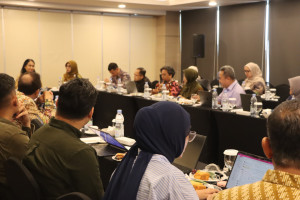
Furthermore, Iwan noted that one of Indonesia’s current challenges in the palm oil sector is the diversity of data across institutions. This highlights the need for an integrated data system to produce more objective information.
“At present, palm oil data is scattered. Each institution has its own dataset. Through this initiative, we hope to establish a unified database that can serve as a reliable reference for negotiators and diplomats in conveying objective facts about Indonesia’s palm oil,” he concluded.
In addition to discussing the curriculum, the workshop marked the beginning of a hybrid training program for negotiators and diplomats. The program will be conducted in two phases: a four-day intensive training following three weeks of self-paced learning, followed by field visits to five palm oil production regions for five selected negotiators and diplomats.
The hybrid training is scheduled for July 2026, while the field visits will take place in September 2026. This initiative represents a strategic step for Indonesia to ensure that its palm oil diplomacy is not only defensive against global pressures but also proactive in shaping a sustainability narrative grounded in data and national interests.
Author: Leony
Editor: Gusti Grehenson
Post-editor: Zabrina Kumara
Photo: Kompas