


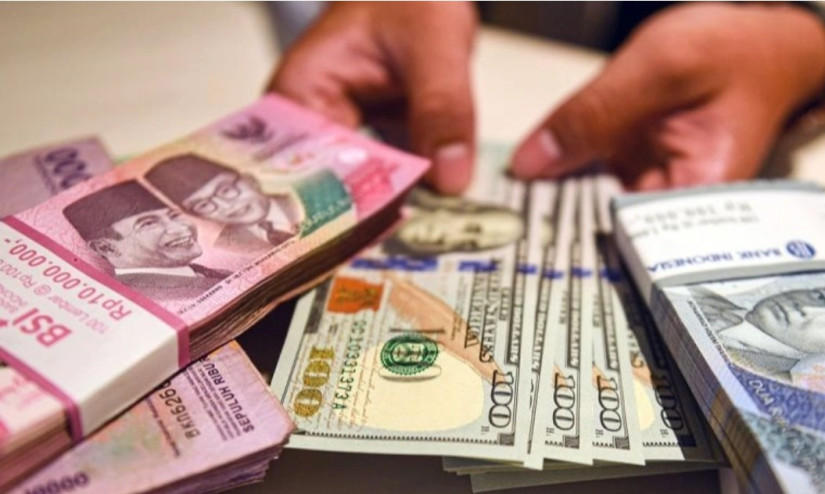
Pressure on the rupiah has intensified amid escalating conflict in the Middle East, fueling global uncertainty. This situation raises concerns that the impact of the rupiah’s depreciation will transmit more quickly to the domestic economy. Over the past 28 years, the rupiah’s exchange rate has tended to weaken. Although driven by different factors and patterns, the economic impact has been relatively similar. At present, the exchange rate stands at around Rp17,400 per US dollar.
An academic at the Faculty of Economics and Business, Universitas Gadjah Mada (FEB UGM), Rijadh Djatu Winardi, Ph.D., assessed that the current rupiah depreciation results from the accumulation of multiple simultaneous pressures, often referred to as a “perfect storm”. From a global perspective, he explained that geopolitical tensions and global economic uncertainty have increased demand for the US dollar, prompting investors to treat it as a primary safe-haven asset.
On the domestic side, he noted seasonal and structural factors that further intensify pressure on the rupiah, such as the dividend payment period for foreign investors, which routinely increases demand for foreign exchange. In addition, growing market concerns over increasingly limited fiscal space or deficits approaching the threshold have raised risk perceptions regarding the domestic economy.
“The combination of global and domestic factors, in my view, makes the rupiah depreciation feel more severe,” he said on Sunday (May. 10).
The rupiah’s depreciation is considered to have a relatively direct impact on the prices of goods consumed by the public. Rijadh explained that in economic studies, this phenomenon is known as imported inflation, where a weaker rupiah increases the cost of imported goods when denominated in rupiah. Companies that rely on imported raw materials will face rising production costs. Although they may still have old stock, price adjustments are ultimately difficult to avoid and are generally passed on to consumers within one to several months.
“People will begin to feel the impact in the form of rising prices of essential goods, higher transportation costs, and increased prices of health products,” he said.
The depreciation of the rupiah is also seen as putting significant pressure on several components of the state budget, especially on expenditures sensitive to exchange-rate movements. Rijadh mentioned energy subsidies as one of the most affected sectors, given the sector’s reliance on imported components, which increase subsidy burdens when the rupiah weakens.
In addition, the burden of external debt is a significant factor because the value of principal and interest payments in rupiah terms swells even though the dollar-denominated obligations remain unchanged.
“When fiscal space is absorbed by subsidies and debt, the government’s flexibility to finance other sectors such as education, health, or social protection becomes limited,” he explained.
Furthermore, Rijadh noted that efforts to stabilize the rupiah place Bank Indonesia in a dilemma between maintaining stability and sustaining economic growth. On the one hand, keeping interest rates relatively low is important to support economic activity and maintain affordable credit costs; on the other hand, exchange rate stability must also be preserved.
According to him, a combined approach can be taken, ranging from interventions in the foreign exchange market to reduce rupiah volatility to the use of financial instruments such as securities to attract capital inflows.
“This approach, in my opinion, is quite rational because it seeks to maintain a balance between macroeconomic stability and domestic growth momentum,” he said.
Rijadh emphasized the importance of maintaining fiscal credibility through disciplined state spending and strengthening the domestic sector to reduce import dependence, especially on food and energy. He also viewed the current rupiah depreciation as an opportunity to boost exports.
“Equally important, in my view, is safeguarding the resilience of vulnerable communities. Social protection programs must remain strong and adaptive, as these groups are usually the first to feel the impact of rising prices,” he concluded.
Author: Diyana Khairunnisa
Editor: Gusti Grehenson
Post-editor: Rajendra Arya
Photo: Antara