


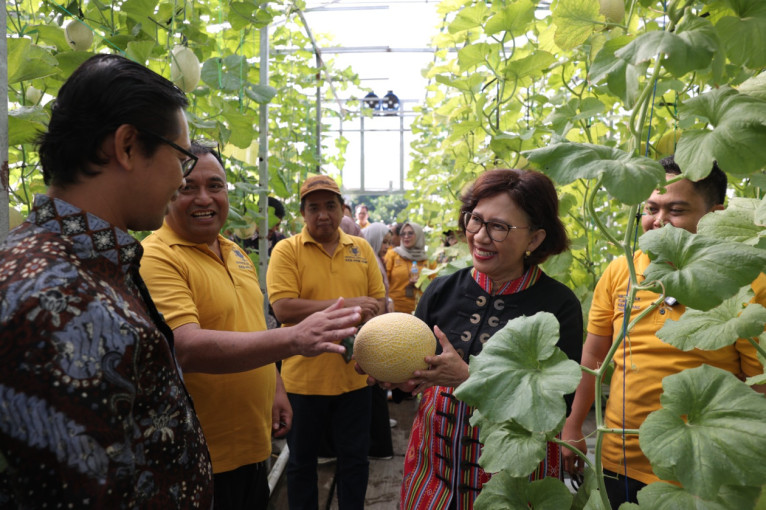
University Gadjah Mada’s (UGM) Rector, Professor Ova Emilia, reaffirmed that researchers across UGM are ready to support the government’s national food self-sufficiency agenda through research innovation and downstream commercialization. She noted that the agricultural sector is currently facing numerous challenges, including El Niño, climate change, and land conversion, making the development of technology, smart farming, and the modernization of production systems increasingly important. These efforts, she said, can be advanced through research.
“We fully support the national priorities and future missions because food self-sufficiency is a priority for the nation and the state as part of Indonesia’s transformation strategy,” said Professor Ova during the groundbreaking ceremony for the Smart Eco Bioproduction research facility at the UGM’s Faculty of Agriculture (Agriculture UGM) on Friday (Jul. 10).
According to Professor Ova, Smart Eco Bioproduction represents a new paradigm for agricultural development by integrating technology, artificial intelligence, biotechnology, precision agriculture, resource efficiency, the circular economy, and sustainability principles. The new facility is expected to strengthen laboratory development, practical learning activities, and the creation of innovations that generate tangible benefits for society.
“These achievements demonstrate that innovations developed at UGM possess strong commercial value while enhancing the competitiveness of the horticultural sector and strengthening national seed sovereignty,” she said.
The Dean of Agriculture UGM, Professor Jaka Widada, stated that the construction of the Smart Eco Bioproduction Building is a strategic step toward supporting education, sustaining research, and developing human resources in agriculture. He expressed hope that the entire construction process would proceed smoothly and provide lasting benefits for future generations in Indonesia’s agricultural sector.
“We ask for everyone’s prayers that the construction of the Smart Eco Bioproduction Building proceeds smoothly without any obstacles and becomes a highly beneficial program for nurturing future generations, particularly those in agriculture,” said Professor Jaka.
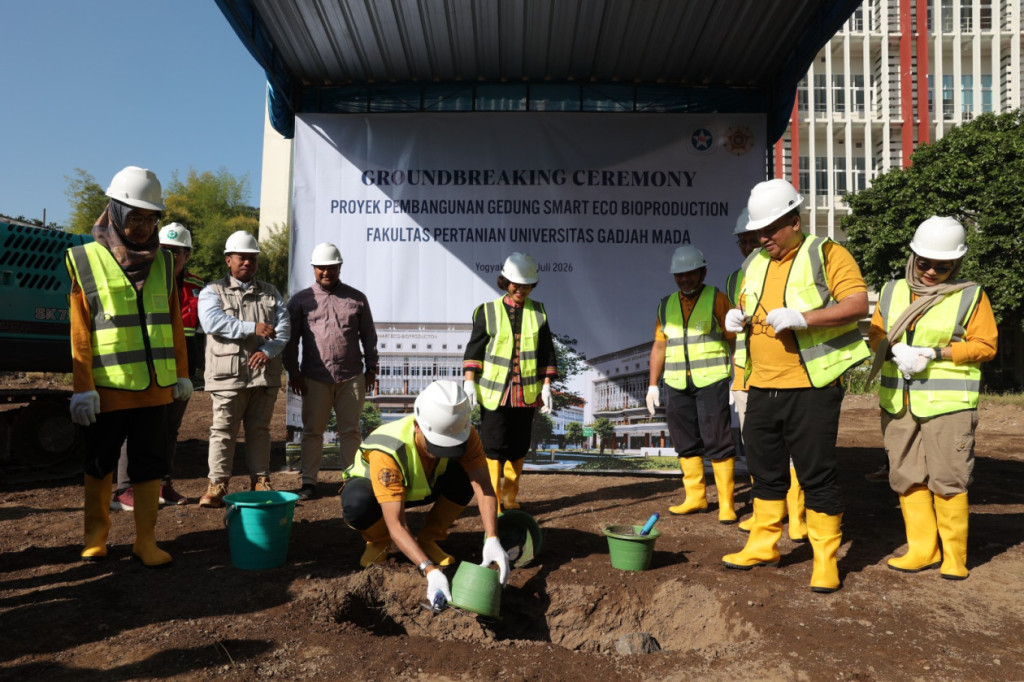
UGM Vice Rector for Research, Business Development, and Partnerships, Dr. Danang Sri Hadmoko, reaffirmed the university’s commitment to strengthening the research ecosystem and seed development through the construction of supporting infrastructure and cross-faculty collaboration. He revealed that UGM is preparing to build seven greenhouse units within the Agriculture UGM complex to accelerate plant breeding and the development of superior crop varieties.
In addition, UGM will integrate seed researchers from across its faculties.
“Research on superior seed varieties, including the Premium Hybrid Melon that has recently been harvested for the first time by Agriculture UGM, will continue as part of strengthening innovation and the downstream commercialization of the university’s research outcomes,” said Dr. Danang.
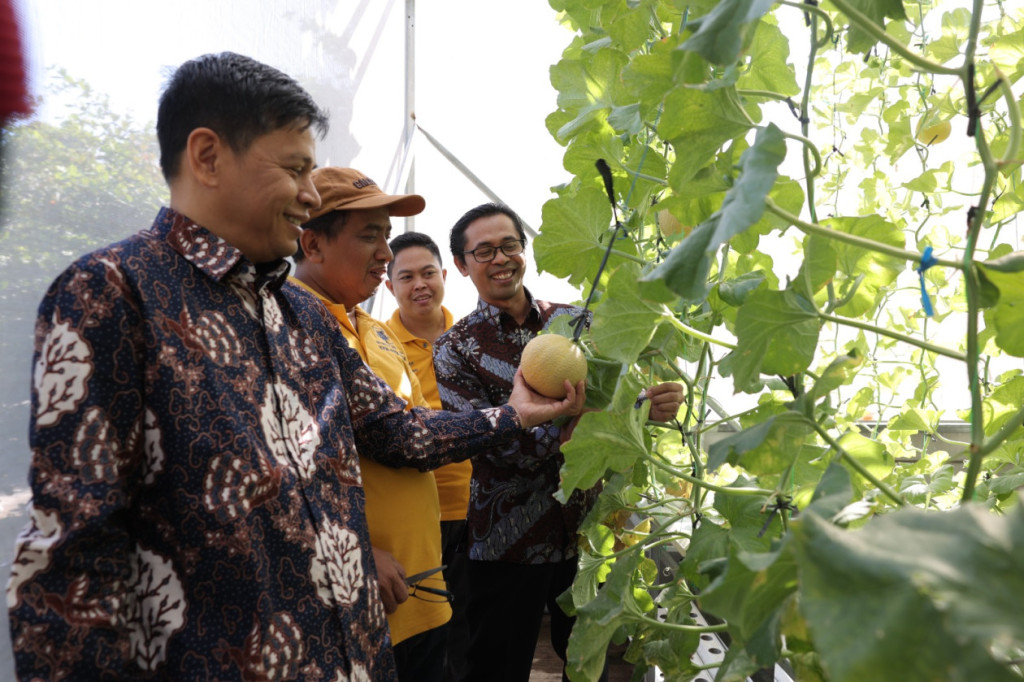
The groundbreaking ceremony for the Smart Eco Bioproduction Building was held as part of the opening series of events celebrating UGM’s 80th Anniversary and 16th Lustrum. Following the ceremony, the university symbolically reaffirmed its commitment to research downstreaming through the first harvest of the Premium Hybrid Melon developed by UGM Agriculture. The Premium Hybrid Melon seed is one of the faculty’s flagship research and development products, developed through a long, systematic process. This achievement demonstrates that research at UGM extends beyond scientific publications to produce innovations ready to deliver tangible benefits to society.
Author: Cyntia Noviana
Editor: Gusti Grehenson
Post-Editor: Priyanandaningrat
Photo: Firsto