


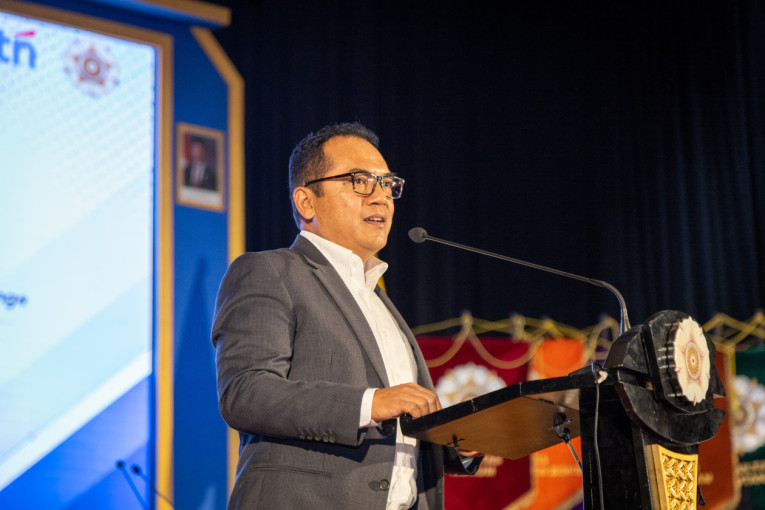
Graduates entering today’s workforce need more than academic excellence—they must continue learning, adapt to rapid change, and focus on creating meaningful impact. That was the message delivered by Eko Waluyo, Director of Human Capital and Compliance at PT Bank Tabungan Negara (Persero) Tbk. (BTN), to 1,054 graduate students of Universitas Gadjah Mada (UGM) during the orientation and graduation rehearsal for the Graduate Program Commencement Ceremony for the fourth period of the 2025/2026 academic year on Tuesday (July 21) at Grha Sabha Pramana.
Drawing on his experience in the banking industry, Waluyo encouraged students to prepare for a workplace where success depends not only on individual achievement but also on collaboration and continuous learning.
“The key is how to create impact, influence your team, build teamwork, and collaborate. It is no longer about yourself, but about what we can achieve together,” said the MBA graduate of UGM’s Faculty of Economics and Business.
Waluyo said professionals must continue creating value for themselves and the organizations they serve, emphasizing that learning should never stop after graduation.
“Especially in an era of rapid change, everyone is expected to become a lifelong learner,” he said.
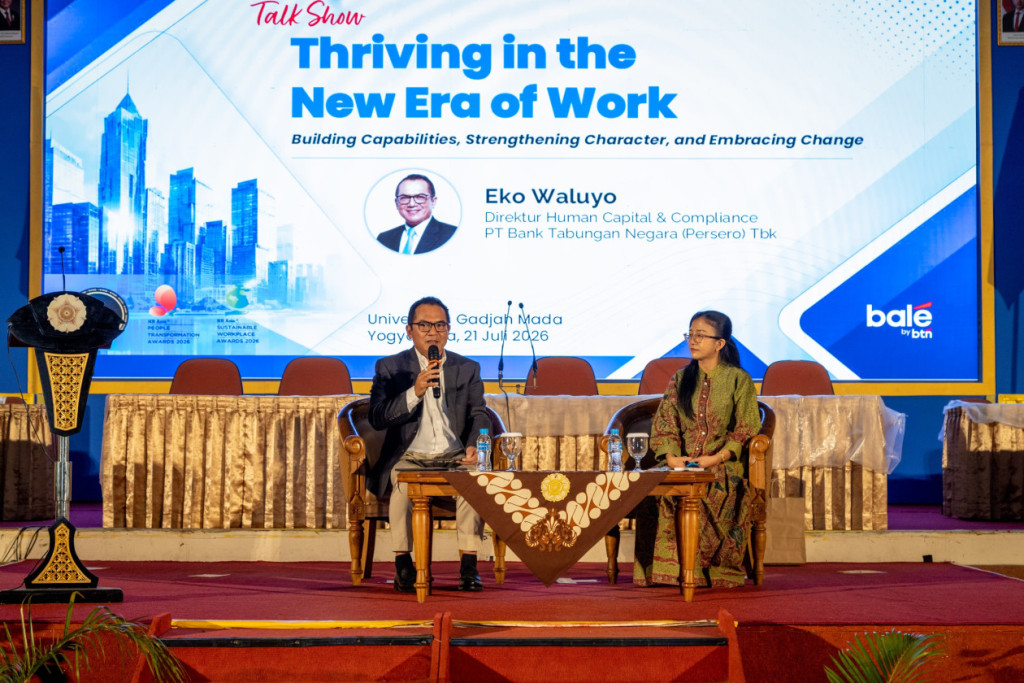
He explained that technological disruption has transformed the banking industry. Banks now deliver services primarily through digital platforms rather than physical branches, with customers conducting around 70–80 percent of banking transactions through mobile applications.
“As customer behavior changes, so do jobs. Around 3,000 employees at my company no longer perform the same roles they once did, and every year we relocate around 400 employees to new functions,” he said.
Waluyo also cited research by CB Insights showing that the average lifespan of companies listed in the S&P 500 has shortened dramatically over the past several decades. According to him, organizations that fail to anticipate technological and business changes risk becoming obsolete.
For that reason, he said, today’s professionals need competencies that extend beyond their academic disciplines. Referring to data from the World Economic Forum, he noted that many of the most sought-after skills are technology-related, regardless of one’s educational background.
“By 2030, perhaps one-third of the skills we have today will no longer be relevant. We need to start developing new skills and competencies now,” he said.
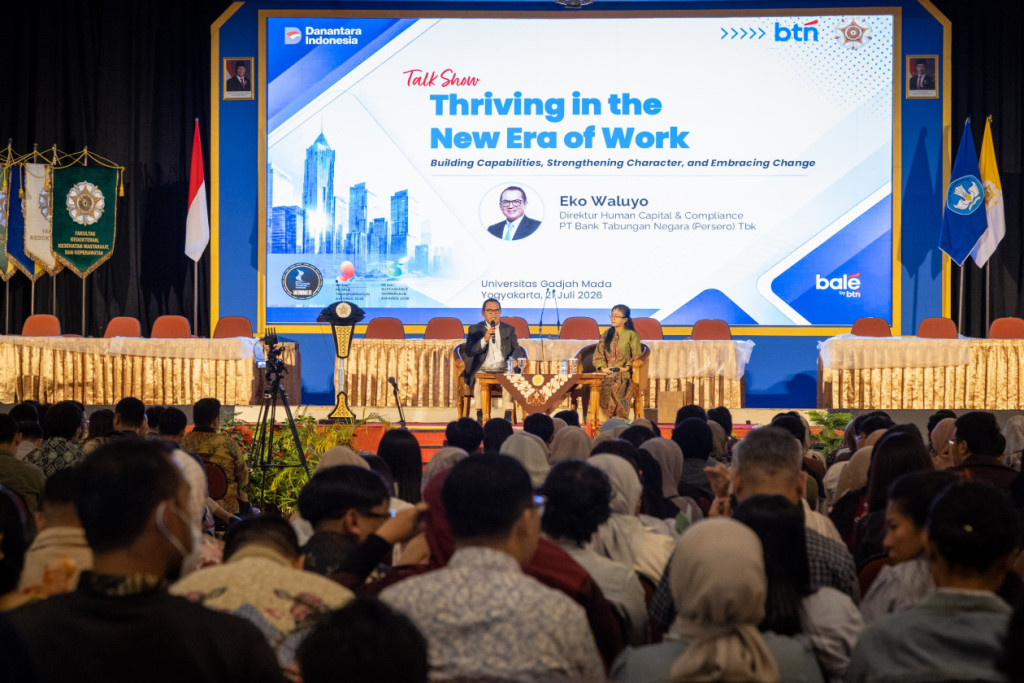
Waluyo likened career development to running a marathon rather than a sprint, requiring endurance, adaptability, and continuous self-improvement throughout one’s professional life.
He identified four essential elements of long-term career success: competence, character, consistency, and contribution.
“Character multiplied by competence, multiplied again by consistency, and multiplied again by contribution. If any one of these four is zero, then the final result will also be zero,” he said.
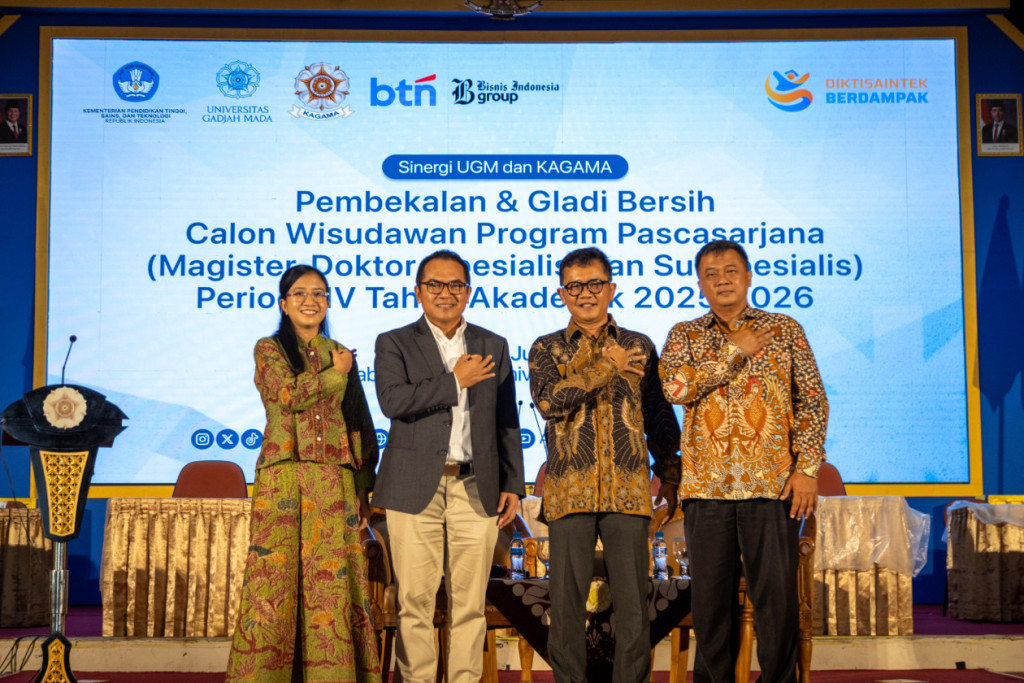
UGM Vice Rector for Student Affairs, Community Service, and Alumni, Dr. Arie Sujito, said the orientation serves as an important bridge between university life and the professional world.
“We are equipping our graduating students with the essential foundation they need as they move into the next stage of their journey,” he said.
Dr. Sujito added that universities must continue strengthening relationships with alumni to remain responsive to developments in the professional world. Beyond producing graduates, he said, higher education institutions also have a responsibility to build networks that help connect alums with career opportunities.
“We also have a responsibility to ensure that the networks we have built over the years serve as bridges that help our graduates pursue the careers they aspire to,” he concluded.
Also speaking at the event, Chair of the Gunungkidul Chapter of the UGM Alumni Family Association (Kagama), Ir. Eddy Praptono, M.Si., encouraged graduates to remain connected through the alum network.
He said Kagama offers graduates opportunities to learn, collaborate, and expand professional networks while continuing to uphold UGM’s values through meaningful contributions to society.
“Graduation also comes with the responsibility of upholding UGM’s good name by achieving excellence and making positive contributions to the nation,” he said.
Author: Hanifah
Editor: Gusti Grehenson
Post-Editor: Zabrina Kumara
Photo: Donnie