


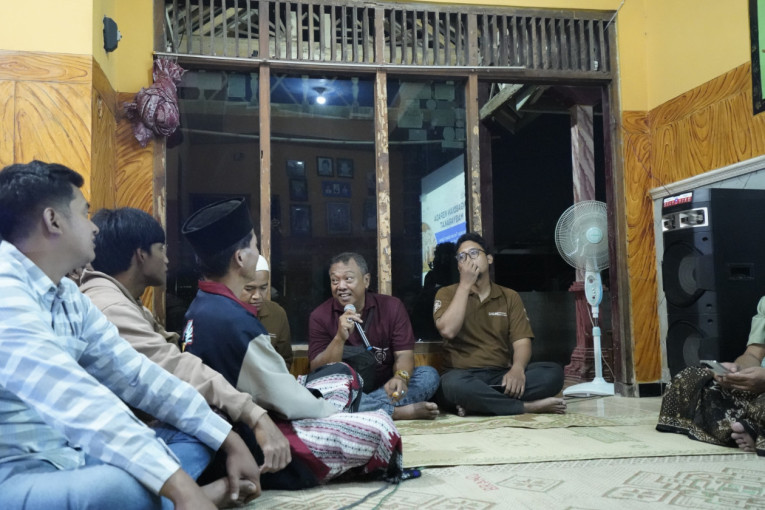
Improving the productivity of dairy cattle and goats requires proper feed management, adequate nutrition, and disease prevention. These were the focus of an educational outreach session and discussion with farmers in Kayumas Village, Jatinom District, Klaten Regency, on Wednesday (Oct. 14), initiated by academics from Universitas Gadjah Mada’s Faculty of Veterinary Medicine (FKH UGM).
Yanuartono, a veterinarian and lecturer in the Department of Internal Medicine at FKH UGM, discussed livestock management and nutritional requirements, particularly for dairy cattle and goats. Meanwhile, Sugiyono, a veterinarian from the Department of Pathology at FKH UGM, highlighted diseases affecting both types of livestock and the importance of recognizing and preventing health problems early.
Yanuartono emphasized preparing feed reserves to cope with the dry season. Declining forage availability can challenge farmers, making it essential to plan feed supplies before the dry season begins.
“We should have prepared these reserves during the previous season, before the prolonged dry spell, so that we can breathe a little easier during the current one,” he said.
According to Yanuartono, one measure farmers can take is to process forage into silage, a type of feed preserved through a fermentation process.
“By maintaining feed reserves, farmers can anticipate forage shortages while ensuring a continuous supply of feed for their livestock,” he explained.
Beyond the quantity of feed, adequate nutrition also requires attention.
“Nutritional requirements are linked to body condition, productivity, and the animals’ ability to produce milk. Therefore, feed management needs to be adjusted to livestock requirements and farmers’ capacity to provide feed sustainably,” he added.

The condition of livestock housing is an important aspect of animal management. Roof materials, building height, and air circulation need to be evaluated to prevent excessive heat stress in livestock.
“Whether the roof is made of metal sheets, asbestos, or tiles, metal sheets and asbestos can become extremely hot under conditions like those we experienced from this morning until noon. We also need to assess the height of the roof above the floor and how air circulates inside the barn. In addition to feed, these are factors we need to evaluate,” he explained.
Livestock productivity cannot be improved simply by increasing feed supplies. Housing conditions and overall husbandry practices must also be considered to support the comfort and productivity of dairy cattle and goats.
In addition to husbandry management, animal health is essential to maintaining livestock productivity. In discussing diseases affecting dairy cattle and goats, Sugiyono emphasized understanding the factors associated with health problems and implementing appropriate prevention and treatment measures. One of the issues discussed was mastitis, or inflammation of the udder, in dairy cattle.
The disease warrants attention because it affects animal health and milk quality.
“Livestock examinations should not focus solely on teat hygiene; they must also consider the animal’s overall health. We should not simply say, ‘My cow has mastitis because its teats are not clean enough.’ That is only one aspect; there are two other aspects we need to consider,” he said.
Sugiyono also highlighted the relationship between health problems in dairy cattle and milk quality, noting that poor-quality milk can affect sales to dairy cooperatives.
“Milk that fails to meet quality standards may be rejected by cooperatives or processors. Therefore, farmers need to maintain hygiene during milking, monitor udder conditions, and promptly investigate any changes in their animals’ health,” he said.
The discussion on animal health also covered suspected health problems in Peranakan Etawa (PE) goats associated with iodine deficiency. Participants raised the possibility that soil characteristics in the Kayumas area could affect mineral availability and, consequently, the animals’ mineral intake. However, this hypothesis requires further research, including studies of iodine levels in goats.

Ikhwan, a resident of Kayumas Village, welcomed the community outreach conducted by FKH UGM. The session was particularly beneficial for young farmers who still need to develop their knowledge and experience in livestock management.
“It has been a great help to young farmers like me. There may be many problems we are not yet aware of, but the lecturers and instructors explained them today, including practical tips and ways to address them. This is very useful for young farmers like me,” Ikhwan said.
Looking ahead, Ikhwan hopes similar activities can be held regularly. He suggested establishing a forum where farmers can exchange experiences and creating opportunities for them to visit UGM to learn about good livestock management practices.
“I hope these sharing sessions or farmer meetings can be held more often, giving farmers like us the opportunity to visit UGM and see how to manage livestock properly. Alternatively, UGM could visit us more frequently to assess the farms in our community, particularly those of farmers whose businesses are still relatively small,” he said.
Through this outreach initiative, farmers are expected to improve their understanding of feed management, nutritional adequacy, housing conditions, and the prevention and early recognition of diseases in dairy cattle and goats.
Addressing management and animal health together is essential to maintaining livestock productivity and ensuring the sustainability of community-based livestock businesses.
The activity was part of a community service initiative conducted by the Department of Pathology at Universitas Gadjah Mada’s Faculty of Veterinary Medicine under the theme “Penguatan Manajemen Pemeliharaan Ternak Ruminansia Kecil untuk Pencegahan Penyakit Endemis” (Strengthening Husbandry Management for Small Ruminants to Prevent Endemic Diseases).
Author/Photo: M. Aidil Syahputra
Editor: Gusti Grehenson
Post-editor: Jasmine Ferdian