


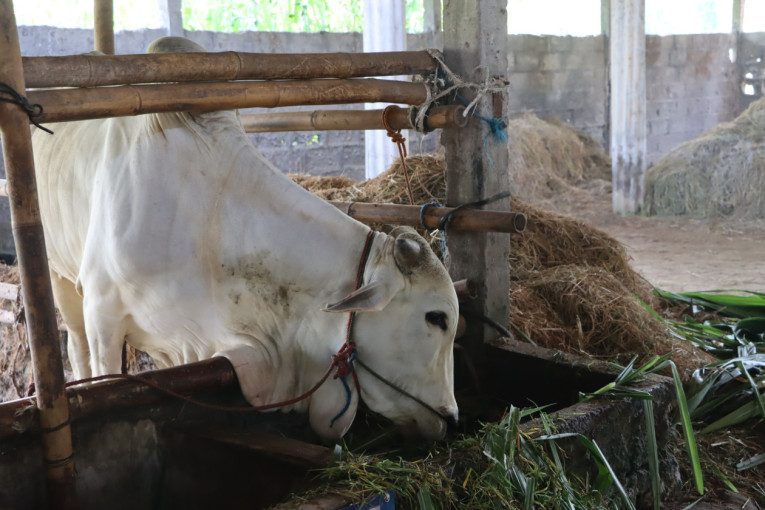
The population of Ongole Crossbred (PO) cattle, commonly known as Javanese cattle, is reportedly under increasing threat amid the rapid expansion of crossbred cattle. Yet this indigenous breed is highly adaptable to local environments and reproduces easily. Its primary limitation lies in its relatively small body size compared to other crossbred cattle.
“This breed is native to Indonesia, particularly Java. These white cattle are highly adaptable and breed easily. Their only drawback is their smaller size,” said Professor Agung Budiyanto, Professor at the Department of Reproduction and Obstetrics, Faculty of Veterinary Medicine UGM (FKH UGM), during a community development program based on applied research and community empowerment. This year, held in Bolu, Margokaton Village, Sleman, on Thursday (Jun. 4).
In collaboration with the Mergo Andhini Makmur livestock farmers group in Seyegan, FKH UGM launched a program to conserve the genetic resources of Ongole crossbred cattle through smart farming technologies in reproduction, nutrition, and information digitalization.
Through the application of reproductive technologies, nutrition management, animal health practices, and information digitalization, the program is expected to increase the population and productivity of PO cattle, supporting national beef self-sufficiency while contributing to the achievement of the Sustainable Development Goals (SDGs), particularly Goal 2: Zero Hunger.
Professor Agung explained that the program’s implementation includes providing high-quality feed, estrus synchronization, artificial insemination, and embryo transfer technology.
“This community service program focuses not only on increasing the PO cattle population but also on strengthening farmers’ capacity to manage livestock reproduction, health, and nutrition in a more modern and efficient manner,” he said.
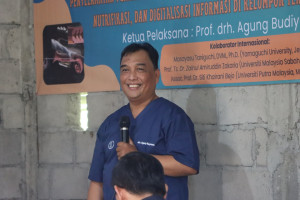
Among the many livestock farmer groups in the Yogyakarta Special Region, Mergo Andhini Makmur was selected as a partner due to its strong track record of collaboration with FKH UGM. In addition, the group has demonstrated a strong commitment to development, supported by its members’ active participation.
Professor Agung noted that the relationship between FKH UGM and Mergo Andhini Makmur has been established for many years. The farming area frequently serves as a site for student academic activities and various community engagement programs organized by the faculty.
“We chose Mergo Andhini Makmur because they are highly cooperative. We also have a long history of collaboration with this group. FKH UGM frequently uses this location for practical training and various student activities. The farmers are open to innovation and eager to grow together with us,” he said.
In addition to support from farmers, the program’s success is strengthened by the involvement of local government authorities, who have actively supported its implementation. According to Professor Agung, synergy among universities, communities, and government institutions is a key factor in creating sustainable empowerment programs.
Meanwhile, Professor Aris Haryanto, Vice Dean for Research, Community Service, Cooperation, and Alumni Affairs at FKH UGM, explained that the initiative is part of the faculty’s annual community service program, which this year involves international collaborators from Japan and Malaysia. According to him, the collaboration serves to implement one of the pillars of the Tridharma of Higher Education by providing direct assistance to livestock farmers.
“This year’s program is particularly distinctive because we have involved partners from Yamaguchi University, Universiti Malaysia Sabah, and Universiti Putra Malaysia. Together, we are working directly with livestock farmer groups to support the development of science- and technology-based livestock farming,” he said.
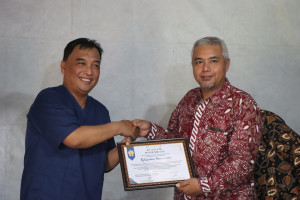
In addition to benefiting the community, the program also serves as a learning platform for students. Professor Aris explained that undergraduate, master’s, and doctoral students are directly involved in better understanding the challenges faced by livestock farmers and in applying the knowledge acquired during their studies.
“Students need direct field experience. By engaging with communities, they can observe the challenges faced by farmers while learning how to develop appropriate solutions based on their academic expertise,” he said.
The community service program began with an outreach session covering beef cattle reproductive management, the use of herbal antimicrobials for livestock, and screening for bacterial and viral diseases in cattle.
The materials were presented by the FKH UGM faculty team, consisting of Professor Agung Budiyanto, Dr. Ida Fitriana, and Dr. Okti Herawati. In addition to outreach activities, the team provided training on producing complete feed from forage and on using locally available feed ingredients through silage methods. This technology is expected to improve feed quality while optimizing the use of agricultural waste.
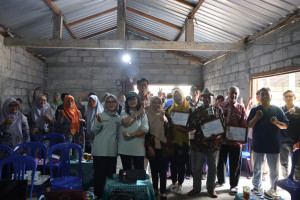
The community service team also implemented a QR code-based digital recording system to document the health and reproductive data of individual cattle. The system enables farmers to record and monitor livestock more accurately, systematically, and efficiently.
As part of efforts to improve livestock health, disease screening was also conducted through complete blood examinations and fecal sample analysis. The results served as the basis for integrated treatment measures, including administering vitamins, deworming medication, supplements, and herbal products to support animal health.
FKH UGM provided all technological and equipment innovations throughout the program’s implementation. The initiative was carried out in collaboration with research teams from Yamaguchi University, Universiti Malaysia Sabah, and Universiti Putra Malaysia.
Author: Zabrina Kumara
Editor: Gusti Grehenson
Post-editor: Jasmine Ferdian
Photo: Hanifah