


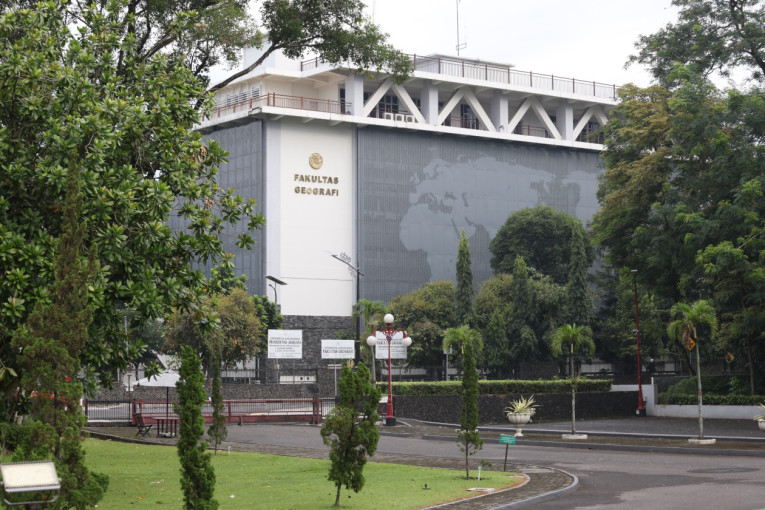
Universitas Gadjah Mada (UGM) demonstrated its achievement following the release of the QS World University Rankings (QS WUR) by Subject in March. UGM’s Geography ranked 101–150 globally. At the national level, only two universities were listed, with UGM’s Geography securing 1st place in Indonesia and Universitas Indonesia (UI) ranked 2nd (151–200 globally).
The Vice Dean for Research, Community Service, Cooperation, and Alumni Affairs at the Faculty of Geography UGM (Geography UGM), Dr. Dyah Rahmawati Hizbaron, known as Emma, highlighted alumni collaboration and a strong commitment to community service as key factors behind the faculty’s global ranking achievement.
Dr. Emma explained that long before QS WUR was established in 2004, Geography UGM had already expanded its presence in various international consortia and forums. This has been part of the faculty’s and the university’s efforts to build global partnerships, which became the foundation for assessments by international university ranking institutions, including QS WUR.
These efforts have also created opportunities for UGM experts to engage with various United Nations systems, including the United Nations Convention to Combat Desertification, the United Nations Environment Program, and UN-Habitat.
“For the past 15 to 20 years, we have been striving to join these groups. If we are not recognized by international partners, we will not be involved in global initiatives. This effort has paid off, as our expertise is now considered capable of meeting needs within the United Nations,” she said on Friday (Apr. 24).
As is known, QS WUR by Subject evaluates rankings based on several indicators, including academic reputation, research performance, employer reputation, and faculty-student ratio. Geography UGM has sought to enhance its academic reputation through lecturers’ performance in producing publications in international journals.
In terms of research, Dr. Emma noted that Geography UGM plays a pioneering role in geographical sciences, holding a central position in the development of regional studies in Indonesia.
“On average, our research output ranges from four to five publications per lecturer each year. This achievement is the result of team collaboration, so targets do not rely on a single party,” she explained.
Beyond research achievements, Geography UGM has also strengthened its research networks and maintained long-standing partnerships. However, such activities are often not included in publications, which are now widely considered in accreditation assessments.
To support this, Dr. Emma encouraged lecturers to involve students in joint supervision activities and introduce them to research outputs that have been successfully published.
Another indicator considered by QS WUR is employer reputation, which is derived from user groups of graduates, namely alumni of Geography UGM who are spread across various companies, institutions, and organizations both domestically and internationally.
“Alumni actively provide evaluations and feedback,” she noted.
In addition to research, collaboration between alumni and the faculty serves as the backbone of the faculty’s achievements. Public lectures are frequently organized each year to connect students and alumni, enabling students to gain insights into the paradigms of their field of study.
“We are working to ensure that each study program regularly engages with alumni in various ministries and institutions to explain the curriculum, so they understand where their geographical expertise can be applied,” she concluded.
Author: Ika Agustine
Editor: Gusti Grehenson
Post-editor: Jasmine Ferdian
Photo: Donnie