


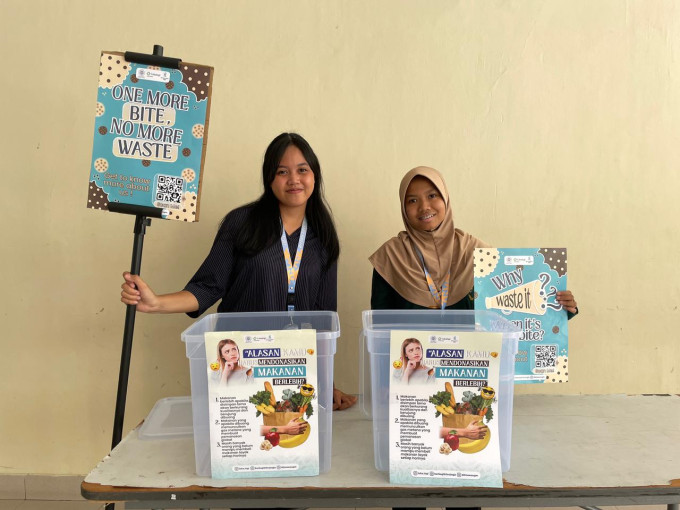
Lokalogi Pramuka UGM launched a progressive initiative to manage waste at UGM graduation ceremonies, which are attended by thousands and generate large volumes of waste. The team processed surplus food and leftover meals during the Postgraduate Graduation Ceremony held on Apr. 22-23, 2026. Through a strategic collaboration with Berbagi Bites Jogja (BBJ), Lokalogi conducted a pilot waste-management initiative to separate edible food from organic waste around the Grha Sabha Pramana and Balairung UGM areas.
The Head of Lokalogi Pramuka UGM, Giovanni Yusuf H., explained that this initiative was driven by efforts to raise public awareness of waste, with the main theme of creating without waste. Gio, as he is commonly known, revealed that during the two years of Lokalogi’s operation, the most difficult challenge has not been technical issues but rather students’ own habits.
“We still often encounter students who lack awareness about waste. Even when waste bins are monitored, they are still reluctant to sort their trash,” he said on Friday (Apr. 24).
Through this graduation momentum, Gio and the Lokalogi team aim to instill inclusive sustainability principles among the entire academic community. He emphasized that significant change always begins with small, collective actions.
“Let’s start with small steps. Rather than one person practicing zero waste perfectly but without broad impact, it is better for ten thousand people to practice zero waste imperfectly but collectively,” he urged.
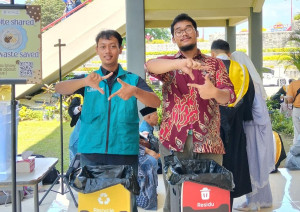
In line with Lokalogi’s spirit, Berbagi Bites Jogja also serves as a driver for reducing surplus food while mobilizing social engagement. Head of BBJ’s Food Division, Maximillian Chandra, stated that BBJ aims to rescue food through two main programs, namely food rescue and food bank initiatives, targeting both social foundations collectively and UGM students individually.
Max explained that there are strict criteria for food to be rescued: it must be fit for consumption, clean, safe, and not be leftovers from a previous meal. To ensure adherence to these standards, his team applies a layered verification process from collection through quality assessment.
“We evaluate organoleptic aspects or sensory analysis through three indicators, which are taste, texture, and aroma. If all three indicators pass, the food is deemed safe for consumption,” Max explained.
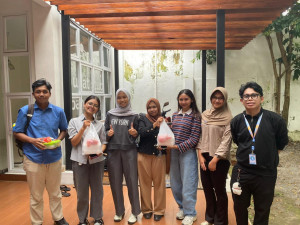
Although this was the first time the initiative was implemented during a graduation ceremony, the collaboration successfully mobilized around 25 volunteers, divided into three shifts and stationed at seven strategic points, covering the Grha Sabha Pramana to the Balairung UGM areas.
This initiative is expected not only to provide a practical solution to surplus food waste but also to serve as an educational platform for the families of attending graduates.
“UGM students may already be familiar with waste sorting education, but for graduates’ families, this becomes a tangible learning experience that graduation celebrations can also be conducted responsibly toward the environment,” Gio concluded.
Author: Aldi Firmansyah
Editor: Gusti Grehenson
Post-editor: Zabrina Kumara
Photo: Lokalogi and BBJ Team