


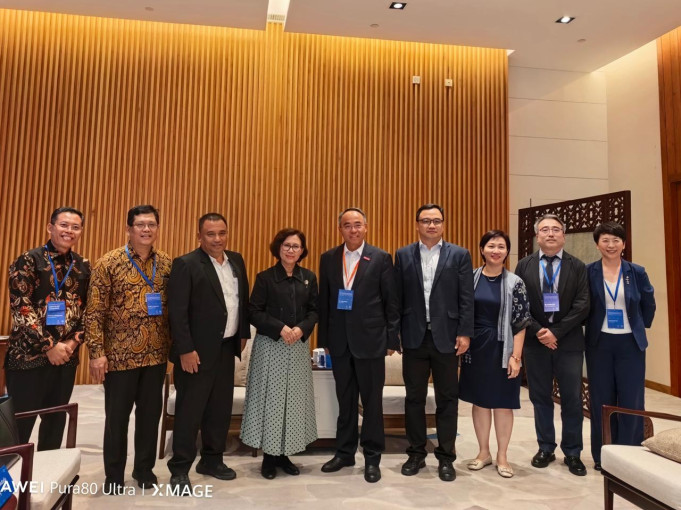
Universitas Gadjah Mada (UGM) participated in the Second University Presidents Forum of the University Consortium of the 21st Century Maritime Silk Road (UCMSR), organized by Xiamen University in China from June 11 to 13. This international forum brought together university leaders from various countries to discuss strengthening collaboration in higher education, global talent development, and universities’ role in addressing global challenges through innovation and digital transformation.
The event served as a strategic platform for higher education institutions to share best practices while expanding cross-border collaboration. Various issues related to the future of higher education and the development of innovation ecosystems were also among the key topics of discussion.
The UGM delegation was led by UGM Rector, Professor Ova Emilia. Also joining the delegation were Dean of UGM’s Faculty of Agriculture (Agriculture UGM), Professor Jaka Widada, as well as representatives from Biology UGM, including the Dean, Professor Budi Setiadi Daryono, and Vice Dean for Finance, Assets, and Human Resources, Dr. Slamet Widiyanto.
The presence of a cross-faculty delegation reflected UGM’s commitment to expanding international collaboration across various fields of study. The forum also opened broader opportunities for cooperation in education, research, and innovation. UGM’s active participation is expected to strengthen the university’s position within global academic networks.
The forum, attended by dozens of universities from various countries, addressed a range of strategic issues related to the future of higher education. Discussions covered global governance development, the use of artificial intelligence in education, and the strengthening of international partnerships.
In addition to keynote speeches by global university leaders, the program also featured discussions on building innovation ecosystems and accelerating technology downstreaming through collaboration among universities, industry, and government. The diverse perspectives presented offered insights into the direction of transformation in higher education amid increasingly dynamic global changes.
“This forum provides a highly strategic platform for UGM, particularly the Faculty of Biology, to expand networks and explore opportunities for international research and educational collaboration,” said Professor Daryono on Wednesday (Jun. 17).
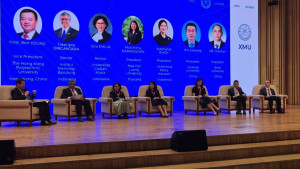
During the forum, the UGM delegation also participated in a discussion session titled “Connecting the World: Shaping New Paradigms for Global Higher Education Cooperation”. The session explored best practices in developing cross-border academic partnerships, student and faculty mobility, and innovation in international education.
The discussion highlighted the importance of more inclusive and adaptive collaboration to address global challenges. Higher education institutions were recognized as playing a crucial role in building increasingly open and interconnected learning ecosystems. The forum also served as a platform to strengthen synergy among universities in developing global talent.
In addition to discussing educational cooperation, the forum also highlighted the relationship between academia and industry through the session “Linking Industry and Academia: Building a New Ecosystem for University Technology Transfer”. In this session, participants discussed strategies to accelerate the downstream application of research outcomes and to promote innovations that deliver tangible benefits to society.
Universities were encouraged to build closer collaboration with industry in technology development. This approach is considered important for increasing research relevance while strengthening universities’ contributions to sustainable development. The discussion aligns with UGM’s commitment to promoting innovation that addresses the needs of society and industry.
On the final day of the program, delegates from Biology UGM visited the Tan Kah Kee Innovation Laboratory and the Biomarine Research Institute. Both institutions are recognized as leading centers of innovation and research focusing on strategic technology development and multidisciplinary collaboration.
The visit provided insights into research management integrated with industrial and societal needs. The delegation also gained valuable perspectives on developing innovation ecosystems that support the sustainable downstream application of research outcomes.
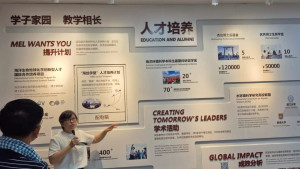
In addition, the UGM delegation also visited the Xian An Biomedical Laboratory, which focuses on vaccine development and production for public health. This visit demonstrated how basic research can be transformed into products that provide broad public benefits.
The research facility highlighted the importance of synergy among academia, industry, and government in accelerating health innovation. Through these field visits, the delegation gained deeper insight into internationally standardized research management practices.
“Visits to leading laboratories at Xiamen University provided real inspiration for how innovation ecosystems can be built collaboratively among universities, industry, and government,” added Professor Daryono.
UGM’s participation in the UCMSR forum is part of the university’s ongoing efforts to strengthen international networks and enhance the quality of higher education. Through various global forums, UGM continues to open opportunities for collaboration in education, research, innovation, and human resource development. Synergy with international universities and research institutions is expected to generate initiatives with broad societal impact.
Strengthening global partnerships is also a strategic step in addressing increasingly complex future challenges. Through closer collaboration, UGM continues to reinforce its contribution to sustainable global development.
Author: Triya Andriyani
Post-editor: Rajendra Arya
Photo: Documentation of Professor Daryono