


Universitas Gadjah Mada (UGM), in collaboration with the Bandung Institute of Technology (ITB), Universitas Padjadjaran (Unpad), and Universitas Nusa Cendana (Undana), carried out the 2026 Indonesian Collaborative Community Service Program (PMKI) in Fatukoko Village, West Mollo District, South Central Timor Regency, East Nusa Tenggara (NTT). The program was conducted under the theme “Penerapan Inovasi Teknologi Filtrasi Air Bersih Berbasis Material Adsorben dengan Pendekatan One Health untuk Penyediaan Air Bersih di Masyarakat dan Program Pencegahan Penyakit dan Peningkatan Kesehatan Hewan”, an innovative adsorbent-based water filtration technology developed through a One Health approach to improve access to clean water, prevent disease, and promote animal health.
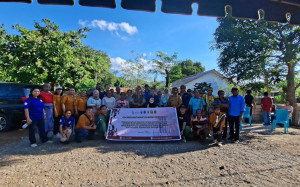
The program represents the implementation of the Tri-dharma through inter-university collaboration to address the needs of rural communities. To implement the clean water filtration technology, the ITB and Unpad team, represented by Professor Muhammad Ali Zulfikar and Professor Aliya Nur Hasanah, introduced an adsorbent-material-based filtration system designed to address limited access to clean water in Fatukoko Village. The system utilizes river water, which is processed into safe drinking water to improve the community’s quality of life and sanitation.
“To ensure the sustainability of the program, the team also handed over a maintenance guide booklet to the Fatukoko Village Government,” said Professor Ali on Thursday (July 30).

In the field of animal health, UGM collaborated with Undana and the South Central Timor Regency Livestock Office. The activities focused on veterinary services and disease prevention education based on the One Health approach. During the veterinary services, the team administered deworming medication to 100 livestock animals, 60 dogs, and 60 cats.
“We also provided vitamins to hundreds of livestock animals and companion animals,” said Dr. Hevi Wihadmadyatami, who led the UGM Faculty of Veterinary Medicine (FKH UGM) team.
Dr. Hevi explained that the animal health program was implemented in response to the needs of the local community, particularly the large livestock population and the continued occurrence of animal diseases.
“We also provided education on environmental health and rabies prevention, as rabies remains one of the priority zoonotic diseases in the region,” she said.
According to Dr. Hevi, improving animal health must go hand in hand with increasing public awareness of zoonotic disease prevention and environmental health.

Dr. Yulfia Nellymalik, a team member from the Undana Faculty of Veterinary Medicine, stated that the community service program in animal health focused not only on treatment but also on promotive and preventive efforts through community education. To support animal health and strengthen immunity, the team provided three liters of vitamins to be mixed into livestock drinking water, along with 60 multivitamin gel supplements for companion animals.
Author: Jelita Agustine
Editor: Gusti Grehenson
Post-Editor: Priyanandaningrat
Photo: Documentation of FKH Service Team