


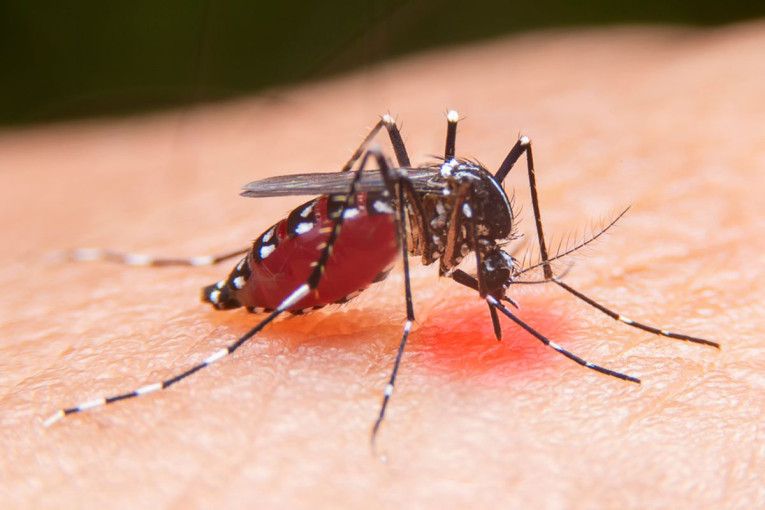
Researchers at Universitas Gadjah Mada’s (UGM) Center for Tropical Medicine (PKT) are developing a platform that uses artificial intelligence (AI) to detect potential dengue outbreak risks. The platform combines dengue case data from health facilities with climate, weather, and rainfall data. It then uses this information to predict changes in dengue risk and identify areas where cases may increase.
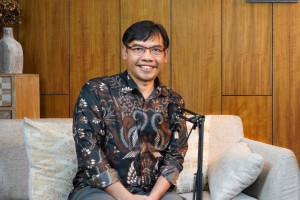
Dr. Anis Fuad, a researcher at UGM’s Center for Tropical Medicine, said the system, called ExplainDengue, connects various data sources, including historical dengue patient records from health facilities and climate, weather, and rainfall data.
“AI will then generate predictions of where dengue cases are likely to rise or fall in the future,” he said on Thursday (October 8).
In addition to dengue case data, the UGM PKT team is also using Electronic Medical Record (EMR) data from hospital emergency departments to help detect potential outbreaks. EMRs contain information about patients’ complaints and medical histories when they arrive at hospitals. This information can then be processed using a Large Language Model (LLM) to identify symptom patterns that may signal the early emergence of diseases capable of triggering an extraordinary event (KLB).
“Key symptom clusters from emergency department electronic medical records are entered into a large language model. The data are then combined in a format that helps identify whether the symptoms belong to a cluster associated with a disease that could trigger an extraordinary event (KLB) or a notifiable disease,” Anis explained.
According to Anis, AI can complement the government’s existing early warning systems. If disease patterns across health facilities can be identified more quickly, health offices can receive early information about potential outbreaks and determine the necessary responses.
“By adding a system behind the electronic medical records used by staff to help identify whether a disease could potentially lead to an extraordinary event (KLB), health office staff will be better supported,” he said.
Nevertheless, Anis noted that applying AI to support early outbreak detection still presents several challenges. One is the availability of accurate, complete, and consistent data. He explained that AI requires continuously updated data to produce increasingly reliable analyses.
“If the AI system we develop receives accurate, complete, and consistent data on an ongoing basis, it will be able to learn from that information and become more capable,” Anis explained.
Beyond data quality, ensuring the technology can be used sustainably is another challenge. Anis emphasized that AI serves as a supporting tool, not a replacement for human decision-making. AI-generated information can inform decisions, but the final decision remains with the user.
“Once we have developed an AI product and put it to use, it can help provide input on whether a situation has the potential to become an extraordinary event (KLB). However, we remain in control,” he said.
The use of AI in health services must also be accompanied by sound governance and evaluation. Anis cautioned that AI technologies developed overseas cannot be adopted directly for patient care in Indonesia. Health facilities need to understand how the technology works, verify its status and regulatory requirements, determine how patient data are managed and stored, and examine its results in other countries. Before implementation, the technology must also undergo a health technology assessment (HTA) to evaluate its suitability.
Anis also stressed the importance of human involvement at every stage of AI use, from development and testing to implementation and evaluation. In his view, AI must remain a supporting tool for health professionals, while humans retain control over decision-making.
He emphasized that AI must ultimately be used wisely and responsibly to ensure that the technology genuinely benefits health services.
“Use AI wisely, applying it to needs that truly require it and to support activities that create greater benefits for more people,” he concluded.
Author: M. Aidil Syahputra
Editor: Gusti Grehenson
Post-Editor: Priyananda
Photo: Shutterstock, PKT UGM Documentation