


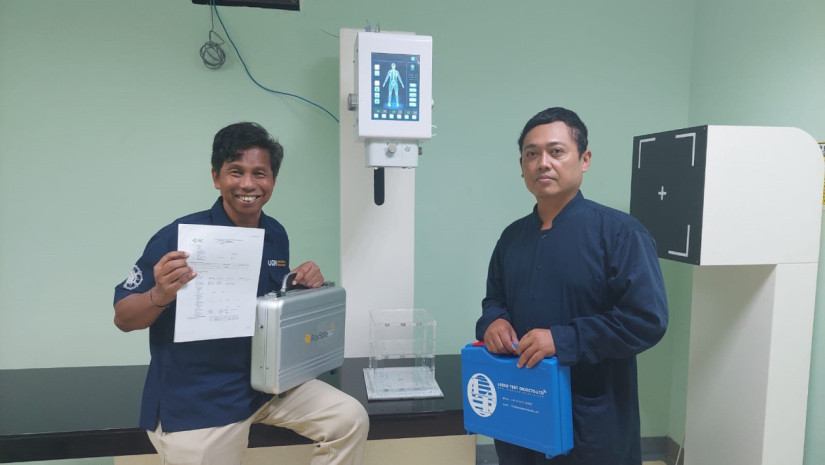
Professor of Image Physics at the Faculty of Mathematics and Natural Sciences, Universitas Gadjah Mada (FMIPA UGM), Professor Gede Bayu Suparta, together with his team, expressed gratitude that the Digital Fluorescence X-ray Radiography (RSFD) technology they have developed since 1990 has successfully entered the industrial and public markets. The downstreaming process has been carried out through PT Madeena Karya Indonesia (PT Madeena) since 2012. In 2021, the team introduced the DDR Madeena product based on RSFD technology, which has now obtained a distribution permit from the Indonesian Ministry of Health.
Professor Suparta explained that DDR Madeena is designed to become a primary medical device in Indonesia, available in all hospitals, clinics, and community health centers (Puskesmas).
DDR Madeena is a medical device used for health examinations that produces visual images. With image-based results, doctors, patients, and patients’ families can objectively and transparently access information on a patient’s health status and condition.
“Transparency of information from healthcare providers to patients and their families, combined with fast access to information, will greatly support patient treatment when a disease is detected,” he said at the UGM campus on Monday (Feb. 9), after attending the Medical Expo 2026 at GIK UGM.
Professor Suparta also expressed his gratitude that PT Madeena has obtained a Medical Device Production License (IPAK) and a Good Manufacturing Practices for Medical Devices (CPAKB) certification. PT Madeena has also secured a Medical Device Distribution License.
The DDR Madeena product (Medical Image Digitizer) has additionally received a Domestic Component Level (TKDN) certification of 57.62 percent. He explained that digital radiography technology is used in various forms of radiology equipment in hospitals.
These radiology devices are categorized as supporting medical equipment, yet they are relatively expensive due to the advanced features embedded in them. Radiology equipment is generally available only in hospitals and is used for medical screening, medical check-ups (MCU), diagnostics, and therapy.
He noted that radiology devices have mostly been imported products, resulting in very high investment costs for hospitals and the government. This situation limits the government’s ability to procure radiology equipment, leading to expensive and limited radiology services.
However, advanced radiology devices such as Digital Radiography and CT Scans are still categorized as supporting medical equipment and are often used merely as promotional features by hospitals.
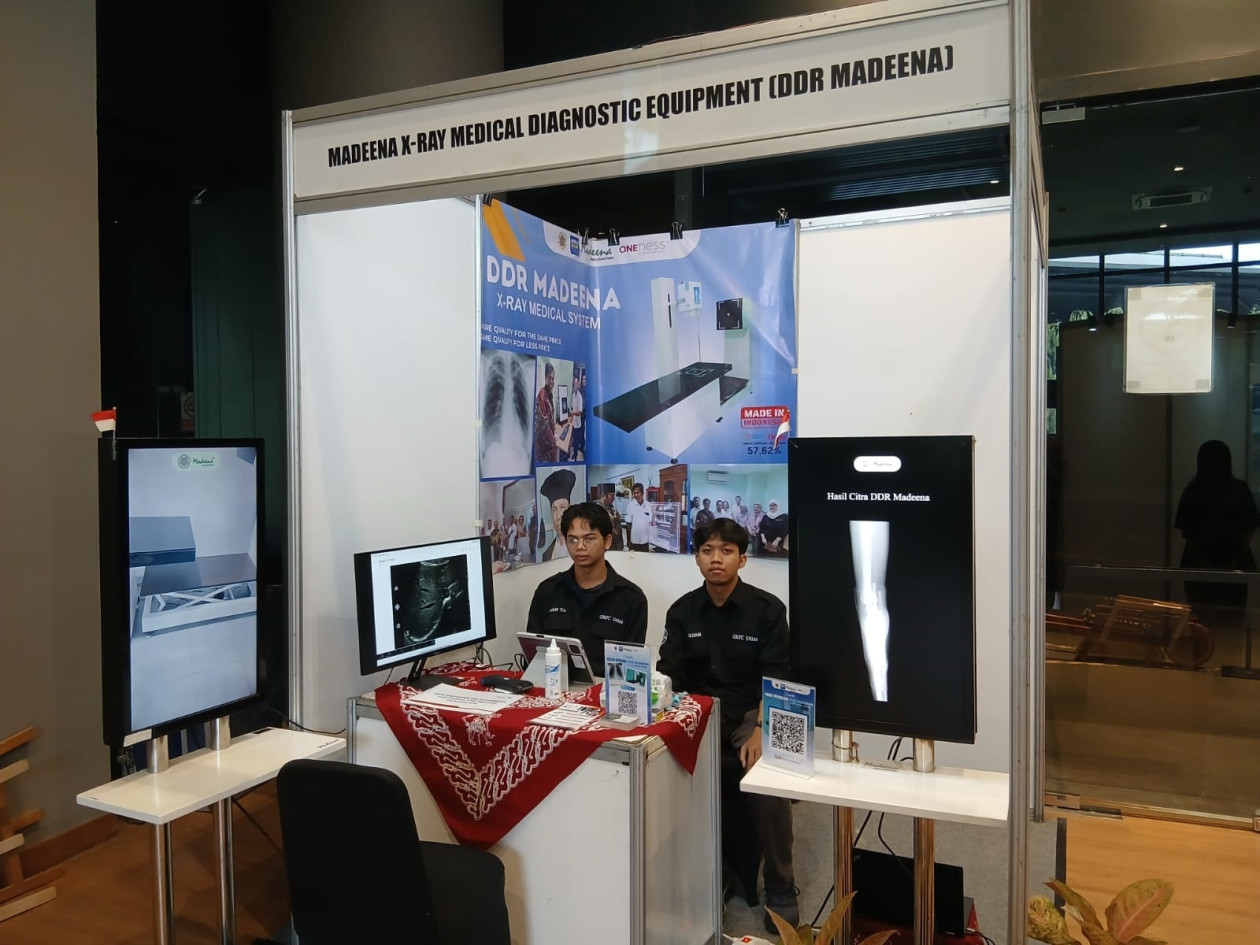
Today, he and his research team take pride in DDR Madeena, the result of their work. The device has demonstrated performance comparable to, and potentially more advanced than, radiology equipment currently available and used in hospitals.
“We hope that DDR Madeena can contribute to optimizing the Rp47 trillion budget allocated by the government for the Free Health Check Program (CKG). With trust in this product, DDR Madeena will continue to improve, and new supporting medical devices for CKG produced by Madeena can be realized,” he said.
He added that DDR Madeena serves as an intelligent pipeline solution for integrated healthcare services by incorporating Madeena’s standard advanced features, including adoption of Digital Industry 4.0, new normal systems, mobile and portable transportable devices, DICOM and PACS compatibility, teleradiology applications, and AI-based diagnostics.
In collaboration with PT Madeena Karya Indonesia, their research and development of DDR Madeena was showcased at the Medical Expo 2026, held over two days on Feb. 6 – 7, 2026, at the Innovation and Creativity Hub of UGM (GIK UGM).
For him, this achievement can serve as a template for how universities and the government, through the Ministry of Higher Education, Science, and Technology or BRIN, should manage intellectual property generated by researchers, academics, and students. He emphasized that intellectual property is not limited to patents but also includes personal equity.
“Together with students from the Physics Department of FMIPA UGM and PT Madeena, we have proven that sustainable, consistent, focused, and solution-oriented research aimed at addressing national or global challenges will succeed. DDR Madeena is one example of successful university research, particularly in physics, that has gone commercial,” he stated.
Through PT Madeena, the team has also initiated collaborations with global companies such as Oneness International Group, which has financial access, component supply chains, and cutting-edge global technology.
As an academic and researcher, he has systematically established research collaborations for technology and product development with researchers from leading universities worldwide.
As a researcher, Gede Bayu Suparta continues to conduct research and technology development by partnering with various stakeholders, particularly through Oneness International Group at the global level.
“As evidence, DDR Madeena, an Indonesian-made product, is now strengthened with AI-based diagnostic services developed together with global partners. Madeena’s experience and competence in developing DDR Madeena have also accelerated collaboration in the development of AI-based ultrasonography (USG) products,” he explained.
Author: Agung Nugroho
Post-editor: Zabrina Kumara Putri