


Rising global temperatures, increasingly extreme weather patterns, and the growing frequency of hydrometeorological disasters indicate that current environmental conditions are under mounting pressure. This crisis is not merely an ecological issue but is closely linked to human activities, particularly long-term industrialization and the exploitation of natural resources.
In Indonesia, the impacts of climate change are evident in the increasing frequency of extreme weather events, such as heavy rainfall and the emergence of tropical cyclones moving closer to the equator. This phenomenon signals significant changes in the atmospheric system that cannot be ignored. Therefore, the recent commemoration of Earth Day on April 22 serves as an important reminder that mitigation and adaptation efforts in response to climate change must be sustained and collective.
Environmental Studies expert from Universitas Gadjah Mada (UGM), Professor Djati Mardiatno, explained that climate change is now an unavoidable phenomenon, yet it can still be managed through mitigation and adaptation measures.
“Climate change is something we can no longer avoid. What we can do is undertake mitigation and adaptation to the changes taking place,” he said on Friday (Apr. 24).
Professor Mardiatno further explained that the increasing frequency and intensity of hydrometeorological disasters, such as extreme rainfall and tropical cyclones, serve as clear indicators of the ongoing climate crisis. According to him, these changes did not occur suddenly but resulted from a long process influenced by human activities, particularly the rise in greenhouse gas emissions driven by industrialization and population growth.
He added that the situation is exacerbated by the growing exploitation of natural resources, including the use of fossil fuels and the decline in forest cover. Therefore, the most realistic step at present is to slow the rate of environmental degradation through emission reductions and more prudent resource management.
“These efforts require long-term commitment and a shift in mindset regarding development,” he explained.
In the global context, he also highlighted the importance of international cooperation in addressing the climate crisis.
“We only have one Earth, so the solution cannot be undertaken by a single country alone but must be pursued collectively,” he stated.
He emphasized that both developed and developing countries share equal responsibility in maintaining environmental sustainability, even though their contributions and capacities may differ.
Meanwhile, environmental issues in Indonesia are inseparable from economic and political dynamics. One example highlighted is the oil palm commodity, which holds high economic value but also poses environmental impacts if not managed wisely. Policies such as the palm oil moratorium must be considered comprehensively, given their connection to livelihoods, employment, and contributions to national foreign exchange earnings.
“We must recognize that palm oil is indeed economically beneficial. However, it also generates significant environmental impacts,” he noted.
Professor Mardiatno explained that environmental issues cannot be viewed solely as ecological matters but must also encompass economic and political dimensions. In many cases, developing countries face a dilemma between environmental protection and meeting development needs. On the other hand, developed countries are seen as not yet fully responsible in supporting global conservation efforts, particularly in terms of financing and technology transfer.
In facing these challenges, the principle of sustainable development becomes a crucial foundation. He stressed the need for awareness when distinguishing between needs and wants in the use of natural resources.
“The Earth is capable of meeting all human needs, but it will never be able to fulfill all human wants,” he said.
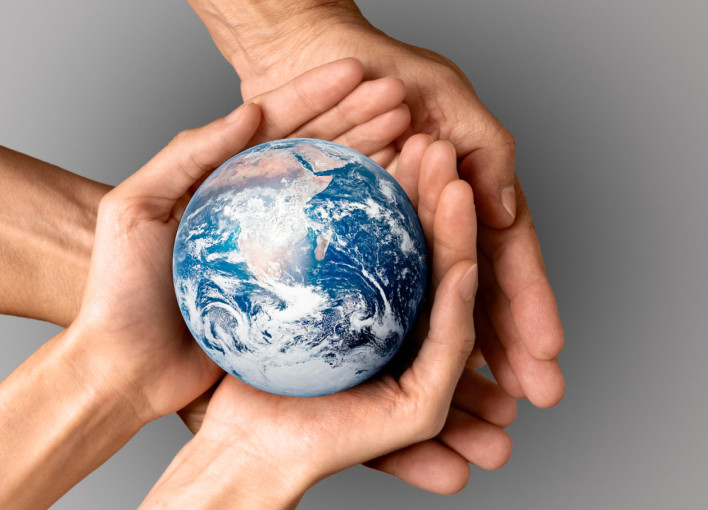
According to Professor Mardiatno, this principle is key to maintaining a balance between resource utilization and environmental sustainability. In closing, Mardiatno invited all elements of society to jointly protect the Earth as a shared heritage. This call serves as a reminder that the responsibility to safeguard the planet does not rest solely with governments or certain groups but is a collective duty of all humankind.
“Let us take care of it together and preserve it for our common interest,” he concluded.
Author: Zabrina Kumara
Editor: Gusti Grehenson
Post-editor: Rajendra Arya
Photo: Freepik