


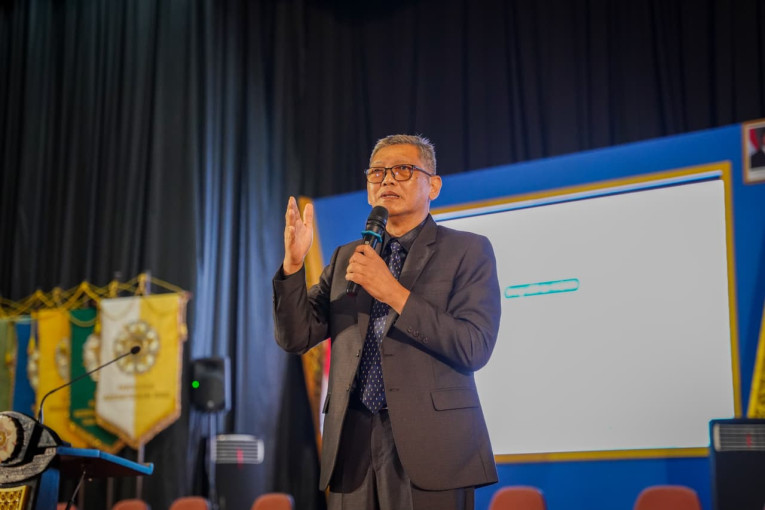
Food is not merely a sectoral issue, but a global concern. Assistant Representative of the Food and Agriculture Organization (FAO) in Indonesia, Dr. Ageng Setiawan Herianto, a 1986 graduate of UGM’s Faculty of Agriculture (Agriculture UGM), said 637 million people worldwide face food insecurity each year.
“There are 637 million people around the world who face food shortages annually, particularly in the Asia – Pacific region. And this responsibility cannot be placed solely on agriculture graduates,” Dr. Herianto emphasized, during a briefing for 1,353 UGM’s undergraduate and applied bachelor’s degree graduation candidates on Tuesday (Feb. 24) at Grha Sabha Pramana (GSP) UGM.
According to Dr. Herianto, the food system supply chain significantly influences food distribution in our daily lives. Therefore, there has been a major shift in the global food security agenda.
In the past, food systems focused on how to “feed the world.” Today, the objective has evolved into “nourish the world.”
“It is no longer sufficient to simply provide food to prevent hunger, we must ensure access to healthy and affordable food for all segments of society,” he said.
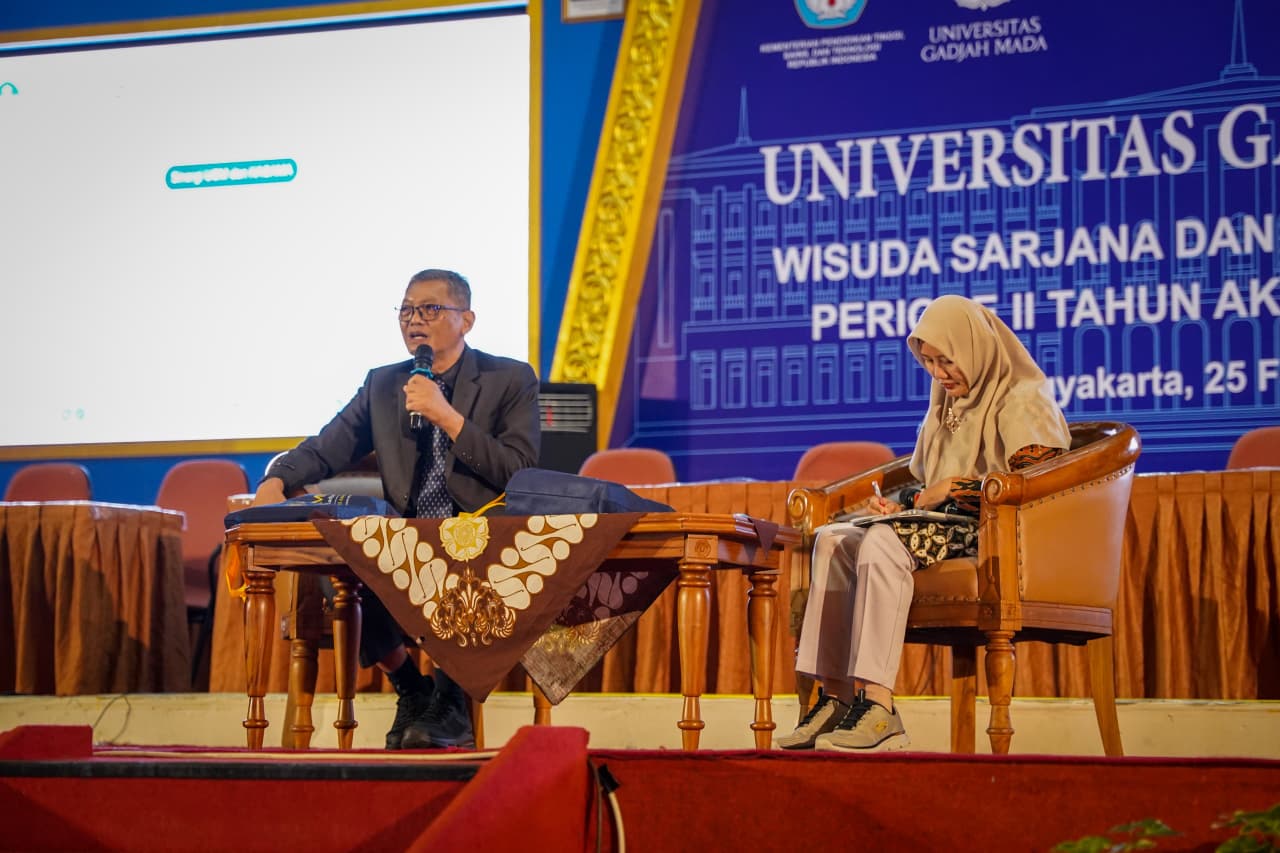
He further explained that the goal of food systems now emphasizes healthy diets, from production to market. This means the food system encompasses the entire value chain, from production and distribution processes to healthy and sustainable consumption.
“This transformation opens vast opportunities for multidisciplinary collaboration,” he added.
Dr. Herianto noted that agricultural digitalization serves as an entry point for young generations from diverse academic backgrounds. Engineering graduates can contribute to supply chain efficiency, economics and business graduates can strengthen financing models and markets, law graduates can play a role in food regulation and policy, along with other related fields.
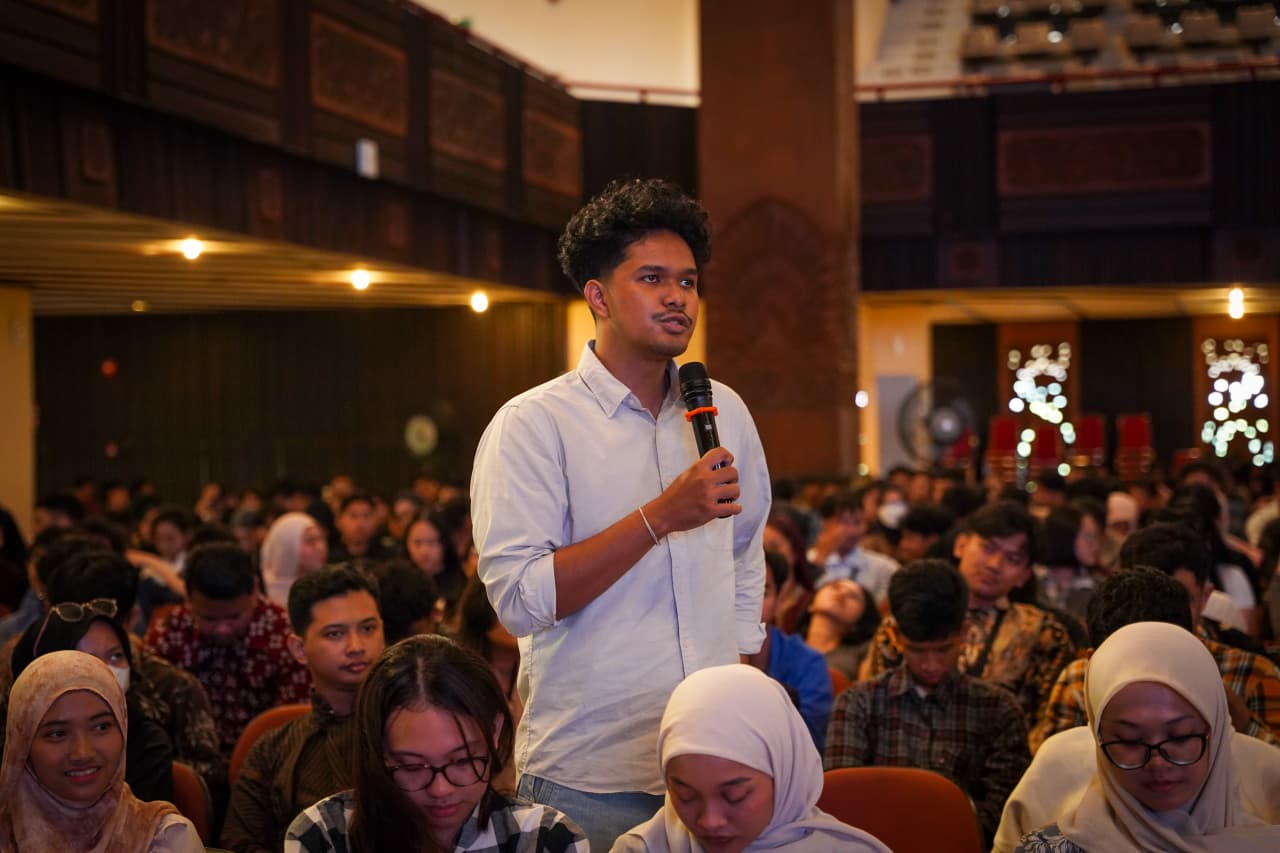
Responding to a graduate candidate’s question about the competencies required in the international arena, Dr. Herianto outlined three main pillars or characteristics that excellent human resources must embody.
“First, always think innovatively, as ideas are crucial. Second, understand policies in order to adapt effectively. Third, build extensive networks. Do not forget to consistently demonstrate interest and commitment so that others trust our integrity,” he explained.
He also reminded the audience that communication skills and proficiency in foreign languages are key to ensuring that ideas are conveyed and accepted globally.
“Intelligence without communication skills will make it difficult to create a broad positive impact,” he said.
Dr. Herianto concluded the briefing by emphasizing that a degree is not the end, but the beginning of greater social responsibility. Food security is a global agenda requiring contributions from various disciplines.
From production to market, from policy to digitalization, every graduate has the opportunity to be involved. With innovation, commitment, and strong networks, UGM graduates are expected to become part of the solution toward a healthy and sustainable food system.
Writer: Ika Agustine
Editor: Gusti Grehenson
Post-editor: Jasmine Ferdian
Photo: Ika Agustine