


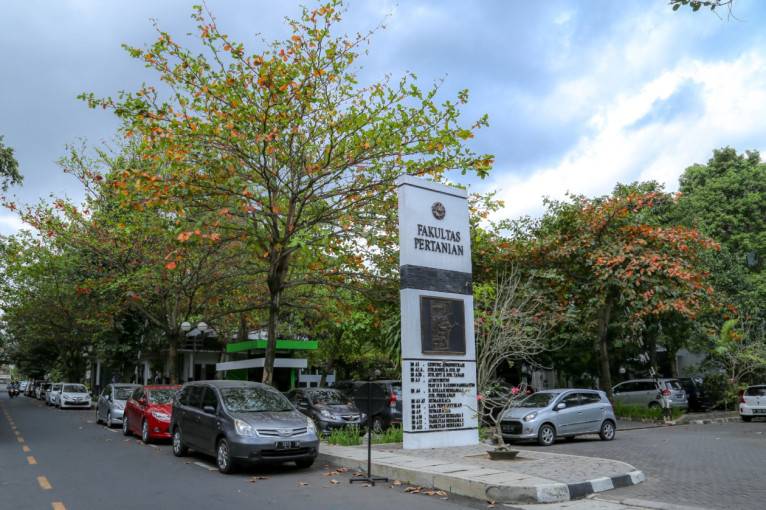
The Agricultural Economics and Agribusiness (EPA) Undergraduate Program at the Faculty of Agriculture, Universitas Gadjah Mada (Agriculture UGM), has recorded a high level of interest in the 2026 Academic Excellence-Based Entrance Selection (SNBP). Data show that the number of applicants reached 271, while only 27 seats were available through the SNBP pathway out of a total capacity of 90 students. The high ratio of applicants to available seats reflects the intense competition to enter this program. Nevertheless, seats are still available through the National Entrance Test (SNBT) pathway, which will be held from April 21-30, 2026. This condition also highlights the growing interest of prospective students in the agricultural sector.
This high level of interest has encouraged many prospective students to learn more about the EPA program before making their choice. Head of the Undergraduate Program in Agricultural Economics and Agribusiness UGM, Dr. Hani Perwitasari, S.P., M.Sc., explained that the program studies the agricultural sector comprehensively, from upstream to downstream. In addition to understanding production activities at the farmer level, students also learn about the broader management of agribusiness systems. This approach includes analysis at both the business and policy levels.
“Students will learn how to manage farming enterprises while also understanding the dynamics of the agricultural sector from economic and policy perspectives,” she explained.
Furthermore, the EPA program has a distinctive feature: it combines two main approaches in its curriculum. Students can specialize in agricultural economics, which focuses on economic analysis of the agricultural sector, or in agribusiness management, which emphasizes business management.
Dr. Perwitasari explained that the curriculum structure provides flexibility for students to choose their area of interest. Required and elective courses allow for interdisciplinary exploration within a single program.
“Students can choose to focus on agricultural economics or agribusiness management according to their interests, and they can still take courses across fields,” she said.
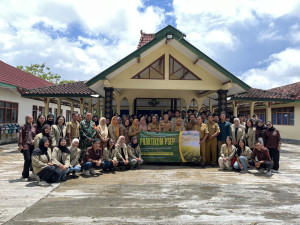
In terms of academic background, the EPA program is open to graduates from both science (IPA) and social science (IPS) tracks. Dr. Perwitasari noted that both backgrounds have equal opportunities to adapt during their studies. Students from science backgrounds are generally more familiar with scientific and mathematical aspects, while those from social science backgrounds have initial knowledge in economics and management.
“Both science and social science graduates have equal opportunities, as each brings strengths that complement one another,” she said.
During their studies, students will gradually learn a combination of agricultural science, economics, and management. In the early stages, students are introduced to the fundamentals of agriculture, such as microbiology, cultivation, and soil science. They also study general economics and management. In the later semesters, students begin to choose their specialization and deepen their knowledge in line with their interests.
“Courses include agricultural marketing, agricultural development, international economics, as well as agribusiness management and finance,” Dr. Perwitasari explained.
Career prospects for EPA graduates are diverse and widely open. Dr. Perwitasari stated that alumni work across various sectors, including government institutions, private companies, and international organizations.
In addition, many graduates pursue careers in banking, the food industry, and research and academia. A significant number also choose entrepreneurship in the agribusiness sector.
“EPA graduates can work in ministries, banking, national and international private companies, as well as become entrepreneurs and consultants,” she said.
Amid global dynamics, agribusiness knowledge is considered increasingly relevant in addressing various challenges in the food sector. Issues such as food security, commodity imports, and price fluctuations are part of the academic discussion. Dr. Perwitasari noted that during their studies, students are trained to analyze these conditions and provide data-driven recommendations. This approach equips graduates with the analytical skills needed in the workforce.
“Topics such as food security, imports, and price fluctuations are discussed in various courses and research to produce policy recommendations,” she said.
Ahead of the 2026 SNBT, prospective students are encouraged to prepare well and understand their chosen study program. Dr. Perwitasari emphasized the importance of maintaining motivation and mental readiness in facing the selection process.
In addition, health is also an important factor during the examination period. She hopes more young people will be interested in agribusiness.
“Stay motivated to study, pray, and maintain your health. We look forward to welcoming you to the Agricultural Economics and Agribusiness Program at UGM,” she concluded.
Author: Triya Andriyani
Post-editor: Zabrina Kumara
Photos: Firsto and EPA UGM Documentation