


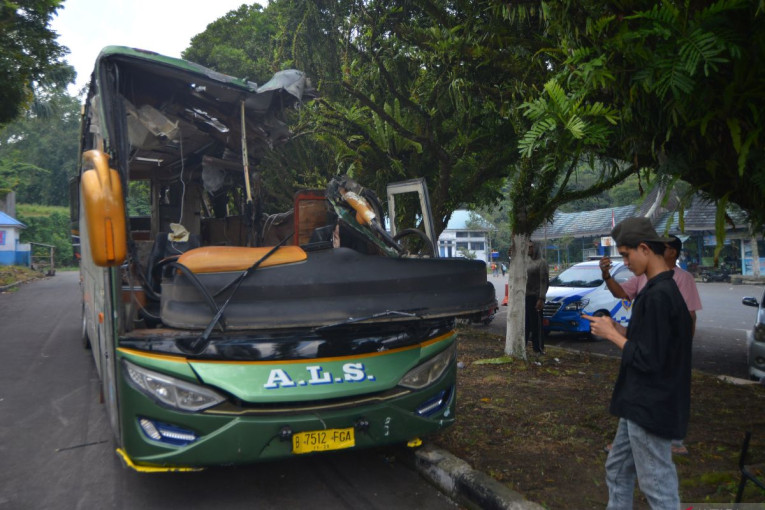
The fatal collision between an Antar Lintas Sumatera (ALS) intercity bus and an oil tanker truck in Musi Rawas Utara Regency, South Sumatra, on May 6 claimed 19 lives. The tragedy has added to the growing concerns surrounding land transportation safety in Indonesia. The incident has also raised public awareness about the importance of remaining vigilant and prioritizing safety while driving to minimize the risk of accidents.
Lecturer in the Department of Civil and Environmental Engineering at the Faculty of Engineering Universitas Gadjah Mada (FT UGM),, Mukhammad Rizka Fahmi Amrozi, who is also a researcher at the Center for Transportation and Logistics Studies, stated that transportation safety is a multifactorial issue, meaning that the cause of an accident cannot be determined from a single perspective without a thorough investigation. He emphasized that the exact cause of the accident must first be examined through a comprehensive investigation, including an official inquiry by authorities such as the police Traffic Accident Analysis (TAA) team.
“So everything depends on the specific situation and conditions. We need to first examine how the incident actually happened and avoid speculation or worsening public opinion before the investigation results are released,” he said on Friday (May 22).
Fahmi explained that bus safety systems are already regulated by various Ministry of Transportation regulations, as well as by international standards set by UNECE. One important device that should be implemented, according to him, is the Event Data Recorder (EDR), a vehicle data-recording system that functions like a “black box” to track vehicle history and conditions prior to an accident. He also stressed the importance of dashcams to monitor driver behavior during trips.
“When a traffic accident occurs, we should have a data recorder similar to a black box to understand the history of how the bus was operated,” he explained.
According to Fahmi, the safety characteristics of public buses differ from those of tourism buses because their operating patterns and driver behavior differ. Therefore, safety evaluations should not focus solely on bus operators but rather involve shared responsibility across the supply chain and among relevant stakeholders, including vehicle manufacturers, body builders, fleet managers, government authorities, drivers, and even passengers themselves. He added that numerous regulations govern the implementation of bus safety standards.
Fahmi further explained the implementation of bus safety standards that refer to international UNECE regulations. The urgency of adopting these regulations is evidence-based and stems from recurring accident patterns, such as buses overturning, vehicle structures collapsing, seats detaching, and the high fatality rates among passengers.
Some of the relevant regulations include UNR14 and UNR16 regarding seat belt strength and anchorages; UNR66 concerning bus structural stability; UNR80 related to seat strength and retention systems; UNR107 on overall bus construction; and UNR160 and UNR169 regarding Event Data Recorders (EDR) as vehicle data recording devices.
Fahmi stated that this tragedy could serve as a turning point for the government to strengthen public transportation safety standards. According to him, the regulations already exist, but their implementation in the field still needs improvement.
“The regulations are already in place. What remains is to implement them properly, while also adding several necessary provisions,” he said.
He also highlighted the importance of passenger manifests, which intercity and interprovincial buses must carry. Similar to luggage inspection, he noted that manifests would improve passenger tracking. In addition, Fahmi recommended implementing Safety Management Systems (SMK) and UNECE standards within bus companies to minimize accident risks. The system also regulates drivers’ working hours and rest periods to prevent fatigue while driving.
A similar view was expressed by another UGM Civil Engineering lecturer, Arumdyah Widiati. She pointed out that regulations regarding public transportation safety already exist under the Ministry of Transportation Regulation Number PM 29 of 2015 concerning Minimum Service Standards (SPM) for Public Transportation Services on Fixed Routes. According to her, the regulation covers various safety aspects, including driver working hours.
“The regulation requires drivers to take a 15-minute break after every two consecutive hours of driving,” she explained.
She also emphasized the need for additional safety equipment, such as glass-breaking hammers, fire extinguishers, seat belts, and electrical systems for audiovisual facilities. Vehicles must also be equipped with emergency exits, especially large buses.
Furthermore, Fahmi stressed that transportation safety should be viewed as a shared responsibility rather than an effort to find parties to blame. He explained that traffic accidents involve five pillars of safety, all of which play a role in creating a safe transportation system. These pillars include road safety management, safer roads, safer vehicles, safer road users, and post-crash victim response.
“We need to move away from blaming road users toward shared responsibility. There is no need to look for a scapegoat because this is a collective responsibility. This case can become the right moment for reflection and continuous improvement,” he said.
Meanwhile, Arumdyah added that accident risks may never be eliminated entirely because there will always be a probability of accidents occurring. However, a robust safety system can reduce the severity of the impact when accidents occur.
“When we talk about accidents, there is always a possibility they may occur. But if they do happen, at least the impacts should not be severe,” she concluded.
Author: Hanifah
Editor: Gusti Grehenson
Post-editor: Zabrina Kumara
Photo: Antara News