


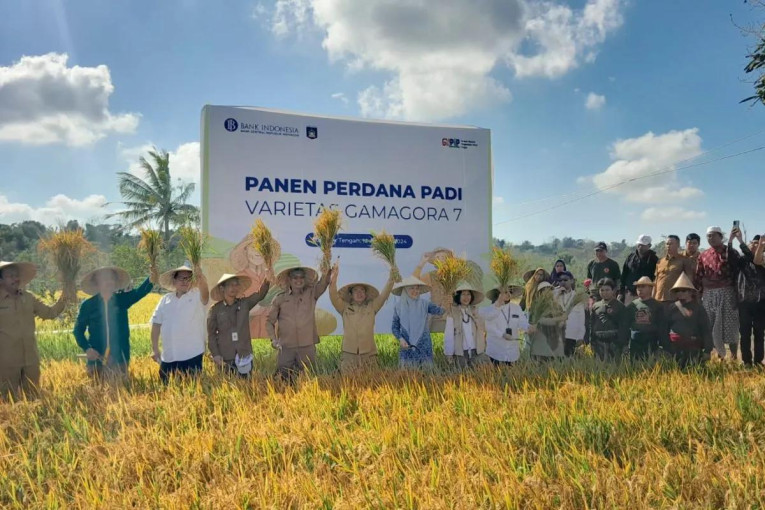
Indonesia’s national seed industry is currently facing numerous challenges. These stem from the impacts of the global climate crisis, geopolitical tensions, supply chain limitations, digitalization, and the country’s still-limited technological self-reliance in seed development. By 2023, Indonesia had released 530 new superior rice varieties, yet only 155 of them had been adopted by farmers. Most farmers continue to cultivate just three superior varieties: Inpari 32 on 1.64 million hectares (25.42 percent), Ciherang on 1.19 million hectares (18.5 percent), and Mekongga on 755,000 hectares.
The Director of Food Crop Seed Development at Indonesia’s Ministry of Agriculture, Dr. Ladiyani Retno Widowati, explained that the growing demand for high-quality seeds across various commodities presents a highly promising market for domestic producers. This opportunity has been further strengthened by Government Regulation No. 7 of 2026, which provides legal certainty, quality standardization, and special recognition for local seed varieties and smallholder farmers.
“We need support. Frankly, we are struggling to obtain soybean, sweet potato, cassava, peanut, and mung bean seeds. We hope UGM can help address this because each type of seed has its own specific characteristics,” she said during the Indonesia Seed Industry Leadership Forum (ISILF) 2026 at Eastparc Hotel on Thursday (Jun. 11).
UGM Vice Rector for Research, Business Development, and Cooperation, Dr. Danang Sri Hadmoko, stated that in the seed sector, UGM has successfully developed the Gamagora rice variety, which has now been adopted in various regions nationwide.
“We know that the agricultural sector serves as the backbone of food and energy security. One of UGM’s current priorities is innovation within the agriculture complex, and therefore, we are developing an ecosystem that integrates upstream and downstream processes,” said Dr. Hadmoko.
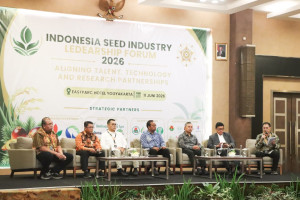
According to Dr. Hadmoko, UGM’s efforts extend beyond the Faculty of Agriculture by involving multiple faculties, as food-related issues encompass not only technology but also supply chains, regulations, and community behavior. He added that cross-sector collaboration has become increasingly crucial as Indonesia’s seed industry continues to face challenges in aligning the visions of academics and business actors. Through integrated interfaculty research, UGM has developed potassium humate soil additives to improve soil productivity and explored the utilization of geothermal waste as a source of nanosilica.
Meanwhile, Chair of the Indonesian Horticultural Seed Producers Association (IPBH), Muhammad Aris, explained that small and medium-sized enterprises are considered the most prepared to become targets of downstream commercialization and practical partners for university research programs. Through stronger collaborative networks, he believes small producers can develop greater independence, adopt ISO quality management systems, and use internet-based branding for marketing.
“I hope universities can contribute in this area, particularly by providing support in plant breeding,” he said.
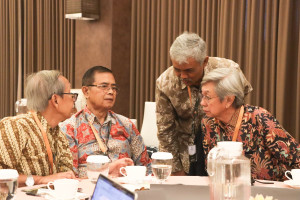
Chair of the Indonesia Seed Industry Leadership Forum 2026 organizing committee and lecturer at UGM’s Department of Agronomy, Dr. Rizky Pasthika Kirana, noted that major challenges in seed development include human resource readiness, the adoption of new technologies, and collaboration mechanisms between universities and industry. According to her, a bridge must be built to combine the strengths of each stakeholder and address existing challenges.
“Each party has its own objectives, but in reality, many continue to operate independently, meaning the potential for synergy has not been fully optimized. Through this forum, we hope to bring together decision-makers from industry, associations, government institutions, and UGM to formulate a shared agenda,” she explained.
Through this constructive dialogue platform, Dr. Kirana said the forum is expected to produce four key outcomes: a competency map for seed industry human resources; a list of cross-sector training programs; partnership schemes; and realistic postgraduate education pathways for industry personnel.
Author/Photo: Aldi Firmansyah
Editor: Gusti Grehenson
Post-Editor: Zabrina Kumara Putri