


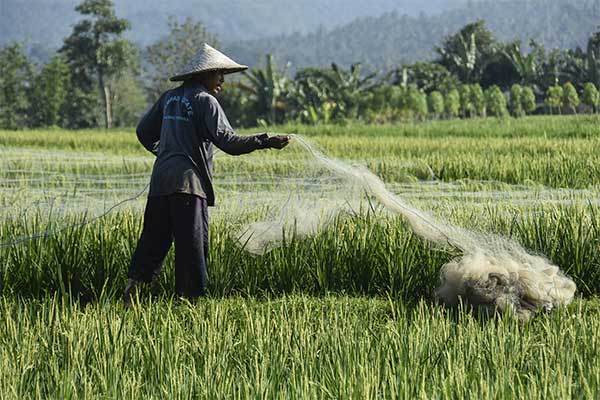
The Committee II of the Regional Representative Council of the Republic of Indonesia (DPD RI), in collaboration with the Faculty of Agriculture at Universitas Gadjah Mada (Agriculture UGM), held a validity review of the Draft Law on the Third Amendment to Law No. 19 of 2013 on Farmers Protection and Empowerment at the Faculty of Agriculture, UGM, on Tuesday (Jun. 23).
Dean of Agriculture UGM, Professor Jaka Widada, stated that the review of the draft legislation is expected to reflect DPD RI’s commitment to formulating a responsive and forward-looking law that addresses the various challenges facing Indonesia’s agricultural sector.
A similar view was expressed by Chair of Committee II of DPD RI, Dr. Badikenita BR Sitepu, who emphasized that the validity review forms part of DPD RI’s legislative function and serves as an effort to ensure that the bill is developed based on empirical data, academic research, and the actual needs of farmers across regions.
Members of the bill’s expert drafting team, Professor Subejo and Professor Tavi Supriana, outlined the key points of the Academic Paper and the draft bill, which are designed to provide balanced guarantees for agricultural land protection and farmers’ welfare. The proposed amendments address several pressing issues, including weak farmer regeneration and human resource quality, inequality in land ownership and land conversion, and limited access to production inputs and financing.
“This bill is expected to strengthen social protection, minimum guaranteed prices, agricultural extension services, agricultural digitalization, market access, farmer institutions, and support for young farmers,” said Professor Subejo.
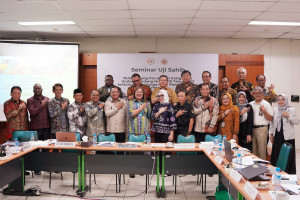
During the seminar session, several agricultural experts shared their perspectives. Among them, Professor Jangkung Handoyo Mulyo stated that agriculture is inherently a high-risk sector and that protection efforts should focus on access to land, fair pricing, capital, production inputs, and insurance.
“Special attention is also needed for small-scale farmers, and those who are just starting agricultural enterprises,” Professor Jangkung emphasized.
Echoing this perspective, National Research and Innovation Agency (BRIN) researcher Professor Erizal Jamal highlighted the gap between legislation and implementation, as well as the need to position farmers as active subjects of development through stronger farmer economic organizations.
A similar view was expressed by Agribusiness Lecturer at UPN Veteran Yogyakarta, Dr. Budi Widayanto, who underscored the importance of protecting farmers’ rights, strengthening institutions, and promoting empowerment that takes into account economic, social, and political vulnerabilities, as well as local wisdom.
Meanwhile, Professor Jamhari from Agriculture UGM encouraged a paradigm shift from assistance-based policies to incentive-based policies.
“Farmers should be recognized not only as food producers but also as providers of public services who preserve soil, water, the environment, and the sustainability of rural areas,” he said.
Representing young farmers, Patrik proposed strengthening farmers’ rights to water resources and fertile land, expanding agricultural insurance coverage, ensuring post-harvest price certainty, controlling imports, and protecting soil quality.
Chair of Committee II of DPD RI, Dr. Badikenita BR Sitepu, reaffirmed that input from academics, practitioners, students, and farmers would be used to refine the bill, making it more implementable, equitable, and responsive to regional needs. The event was also attended by the Deputy Chair of Committee II of DPD RI, A. Abd. Waris Halid; members of Committee II; academics, practitioners, students, and farmer representatives.
Author: Jelita Agustine
Editor: Gusti Grehenson
Post-editor: Zabrina Kumara
Photos: Media Indonesia and Faculty of Agriculture Documentation