


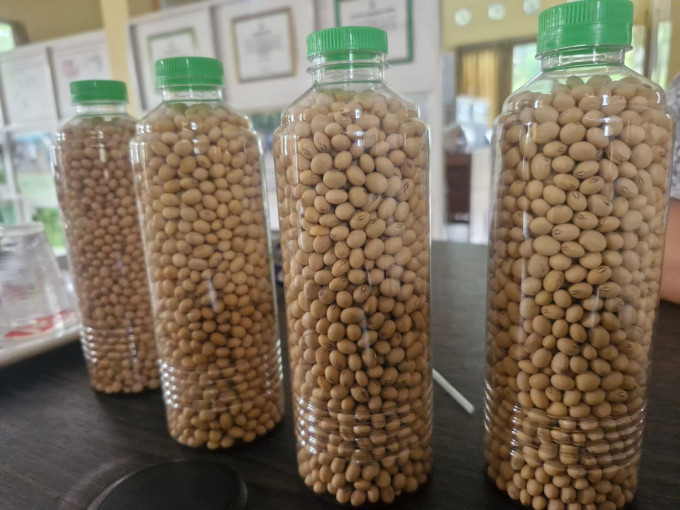
Indonesia is one of the world’s largest soybean consumers. This high level of consumption is tied to the country’s tradition of consuming tofu and tempeh as staple foods. However, despite this demand, nearly 90 percent of the nation’s annual soybean requirement of approximately 2.7 million tons is still met through imports. This heavy reliance on foreign supplies remains a major challenge for the government in achieving national food self-sufficiency.
In response to this challenge, a research team at Universitas Gadjah Mada (UGM) is developing a local soybean ecosystem to increase domestic soybean production while reducing reliance on imported soybeans. The initiative began with the Smart Agricultural Enterprise (SAE) Soybean Program, which serves as the foundation for building an integrated soybean production system, from providing high-quality seeds and farmer assistance to strengthening the supply chain. Through the program, the UGM research team has successfully produced soybean seeds that meet the certification standards of the Yogyakarta Special Region (DIY) and the Seed Inspection and Certification Agency (BPSB).
“We started gradually by working with community seed breeder groups. Through a series of trials, we concluded that the productivity, quality, and protein content of local soybeans can be significantly improved,” said Dr. Atris Suyantohadi, a lecturer at FTP UGM and a member of the research team, during an interview at the faculty on Wednesday (Jul. 1).
According to Dr. Suyantohadi, achieving soybean self-sufficiency requires more than simply increasing production. It also demands the development of an ecosystem that connects farmers, industry, and markets.
“Our goal is to improve farmers’ welfare by increasing the economic value of local soybeans through the establishment of a comprehensive ecosystem,” he explained.
Dr. Suyantohadi revealed that the development of local soybeans originated from research initiated in 2012. The greatest challenge in developing Indonesia’s soybean sector is not merely producing superior varieties but creating a system that gives farmers the confidence to continue cultivating soybeans.
“Farmers will naturally be reluctant to grow local soybeans if they have no certainty about who will purchase their harvest, how the market is guaranteed, or what cultivation techniques they should apply,” he said.
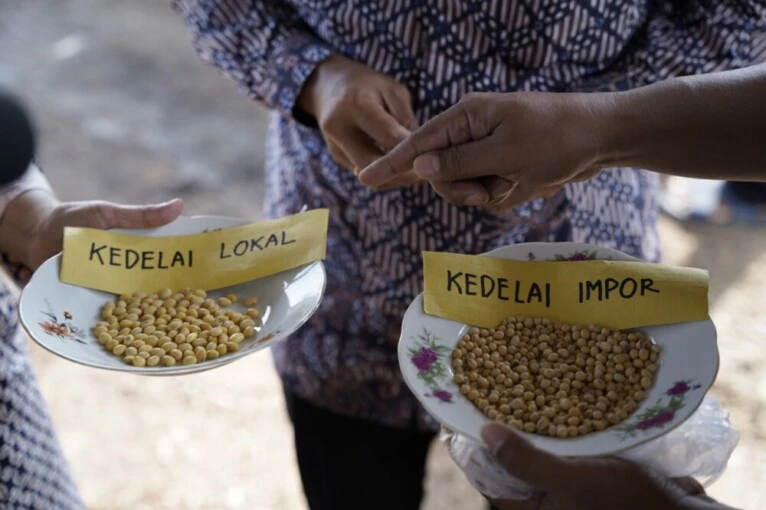
The UGM research team has since expanded the program by assisting farmer groups in several regions, including Grobogan, Bantul, Kulon Progo, Sukoharjo, and Sragen. The assistance extends beyond cultivation techniques to ensuring market certainty through partnerships with industrial off-takers.
“In 2026, soybeans produced by our assisted farmers successfully obtained food safety certification in collaboration with our industrial off-taker,” said Dr. Suyantohadi.
Dr. Suyantohadi explained that the designated industrial off-taker is CV Java Agro Prima, which is responsible for purchasing farmers’ harvests while ensuring that all products comply with food safety certification standards.
Beyond increasing productivity, the UGM research team is also working to establish a modern soybean farming system. According to Dr. Suyantohadi, the development of local soybeans must be accompanied by technological innovation to produce competitive products that meet global market demands. Such efforts, he said, will enable Indonesia’s soybean sector to evolve into a modern agribusiness industry.
“In the future, we envision modern storage facilities, modern cultivation systems, and well-managed soybean processing,” he said.
To support this vision, the research team has begun introducing the Internet of Things (IoT) into soybean cultivation to monitor and control seed quality in real time. One of the program’s assisted areas is Bantul Regency in DIY.
According to Dr. Suyantohadi, before the assistance program began, most farmers relied on government-provided seeds and fertilizers while continuing to use conventional cultivation methods. As a result, harvests had yet to generate optimal economic value, contributing to low farmer interest in soybean cultivation.
“Rather than continuously allocating funds, we must first strengthen farmers’ capacity by improving both their knowledge and practical skills,” he emphasized.
Dr. Suyantohadi highlighted that developing the soybean ecosystem is part of UGM’s commitment to fulfilling the university’s tri dharma of higher education. As a people-oriented university, UGM should not remain an ivory tower that merely generates knowledge within classrooms but must also produce research that addresses real challenges faced by society.
“We hope the downstream impact of this work, from upstream production to end users, will truly reach and benefit the public. Ultimately, it is the people who will judge its success,” he concluded.
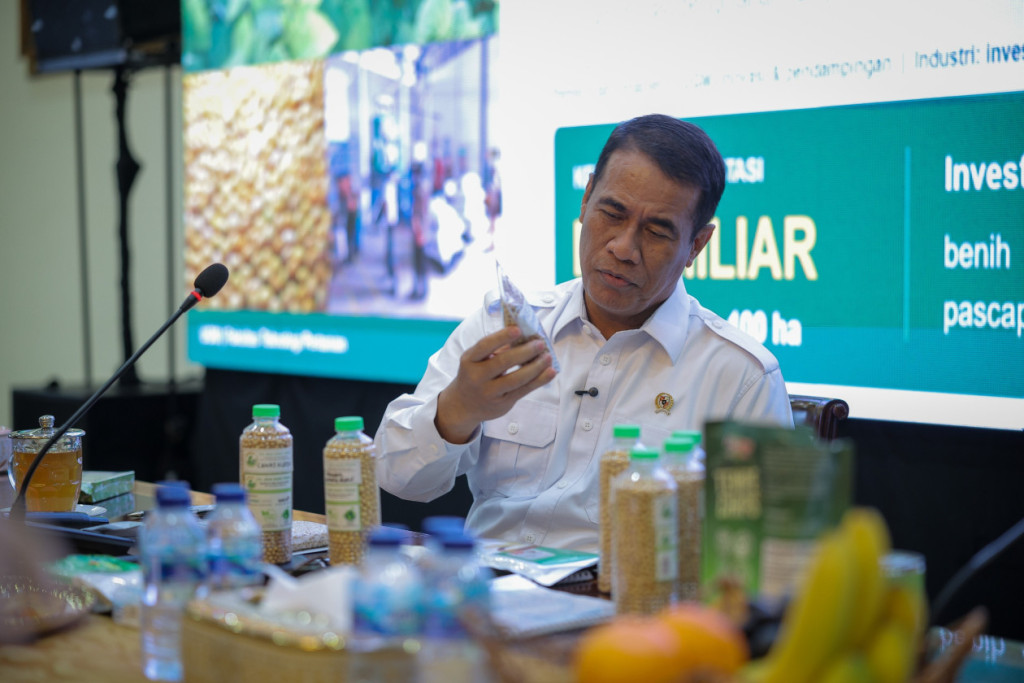
As previously reported, following a meeting between the UGM research team and Minister of Agriculture Amran Sulaiman in Jakarta on Monday (Jun. 29), Indonesia’s Ministry of Agriculture plans to collaborate with UGM to promote local soybean production and reduce reliance on imports.
During the meeting, the minister noted that the soybean variety developed by UGM offers several advantages, including its non-genetically modified organism (non-GMO) status and larger seed size compared with imported soybeans. He described these qualities as presenting an excellent opportunity to prioritize locally developed products over imported ones. The government also plans to oversee pilot projects for soybean and garlic cultivation on 1,000-2,000 hectares of land in Central Java.
Author: Agito
Editor: Gusti Grehenson
Post-editor: Jasmine Ferdian
Photo: Donnie