


Our natural environment must be preserved for future generations. It must be protected and sustained. Yet the Earth, our shared home, has suffered severe environmental degradation, affecting ecosystems as well as social, economic, and cultural life. Since the Industrial Revolution, fossil fuel use has increased dramatically, and global warming represents a profound moral and economic debt.
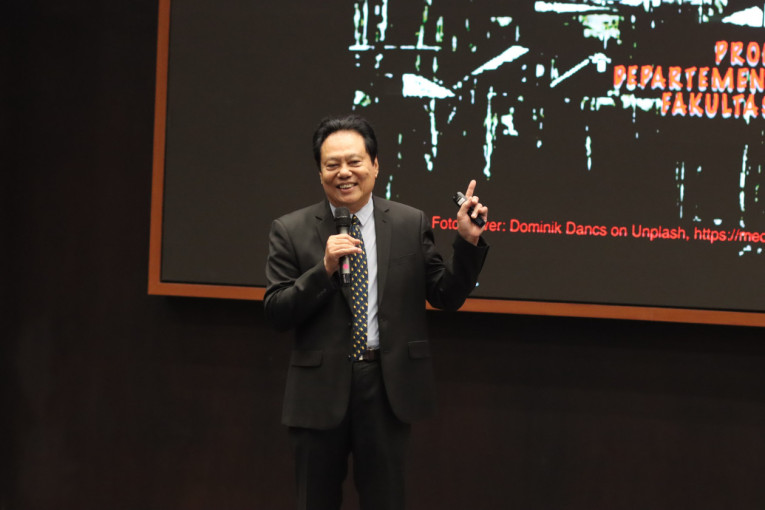
“Around 50 percent of the carbon currently circulating in the atmosphere has been emitted in just the last 30 years. During that period, humanity has caused extraordinary environmental destruction,” said Professor Sudaryono of Urban and Regional Planning at the UGM Faculty of Engineering (FT UGM), during his valedictory lecture at the SGLC Auditorium of FT UGM on Friday (Jul. 10).
In the public lecture held ahead of his retirement, titled “The Axiological Responsibility of Engineering Sciences to Human Civilization and the Universe” (Pertanggungjawaban Aksiologi Ilmu-Ilmu Teknik di Hadapan Peradaban Manusia dan Semesta), Professor Sudaryono emphasized that the threats facing the Earth and its atmosphere are not merely environmental issues but will determine the future of humanity. He warned that by 2050, without meaningful action, humanity may face only two equally dire choices.
“People will either fight one another for food or leave their countries in search of survival,” he said.
Professor Sudaryono stressed that change is the only option. In his view, the Faculty of Engineering has an opportunity to become stronger by continuing to improve its educational practices. He argued that engineering sciences are inherently prescriptive and therefore must be accountable for how their knowledge is applied in society.
“Engineering is prescriptive by nature. Therefore, it must be able to demonstrate axiological responsibility by ensuring that its applications benefit society,” he said.
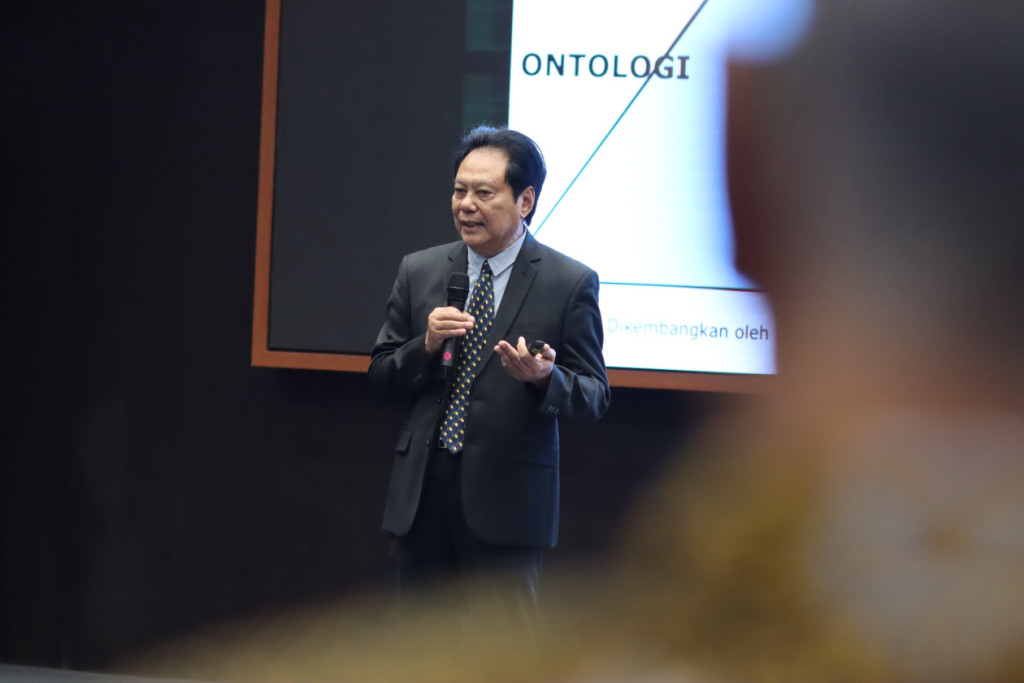 Ia menegaskan bahwa tidak ada pilihan lain selain berubah. Menurutnya, Fakultas Teknik memiliki peluang untuk berubah kembali menjadi lebih tangguh. Persoalan-persoalan pembelajaran, sebutnya, harus terus dibenahi. “Ilmu teknik memiliki sifatnya yang preskriptif ya, maka dia harus bisa mempertanggungjawabkan aksiologi yang itu mempertanggungjawabkan pemanfaatannya di tingkat masyarakat,” ujarnya.
Professor Sudaryono further explained that the domain of science is built through epistemological methods, while its values are reflected in the field of axiology. Engineering sciences possess an inherent prescriptive nature aimed at creating change. Yet engineering also presents a paradox regarding its contributions across space and time. On the one hand, it empowers society and supports environmental development; on the other hand, it can also contribute to environmental degradation. In one sense, engineering has significantly advanced human civilization, particularly since the Industrial Revolution. At the same time, it has accumulated a debt that has contributed to today’s civilizational and environmental crises.
The Dean of FT UGM, Professor Selo, said the pre-retirement public lecture marked the beginning of a broader effort to recognize the contributions of faculty members, lecturers, and the engineering academic community. Everyone has played a role in advancing the faculty. Through initiatives such as this event, those contributions can continue to receive the recognition they deserve.
Professor Selo shared that he had known Professor Sudaryono for more than 13 years and had learned many valuable lessons from him throughout that time. One piece of advice that has remained with him is that faculty leaders should be able to embrace everyone.
“One principle I continue to practice is diilengke, dielokke, and dieman. That has become the spirit I truly strive to apply within the Faculty of Engineering,” he said.
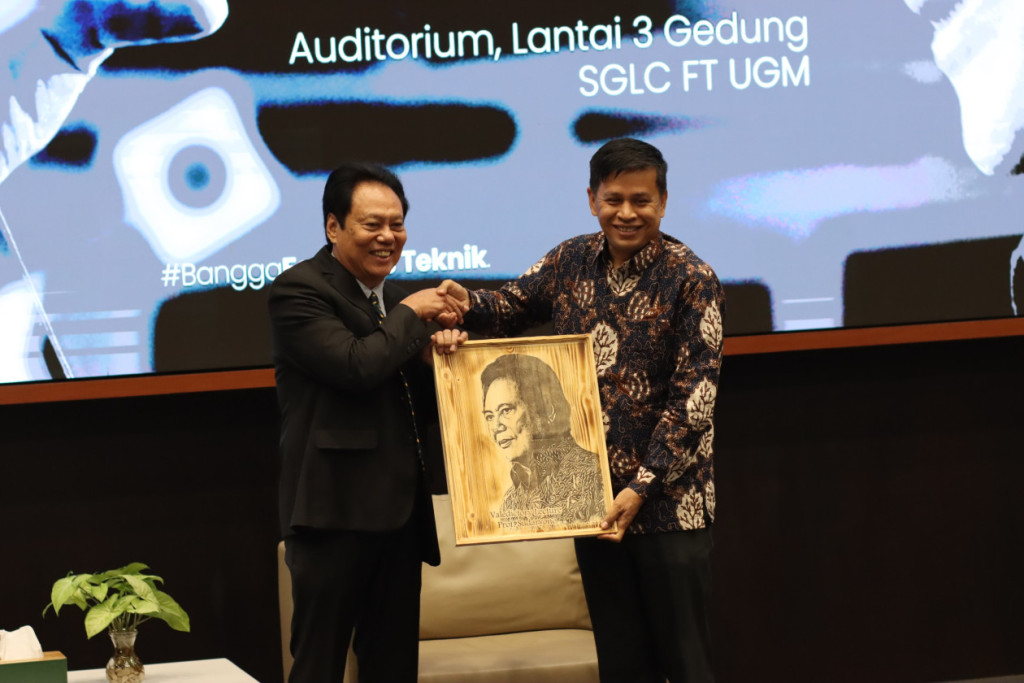 Selo menyatakan kurang lebih sudah mengenal sosok Sudaryono selama 13 tahun lebih. Ia mengaku dalam perjalanan banyak mendapat pelajaran hingga bimbingan berharga. Menurutnya, satu catatan yang diingat-ingat ialah pesan bahwa pengurus fakultas harus mampu untuk merangkul semua pihak. “Satu ungkapan yang saya terapkan yaitu, diilengke, dielokke, dan dieman. Itu menjadi semangat yang yang saya betul-betul terapkan di Fakultas Teknik,” ujarnya.
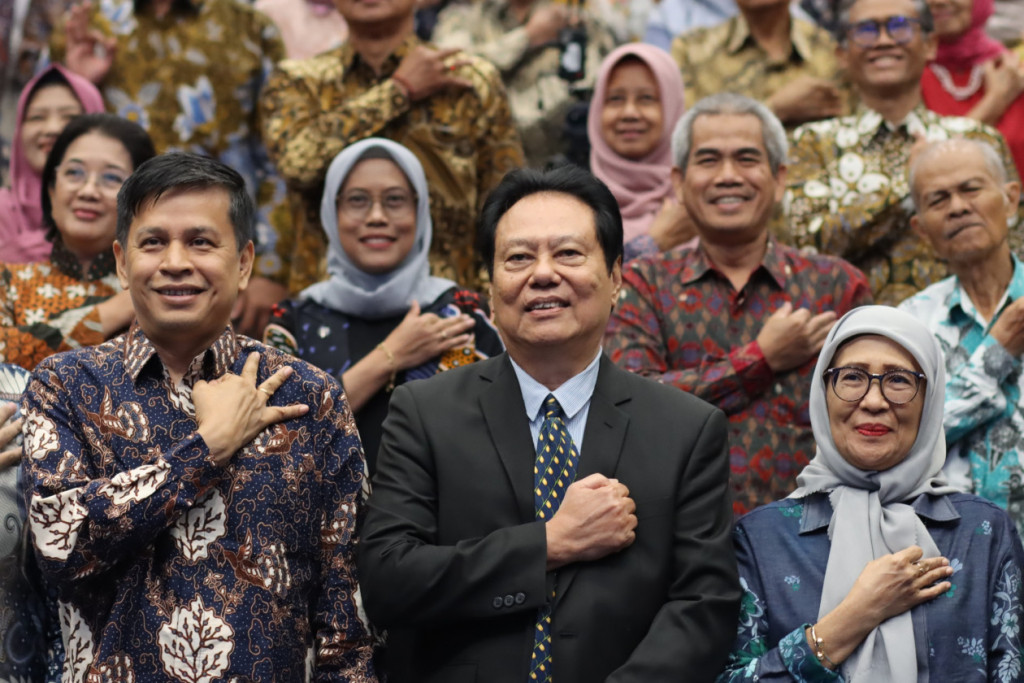
A testimonial was also delivered by Professor Bambang Hari Wibisono, one of Professor Sudaryono’s colleagues. He said retirement should not be viewed as the end of one’s work but as an opportunity to reflect on the legacy left behind. Professor Sudaryono has not only been a senior colleague but also a role model. His academic publications demonstrate remarkable consistency in advancing knowledge. Professor Wibisono also highlighted Professor Sudaryono’s long-standing dedication to research using grounded research and phenomenological approaches.
Beyond his scholarly achievements, Professor Wibisono said what he remembered most about Professor Sudaryono was his deep understanding of humanity. He consistently broadened his perspective through experience, sought meaning in social phenomena, and explored the complexity of human interactions. Professor Wibisono praised the research methods that Professor Sudaryono passed on to generations of academics, emphasizing that meaningful research always begins with sensitivity to reality.
“I believe Professor Sudaryono’s greatest legacy is not only the body of work he has produced, but also the people he has inspired and shaped through his dedication,” he said.
 Di balik itu, Bambang menyebutkan hal yang ia ingat dari sosok Sudaryono adalah substansinya memahami manusia. Meluaskan sudut pandang dari pengalaman, memahami makna di balik fenomena, hingga mengungkapkan interaksi manusia. Ia mengapresiasi metode yang digunakan Sudaryono mengajarkan kepada banyak generasi akademisi bahwa penelitian yang baik selalu berangkat dari kepekaan terhadap realitas. “Warisan yang terbesar yang saya kira dihasilkan oleh Sudaryono bukan hanya karya-karya yang terdokumentasi, tetapi juga manusia-manusia yang terinspirasi dan dibentuk oleh dedikasi beliau,” ungkapnya.
Author & Photo: Hanifah
Editor: Gusti Grehenson
Post-editor: Jasmine Ferdian