


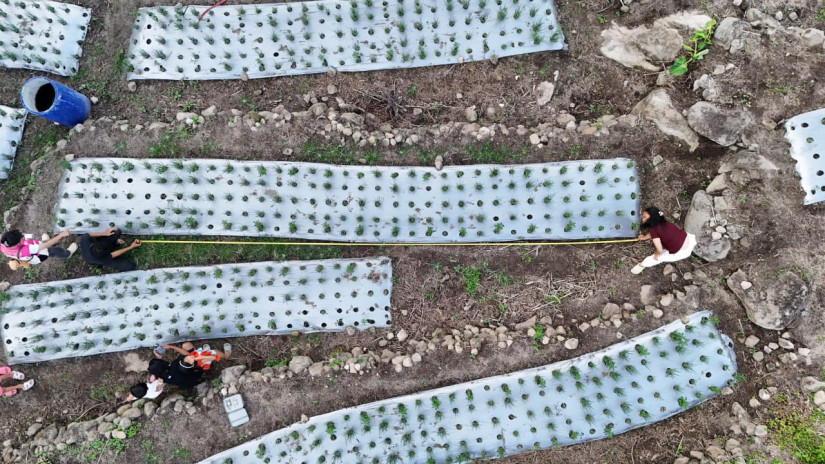
Students from Universitas Gadjah Mada (UGM) have developed a sensor-based drip irrigation system to help farmers on Samosir Island cope with water shortages during the dry season. The innovation is one of the flagship community empowerment programs introduced by the Harian Samosir Community Service Program (KKN-PPM UGM) to improve agricultural productivity while promoting more efficient water use.
The KKN-PPM team comprises 27 students from four interdisciplinary clusters—Agro, Medical, Science and Technology, and Socio-Humanities—who are carrying out community service in Turpuk Sihotang Village and Sosor Dolok Village, Harian District, Samosir Regency, North Sumatra.
According to sub-unit student coordinator Raja Panggabean, agriculture became one of the team’s top priorities after field observations showed that many farmers struggle with limited water supplies during the dry season, leaving farmland dry and reducing crop productivity.
“Those conditions inspired us to develop a sensor-based drip irrigation system that can help farmers manage water more efficiently,” said Panggabean, a Biology student at UGM, on Thursday (July 23).
Unlike conventional irrigation methods, the new system automatically monitors soil moisture through sensors. Farmers fill a water reservoir, while the system detects when soil moisture drops below the desired level and delivers water only when needed.
“This helps maintain soil moisture throughout the dry season and prevents farmland from becoming excessively dry,” he explained.
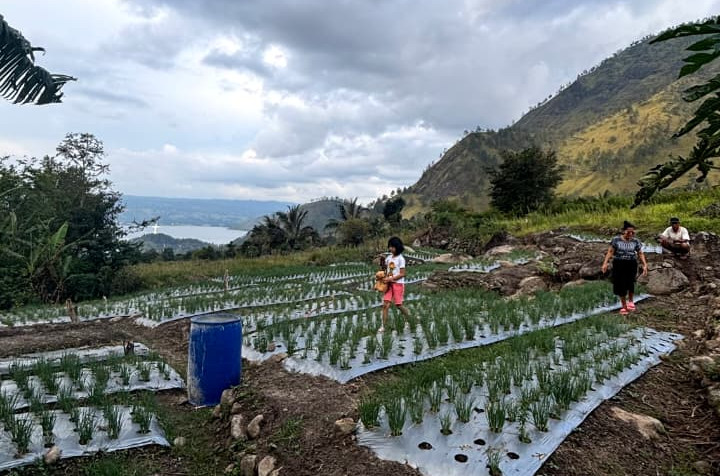
Students from multiple academic disciplines collaborated to develop the irrigation system.
Members of the Agro cluster identified farmers’ needs and agricultural challenges, while the Science and Technology cluster designed the irrigation system, programmed the sensors, and developed the supporting infrastructure.
Meanwhile, students from the Socio-Humanities cluster worked directly with residents, introducing the technology and helping farmers learn how to operate the system independently.
“Every cluster contributes different expertise, making this a truly collaborative project,” Panggabean said.
Alongside the irrigation project, the team has also introduced environmental initiatives to strengthen community resilience.
After identifying waste management as another major challenge in both villages, the students launched educational programs promoting the principles of Reduce, Reuse, and Recycle (TPS 3R).
The initiative encourages residents to sort household waste and process it into products with economic value.
Residents can convert organic waste into eco-enzymes, while they can recycle inorganic waste into concrete blocks instead of sending it to landfill.
“We aim to help the community not only separate waste but also process each type of waste more productively,” Panggabean said.
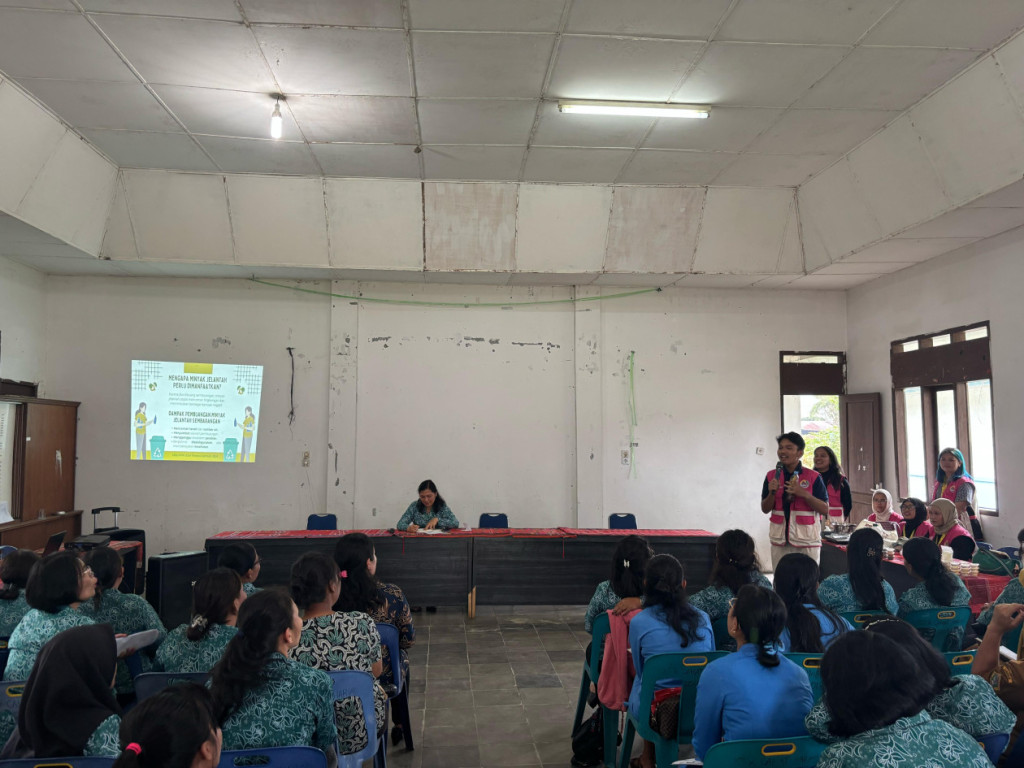
Like many community service projects, the program has also challenged the students themselves.
Kayessa Sianipar, a member of the Socio-Humanities cluster, said adapting to a new environment, colder weather, and an intensive work schedule during the first weeks of the program required considerable adjustment.
“The first few weeks were demanding because almost everything happened at once,” she said. “Fortunately, things have become much more stable as the program has progressed.”
Despite those challenges, she hopes the initiatives introduced by the team will continue long after the community service program ends.
“We hope the programs we’ve started will continue to benefit the villages in the years ahead,” she said.
Field supervisor Dr. Airin Liemanto echoed that hope, emphasizing that community service enables students to apply classroom knowledge to real-world challenges while developing resilience and social responsibility.
“Great sailors are not made in calm seas,” Dr. Liemanto said. “Every challenge helps students grow and encourages them to use their knowledge to serve society.”
Author: Agito Sitepu
Editor: Gusti Grehenson
Post-Editor: Jasmine Ferdian
Photo: Documentation of KKN Team