


Packaging does more than protect products from damage and contamination; it also shapes consumers’ first impressions. Therefore, packaging should be tailored to the product type, shelf life, and target market. Product labels must contain information that complies with applicable regulations, while branding establishes a product’s identity and distinguishes it from competitors.
These topics were discussed at the 39th UMKM Class Series workshop, organized by UGM’s Directorate of Community Service (DPkM) in collaboration with the Gunungkidul Regency Office of Industry, Cooperatives, and MSMEs. The training equipped business owners with knowledge of packaging, labeling, brand development, and digital marketing. A total of 30 MSME participants from various kapanewon (subdistricts) across Gunungkidul Regency, Special Region of Yogyakarta, took part in the event.
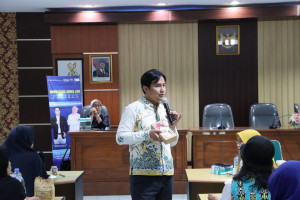
Dr. Endy Triyannanto, a lecturer at UGM’s Faculty of Animal Science (Animal Science UGM), said that micro, small, and medium enterprise (MSME) owners need to pay attention to product packaging, labeling, and branding. He explained how key performance indicators (KPIs) can be used to evaluate the quality of product packaging, branding, and labels.
“These measurements help business owners identify product shortcomings and determine the improvements needed to compete in the market,” he said on Monday, October 12.
Digital marketing practitioner and consultant Yuanita Adhelia Prawestry encouraged MSME owners to use social media and online marketplaces to reach more consumers. Beyond simply registering on a platform, participants also learned how to manage their online stores through Shopee Seller Center, from registration and product uploads to monitoring store performance.
“Learning these marketing strategies must go hand in hand with clear business objectives, a distinctive product advantage that sets it apart from competitors, and regular evaluations of marketing results,” she explained.
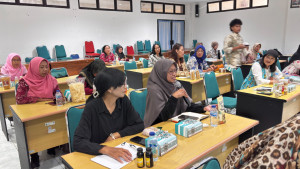
Supartana, Head of the Gunungkidul Regency Office of Industry, Cooperatives, and MSMEs, highlighted the potential of local MSMEs to reach wider markets. However, improvements in packaging, branding, and labeling are still needed to help local products compete more effectively.
“MSMEs in Gunungkidul have the potential to grow and reach wider markets. Therefore, improving the quality of product packaging, branding, and labels must be a priority to make local products more attractive and competitive,” Supartana said.
He also highlighted the local government’s support for local products through the “Grebeg Pasar dan Gema Srikandi” initiatives, including encouraging civil servants to purchase products made by local MSMEs.
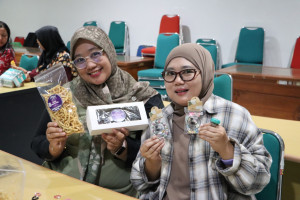
Dr. Djoko Santosa, Head of the Community Empowerment Subdirectorate at the UGM’s Directorate of Community Service (DPkM), welcomed the collaboration with the Gunungkidul Regency Government to support MSME development. Business owners in Gunungkidul have received guidance through various community service programs, including the deployment of students through UGM’s Community Service Program (KKN-PPM UGM). The collaboration is expected to help business owners increase production capacity, expand marketing networks, and build greater business independence.
“Collaboration between UGM and local governments is an important part of supporting MSME development. Through mentoring and community service programs, we hope MSME owners can increase production capacity, expand marketing networks, and become more independent in developing their businesses,” Dr. Djoko said on October 9.
Through the 39th UMKM Class Series, DPkM UGM and the Gunungkidul Regency Government hope to continue supporting MSMEs in improving product quality and marketing strategies. These efforts are expected to help local MSMEs become more independent, strengthen their competitiveness, and expand their market reach regionally and nationally.
Author: Adinda Putri Rahma
Editor: Gusti Grehenson
Post-Editor: Priyananda
Photo: DPkM